Judge declares she’s ‘not the Lorax’ during hearing on Trump’s DC golf course renovation

Daftar Isi
Federal Judge Ana Reyes Invokes Dr. Seuss as DC Golf Course Fight Enters Legal Limbo
Earthguardiansonline.com – WASHINGTON — In a courtroom moment that blended judicial gravity with pop-culture whimsy, US District Judge Ana Reyes told a packed hearing room on Thursday that she was “not the Lorax,” pushing back against the weight of public fury directed at her over felled trees at one of Washington’s most visible green spaces. The remark, delivered amid a status conference that was supposed to be a routine scheduling check-in, captured the unusual emotional charge now surrounding President Donald Trump’s bid to transform a municipal golf course into a championship-caliber facility.
“I do not speak for the trees, I am not the Lorax,” Reyes said, echoing the cadence of the beloved Dr. Seuss character before adding, “I am a judge.”
The judge, a Biden-era appointee, explained that she has received personal threats tied to the controversy, including one from a caller who told her he would “remove” her if she failed to “save the trees.” She also flagged the irony of the timing: 2026 marks America’s 250th anniversary, and the prospect of a sitting president overseeing the cutting of cherry trees — a species forever linked to the apocryphal George Washington legend — had become a matter before her court.
The Tree Removal That Sparked the Firestorm
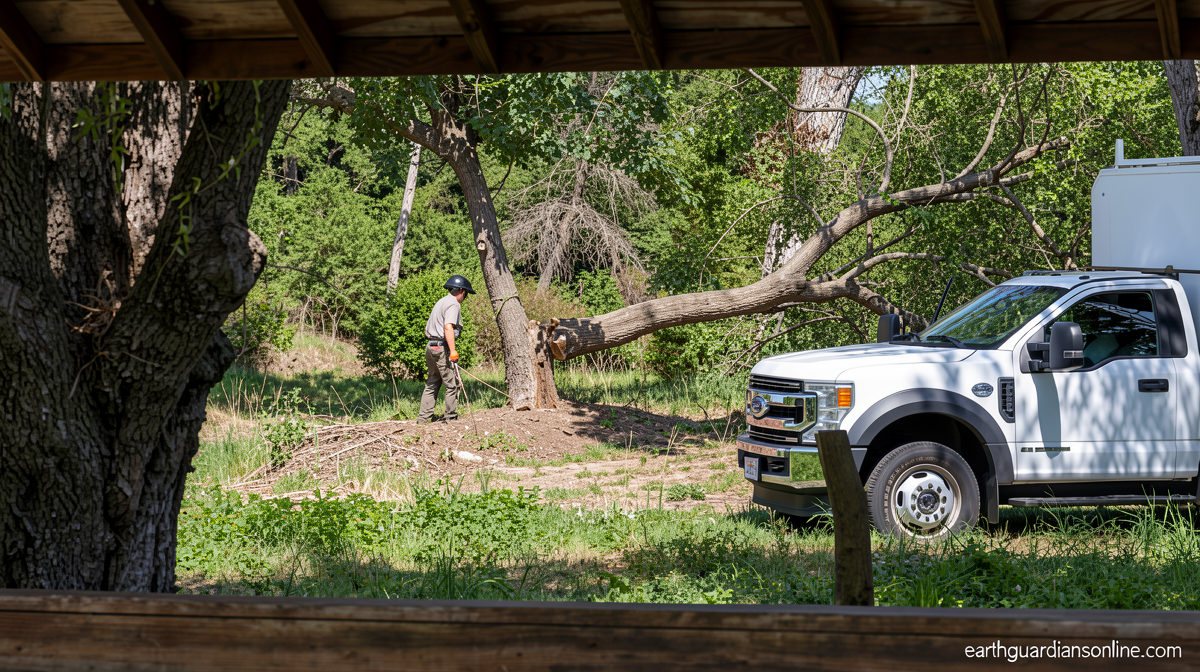
Beginning in late August, crews affiliated with the National Park Service began clearing vegetation at the East Potomac Golf Course, a 300-acre manmade peninsula situated just south of the National Mall. Weeks of speculation, social-media outrage, and local-activist mobilization followed before Department of Justice attorneys finally laid out the numbers at Thursday’s proceeding: roughly 150 trees had been taken down, split between 77 invasive species and 77 specimens classified as dead, dying, or hazardous. The park as a whole contains approximately 3,800 trees.
The Department of Interior told CNN in a written statement that arborists routinely monitor trees across the park for visitor-safety risks and that removal decisions are made when a specimen is judged to be declining or posing a hazard. Shortly before the hearing, however, the plaintiffs’ team filed court declarations challenging the characterization of the removed trees as rotting or dangerous. By the time the judge called the room to order, though, the challengers had walked back that position, conceding they lacked sufficient grounds to dispute the government’s stated rationale for the cuttings.
A Status Conference That Became a Pressure Valve
Thursday’s session was formally scheduled as a status conference — a mechanism for the judge and all parties to assess where the litigation should proceed next. The administration had already moved to dismiss the case outright. In filings submitted Wednesday, Interior Department lawyers pointed to two recent Supreme Court decisions — one upholding construction of the White House East Wing ballroom and another sustaining an executive order governing mail voting — and argued that those rulings effectively foreclosed the plaintiffs’ claims.
Reyes declined to rule on the dismissal motion immediately. Instead, she granted the challengers leave to amend their complaint in light of the new legal landscape and signaled she would move swiftly on any renewed motion to dismiss the government might file. The plaintiffs, represented by the DC Preservation League alongside two local golfers, are pressing for a court order that would freeze the administration’s renovation plans pending resolution of the case.
Reyes has so far refused to issue such a freeze. Earlier in the litigation she concluded she was not persuaded that any statute had been violated. Over the summer she directed both sides to negotiate a reporting arrangement under which the Trump administration would notify the court of any new construction activity at the course while the case worked its way through the system. On Thursday she expressed satisfaction with how the government had kept her informed and declined to impose additional notification obligations on the administration during its planning phase.
Yet the judge also voiced empathy for the preservation league’s core anxiety: that the administration might execute a sweeping, irreversible action without adequate advance warning, leaving a court with little recourse after the fact.
“What I don’t want is to be here with a fait accompli,” Reyes said.
The Golf Course Plan and Its Architect
Trump, a longtime and avid golfer, first floated the takeover-and-expansion concept publicly in May. The course in question, known as The Links, currently operates two nine-hole layouts and an 18-hole course. Interior Secretary Doug Burgum unveiled a rendering of the proposed renovations produced by Fazio Design, a consultancy helmed by golf-course architect Tom Fazio. Fazio previously designed Trump’s Bedminster, New Jersey, property and three additional courses associated with the president’s portfolio.
The planned transformation would convert a public municipal facility into what the administration describes as a championship-level venue, a move that has drawn criticism from preservation groups, local golfers, and environmental advocates who argue the peninsula’s ecological value and public-access character warrant greater scrutiny before any major earthwork or construction proceeds.
What Comes Next
With the amended-complaint window now open and a potential renewed dismissal motion on the horizon, the case is poised for a sharper legal contest than the tree-removal episode alone might suggest. The Supreme Court rulings cited by Interior Department lawyers will shape whether the plaintiffs’ claims survive at the pleading stage, and Reyes has made clear she intends to resolve that question without delay. For the DC Preservation League and its two golfer co-plaintiffs, the stakes remain straightforward: secure a judicial check before the bulldozers arrive, or watch the peninsula’s character change beyond the reach of any later injunction.
The Lorax, of course, had no such option. Reyes, for now, does.
Related Reading
Frequently Asked Questions
What is Judge declares she s not the Lorax?
Judge declares she s not the Lorax is the main topic of this guide. The article explains the context, practical details, and next steps readers should understand.
Why does Judge declares she s not the Lorax matter?
Judge declares she s not the Lorax matters because readers are looking for a useful answer, not just a short summary. Good content should match search intent and help them decide what to do next.