
Judge rejects bid to stop UFC fight at White House
Judge Dismisses Effort to Block UFC Fight at White House
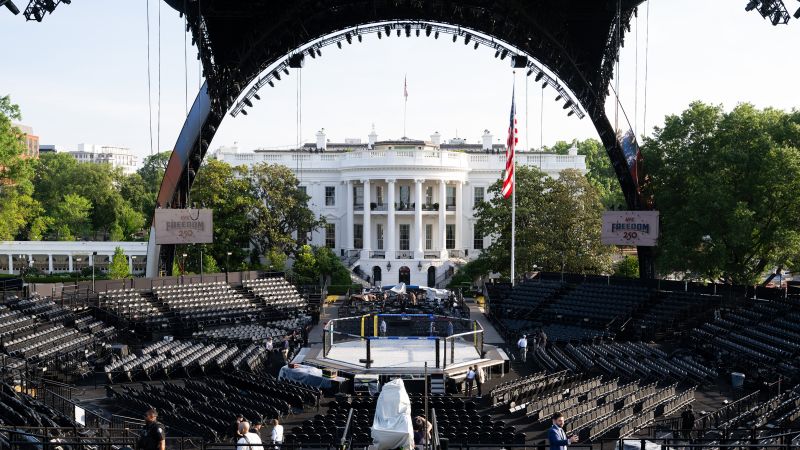
Judge rejects bid to stop UFC fight – A federal judge has ruled against a bid by two Virginia residents to halt President Donald Trump’s planned UFC fight at the White House this weekend. The decision, issued on Friday afternoon by US District Judge Amit P. Mehta, came after the plaintiffs sought to prevent the event from proceeding on the South Lawn of the White House and the Lincoln Memorial. The case, filed last weekend, centered on whether the private event could legally take place at these iconic locations, with the main event scheduled for Sunday. Mehta determined that the plaintiffs lacked the legal standing required to challenge the event, leaving the judge’s ruling focused on the procedural grounds rather than the event’s overall legality.
Legal Standing and Financial Arguments
Mehta emphasized that the two individuals—identified as a political activist and a Vietnam War veteran—did not meet the necessary criteria to assert their claim as a valid legal action. The judge acknowledged the administration’s assertion that stopping the event would cause significant harm, including financial setbacks for the UFC and its affiliated organizations. “The potential loss of those dollars resulting from a last-minute, court-ordered stoppage cannot be ignored,” the judge wrote in his opinion. This argument highlighted the $60 million investment the UFC had already made in organizing the event, which includes production, labor, construction, and promotional costs.
“The event is neither ‘for the celebration of the 250th anniversary of American Independence’ nor, crucially, being ‘planned, organized, and executed’ by the federal government,” the plaintiffs’ legal team stated in their filings. This key point underscored their claim that the event’s exemption from certain permitting rules was based on a federal regulation tied to the country’s 250th birthday. The plaintiffs argued that the administration was leveraging this rule to justify hosting the fight at the White House, despite its primary purpose being to celebrate Trump’s birthday rather than the nation’s founding.
Despite the judge’s rejection of the bid to block the event, the lawsuit remains active. The plaintiffs had requested a temporary injunction to delay the fight while further legal proceedings unfolded. Their concern was that the White House’s use of the South Lawn and Lincoln Memorial without standard regulatory approvals, such as an environmental assessment, violated federal laws. They contended that the event’s private organizers—UFC and its partners—should have followed ordinary procedures, including securing permits for temporary structures on federal property.
White House’s Role and Federal Services
According to White House management, the federal government is providing essential services for the event, including law enforcement, security, and emergency medical support. Joshua Fisher, the administration director, noted in a sworn declaration that the government also supplies a significant volume of perishable food items for the anticipated 4,000 guests on the South Lawn and over 120,000 attendees on the Ellipse. However, the administration has not yet disclosed the full cost of these services to taxpayers. The UFC, meanwhile, is responsible for all production-related expenses, which have already exceeded $60 million.
Defense attorneys for the Trump administration argued that federal law does not require Congress to approve temporary structures on White House grounds, such as the “claw”—a custom-built venue for the event. “Temporary structures are ubiquitous on the White House grounds, erected for nearly every special event, yet nobody has ever before suggested that Congress somehow needs to pass legislation for every concert tent or Easter egg roll kiosk,” the Justice Department claimed in its court filings. This statement was aimed at countering the plaintiffs’ assertion that the administration was bypassing standard permitting processes.
Plaintiffs’ Focus on Event Purpose
The plaintiffs’ legal strategy hinged on the premise that the UFC fight’s timing and location were being used to benefit Trump personally. They alleged that the event, while officially tied to the 250th anniversary of American Independence, was effectively a celebration of Trump’s birthday. This interpretation, they argued, shifts the event’s nature from a public celebration to a private political campaign, thereby subjecting it to stricter regulatory oversight. The plaintiffs also pointed to Trump’s reported ownership of stock in UFC’s parent company, suggesting a potential conflict of interest in the event’s organization.
In their filing, the plaintiffs’ lawyers stressed that the fight’s exemption from permitting rules was based on a specific federal regulation, not on the event being government-sanctioned. “The 250th anniversary rule is designed to streamline events for national commemorations,” they noted, “but this fight is not aligned with that goal.” They further contended that the administration’s use of the rule was an attempt to circumvent legal requirements, which they believed would otherwise necessitate an environmental impact review and other formal approvals.
Implications and Next Steps
The ruling has significant implications for future events at the White House. It reinforces the administration’s ability to host private gatherings on federal property without facing immediate judicial intervention. However, the plaintiffs’ arguments may continue to influence public perception of the event’s purpose and the extent of the government’s involvement. The White House has stated that workers will begin dismantling the “claw” on Monday, signaling the event’s proximity to its conclusion.
While the judge’s decision does not settle the event’s legality, it leaves room for continued debate. The Trump administration’s lawyers will likely argue that the federal rule sufficiently justifies the event’s placement, and the UFC’s financial commitment underscores the stakes involved. Meanwhile, the plaintiffs’ focus on the event’s political undertones highlights the broader tension between public spaces and private use in Washington, D.C. This case may serve as a precedent for similar disputes in the future, particularly as the White House continues to host high-profile events amid ongoing legal challenges.
Additionally, the case has been linked to a separate development involving the removal of Trump’s name from the Kennedy Center. Though the details of that ruling are yet to be fully explored, it illustrates the administration’s efforts to navigate legal hurdles across various initiatives. For now, the UFC fight remains on track, with the White House’s collaboration ensuring the event’s logistical success. As the event approaches, the question of its legal justification—and the role of federal regulations in enabling it—will remain a focal point for both the judiciary and the public.
With the judge’s dismissal of the bid, the plaintiffs’ next steps may involve appealing the decision or seeking alternative legal avenues. The case underscores the complexities of using public spaces for private activities, especially when those activities align with political interests. As the event draws closer, the balance between the administration’s authority and the rights of citizens to challenge its actions will be tested, potentially shaping the future of public use in Washington, D.C.
