
Mullin plan to punish sanctuary jurisdictions by targeting their airports faces fierce headwinds
Mullin Plan to Punish Sanctuary Jurisdictions by Targeting Their Airports Faces Fierce Headwinds
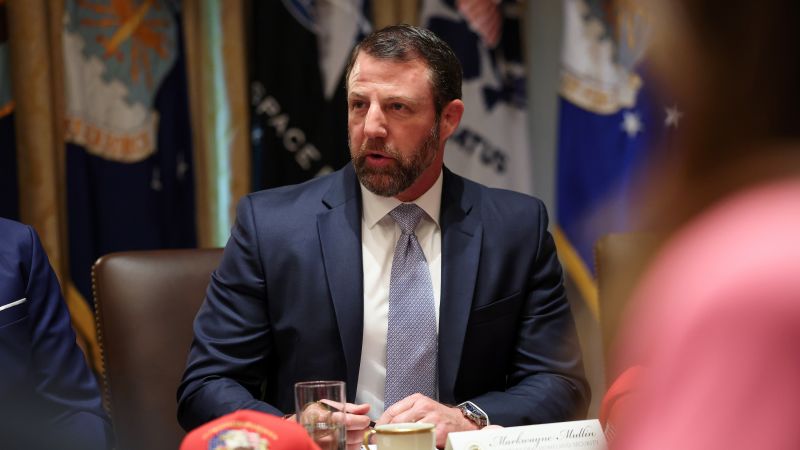
Mullin plan to punish sanctuary jurisdictions – Department of Homeland Security Secretary Markwayne Mullin has proposed a strategy to penalize cities and states that resist federal immigration enforcement. The plan involves reducing customs personnel at airports in these jurisdictions, potentially halting the processing of international travelers. However, this initiative is encountering significant resistance, with the travel industry and local officials raising concerns about its disruptive effects. The White House has not yet given final approval, and even a fellow Cabinet member has publicly opposed the move.
Mullin’s approach aims to apply pressure on so-called “sanctuary jurisdictions” by limiting their ability to welcome international visitors. During a recent interview with Fox News, he asserted that these cities, which prioritize local control over federal immigration policies, should not be allowed to process flights. “If radical left Democrats aren’t enabling federal enforcement, then we shouldn’t be processing international flights into their cities either,” he declared. Mullin emphasized that the situation “makes no sense” to him, as these jurisdictions both resist enforcement and benefit from immigration processing.
“They don’t want us to enforce immigration but they want us to process immigration at their facilities? Nothing about that makes sense to me,” Mullin said.
Despite Mullin’s public stance, the plan remains in flux. Two Trump officials close to the matter told CNN that while the idea has been discussed, no immediate action is planned. The strategy appears to be more of a personal initiative by Mullin than a coordinated effort from the West Wing. The official noted that Mullin has been “obsessed” with the concept since taking office in March, bringing it up repeatedly during meetings with the White House.
Transportation Secretary Sean Duffy has expressed skepticism about the plan during a congressional hearing. “We shouldn’t shut down air travel in a state that doesn’t align with our political goals,” he remarked last week. Duffy’s criticism highlights the potential fallout for the nation’s transportation infrastructure, as the proposal could impact airports across both red and blue states. The disruption might ripple through international trade and tourism, even if the administration waits until after the World Cup to implement it.
Industry leaders have echoed similar concerns. Airlines for America, a trade association representing major carriers, warned that reducing customs staff at key airports would “cause a significant operational disruption to carriers, travelers, and the flow of international cargo.” The group stressed that the plan’s implementation could harm the U.S. economy, as many airports lack the capacity to adjust routes quickly. For example, changing flight paths to avoid sanctuary cities might not be feasible without altering schedules, which are often set months in advance.
The U.S. Travel Association also voiced apprehension, stating that Mullin’s proposal would “have devastating consequences for the travel industry and communities reliant on international visitation.” Representatives from the organization recently met with Mullin to discuss the impact of his plan. They confirmed his assertion that the administration is considering withdrawing customs agents from certain airports, but warned of the broader economic ramifications.
While the plan is framed as a punishment for sanctuary jurisdictions, its effects could extend beyond local politics. The term “sanctuary city” lacks a universal definition, though it generally refers to municipalities that limit cooperation with federal immigration enforcement. The Department of Justice previously published a list of such jurisdictions, which has reportedly grown since the start of the year. Virginia Governor Abigail Spanberger, who recently signed legislation to expand protections for immigrants, has been a vocal target of Mullin’s criticism.
Mullin’s strategy reflects a broader ideological battle within the Trump administration. Although he has earned goodwill from the president for his leadership at the Department of Homeland Security, his airport plan has sparked debate. Some officials privately acknowledge the plan’s potential to destabilize international travel, particularly during peak seasons. The White House has maintained a cautious stance, with one official stating, “The President loves having a team that’s always generating new ideas, but any policy decisions will ultimately rest with him.”
The plan’s implementation would require coordination across multiple agencies, including the Transportation Security Administration and the Customs and Border Protection. However, the lack of clear guidance from the White House has left the travel industry in uncertainty. Airlines, which have not publicly commented on the proposal, are monitoring the situation closely, as any reduction in staffing could delay arrivals and departures, affecting global supply chains and economic activity.
As the debate continues, the focus remains on the balance between immigration enforcement and economic impact. While Mullin argues that sanctuary jurisdictions should bear the cost of their policies, opponents counter that such measures could alienate key trading partners and reduce tourism revenue. The outcome of this push may depend on whether the White House prioritizes political symbolism over practical consequences. For now, the plan remains a point of contention, with its success hinging on both administrative approval and the willingness of the travel sector to adapt to potential changes.
Key Considerations for the Future
One of the most pressing questions is how the administration will define which jurisdictions qualify as “sanctuary.” The Department of Justice’s list, which includes cities like San Francisco and New York, is subject to interpretation. Critics argue that the term is often used to describe municipalities with progressive policies, while supporters see it as a label for those obstructing federal efforts. This ambiguity could complicate the implementation of the plan, as different regions may be targeted based on varying criteria.
Additionally, the logistics of enforcing the policy are not straightforward. International travelers often arrive at major hubs such as JFK or SFO, which are not necessarily the final destinations for all passengers. Reducing staffing at these airports could slow down processing times, creating bottlenecks that affect both incoming and outgoing flights. The transportation sector, already navigating challenges like fuel costs and labor shortages, may struggle to absorb these changes without further strain.
As the summer approaches, the administration’s decision on Mullin’s plan could have far-reaching implications. With the World Cup just weeks away, the timing of any changes might influence the flow of international visitors to the U.S. This has led to speculation about whether the plan is a deliberate effort to shape public perception during a high-profile event or a more symbolic gesture. Regardless of its intent, the policy’s impact on trade, tourism, and daily operations is undeniable, prompting calls for a more measured approach to enforcement.
In the meantime, the debate over sanctuary jurisdictions and their treatment at U.S. airports is likely to persist. The tension between federal authority and local autonomy continues to shape political discourse, with Mullin’s plan serving as a prime example of how immigration policy can intersect with economic strategy. As the administration weighs its options, the travel industry and affected communities await clarity on whether this approach will gain traction or be tempered by broader considerations.
