
National Guard deployment to DC will last through Trump’s term
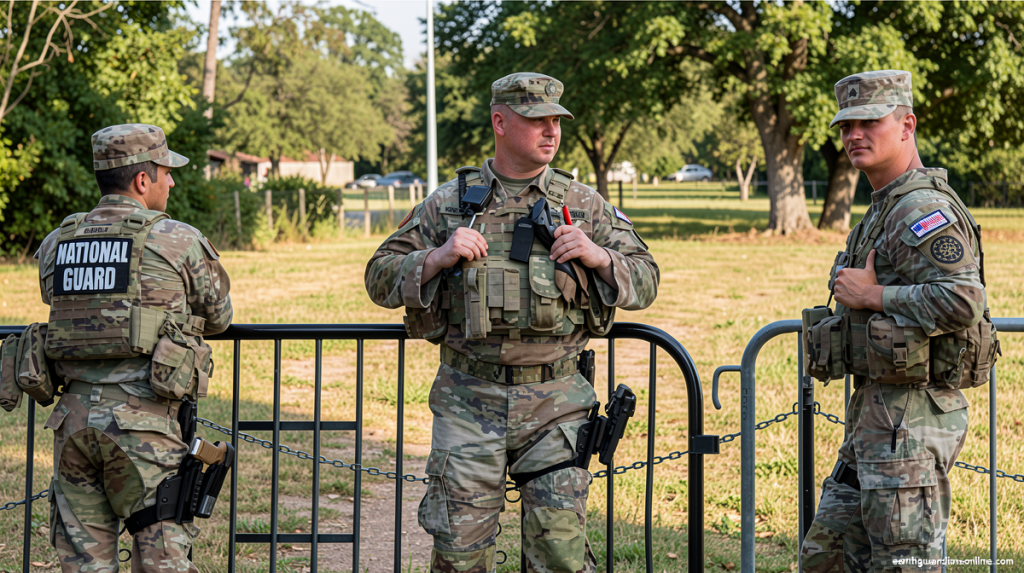
DC National Guard Mission Extended Through Trump’s Presidency
Extended Timeline Confirmed by Pentagon
National Guard deployment to DC will – The Pentagon has officially confirmed that President Donald Trump’s deployment of National Guard personnel to Washington, DC will continue well beyond its original expiration date. According to an email released Thursday, the military mission is now scheduled to run through January 20, 2029, which marks the conclusion of Trump’s current term in office. The confirmation states the deployment will persist “or until terminated by the President,” giving the administration flexibility to end the operation earlier if circumstances warrant.
Originally, this deployment was slated to conclude at the end of 2026 following a previous extension. The decision to prolong the mission significantly extends the presence of armed military personnel in the nation’s capital for several more years. This extended timeline ensures continuity in the security operations that have become a defining feature of Trump’s approach to governing the federal district.
Origins and Purpose of the Deployment
The National Guard deployment to Washington, DC has been a subject of considerable debate since its inception. President Trump issued an executive order in August 2025, citing what he characterized as a crime emergency within the city. This directive called for the mobilization of 2,500 National Guard troops alongside additional federal law enforcement officers to address rising concerns about public safety.
The administration has consistently maintained that crime rates have dropped substantially since the deployment began. However, local officials have contested this narrative, pointing out that crime was already trending downward before Trump ordered the military presence into the city. This disagreement over causation has become a central point of contention in the ongoing debate about the effectiveness of the deployment.
Operations and Daily Activities
During their extended stay in the capital, National Guard members have taken on a variety of responsibilities beyond traditional security duties. Personnel have responded to medical emergencies throughout the city, assisted law enforcement with arrests, helped clear snow from streets during winter storms, and participated in beautification projects aimed at improving public spaces.
While the Guard members themselves do not have the authority to make arrests, the Trump administration has argued that their presence and support have contributed to a broader mission of reducing crime. The White House reported in April that a joint task force had made 12,000 arrests since operations commenced, including the identification and apprehension of 62 known gang members. Additionally, authorities claimed that thousands of illegal firearms had been seized during this period.
Challenges and Comparisons to Other Cities
Despite the extended timeline, the deployment has not been without challenges. In November, tragedy struck when Spc. Sarah Beckstrom was fatally shot and Staff Sgt. Andrew Wolfe was wounded. According to authorities, a man drove from Washington state to DC and opened fire outside a subway station located just three blocks from the White House. Both Beckstrom and Wolfe had been deployed from West Virginia to serve in the DC mission.
The financial cost of maintaining this presence has also drawn criticism. Phil Mendelson, chairman of the District of Columbia Council, expressed concerns in April about the expense. “Taxpayers are paying more than a million dollars a day to have them walk around,” Mendelson stated, adding that “the presence of armed soldiers on American streets is not a good look.”
Meanwhile, deployments to other major cities have faced different outcomes. Courts in California and Illinois have ended or paused similar operations, while more limited missions continue in places like New Orleans. In Washington, however, Guard members remain active, patrolling metro stations, tourist attractions, residential neighborhoods, and public parks throughout the city.
Legal Framework and Future Outlook
One factor that has helped sustain the DC deployment is the city’s unique status as a congressionally established federal district. This designation gives President Trump considerably greater influence over both the local police force and the DC National Guard compared to his authority in other states. He can exercise direct control over these entities, which has enabled him to navigate around some of the legal challenges that have emerged in other jurisdictions.
Disagreements persist regarding how much credit the deployment deserves for crime reduction. Official figures indicate that crime was already declining before the military presence arrived, though these statistics became the subject of an investigation following allegations that local police may have manipulated the data. As the deployment continues through Trump’s term, the question of its long-term effectiveness and necessity remains open for debate among residents, officials, and legal experts alike.
