New book reveals how Trump compared himself to Mao, Stalin, Attila the Hun

New Book Reveals Trump’s Self-Comparisons to Historical Figures Like Mao and Stalin
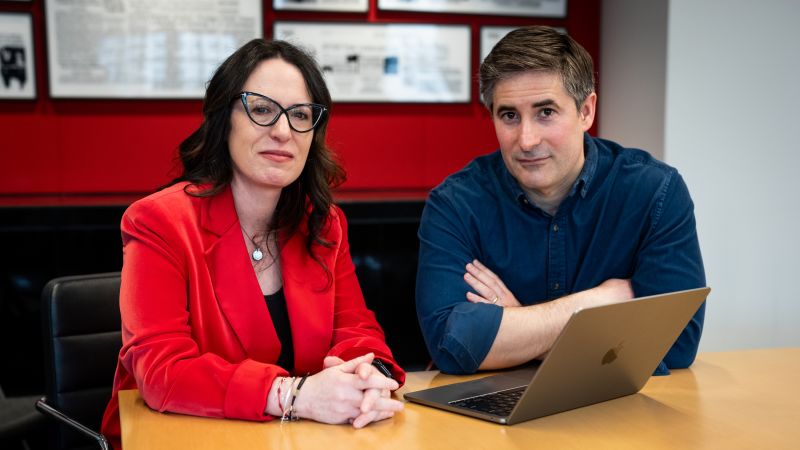
New book reveals how Trump compared – In a revealing anecdote from their upcoming book, journalists Maggie Haberman and Jonathan Swan document a moment when President Donald Trump, during an interview in March, presented a two-page document to them. The text asserted that Trump was more influential than some of the most notorious leaders in history—such as Attila the Hun, Genghis Khan, Napoleon, Stalin, Mao, and Hitler. This claim emerged as part of a discussion about Trump’s power during his second term and his legacy, which Haberman and Swan explored in depth for their work.
A Document with a Surprising Origin
According to the book, Trump had received the document from a historian during an event honoring Gary Player, the legendary golfer. The historian’s analysis emphasized that while figures like Stalin and Mao were feared for their authoritarian control, Trump’s influence transcended borders. “Their power was local,” the text states, “but (Trump’s) was not.” Trump, who seemed eager to showcase the document, had his assistant retrieve a copy, which he then described as a testament to his global reach.
“Who would ever do a thing like that? Right?”
However, the book later exposes the document’s author as a surprising figure: Gary Player’s long-time caddy and confidant. The caddy explained that he first shared his assessment with Player and then, during a casual golf session in Florida, expanded it to Trump. This detail adds an intriguing layer to the narrative, suggesting that the comparison was not the product of a formal historian but a personal perspective.
Behind-the-Scenes Glimpses of Trump’s Second Term
“Regime Change,” the book titled, offers a candid look at the first 14 months of Trump’s second presidency. The authors, who conducted over 1,000 interviews spanning three years, weave together direct quotes and contextual anecdotes to paint a vivid portrait of Trump’s leadership style. The text highlights how Trump often wielded his authority without hesitation, using impulsive decisions to target perceived adversaries, destabilize international markets, and initiate conflicts abroad.
One notable segment details the administration’s chaotic reaction to the Epstein files scandal. The book describes how Trump’s team scrambled to manage the fallout, reflecting a pattern of unpredictability that defined much of his second term. Additionally, the authors recount his abrupt decision to enter the Iran conflict, aligning with Israel’s stance. This move, they note, contrasted with his earlier reservations about the war, as Trump expressed hesitation to support Israeli Prime Minister Benjamin Netanyahu’s aggressive foreign policy.
“He didn’t want any part of a Netanyahu war with Iran.”
These moments, big and small, underscore Trump’s tendency to challenge established norms. The book suggests that his second term saw a greater willingness to break from tradition, whether in his treatment of allies or his approach to governance. The authors also reveal that Trump’s interactions with his own team were often sharp and unfiltered, with his views of world leaders and colleagues frequently laced with skepticism.
Detailing the Oval Office’s Golden Transformation
Another striking scene in the book captures Trump’s deep personal investment in the decor of the Oval Office. One morning, White House press secretary Karoline Leavitt entered the room to find Trump meticulously applying superglue to gold decorations on the marble fireplace mantel. The authors describe how this act reflected his preference for hands-on control, even in mundane tasks. “The sight of the President squeezing glue onto gilded appliques surprised no one in his inner circle,” they write, highlighting the seamless integration of his aesthetic sensibilities into the presidency.
After his return to office, Trump rapidly transformed the Oval Office into a gleaming showcase of opulence. The changes included new gold vermeil figurines, medallions on the fireplace, and gold eagles adorning side tables. Rococo-style mirrors and tiny gold cherubs from Mar-a-Lago were also featured in the space, creating a visual motif that symbolized his vision of power and prestige. This obsession with decor, the book implies, was more than just a vanity project—it was a statement of his belief in his own exceptionalism.
Insights from Daily Reporting and Interviews
“Regime Change” is based on extensive research, including over 1,000 interviews with individuals who worked closely with Trump. The authors, who maintained regular contact with the president during their daily reporting, combined these insights with a significant hourlong interview in March. The result is a layered narrative that blends personal accounts with broader observations, offering a comprehensive view of Trump’s leadership.
Throughout the book, the authors emphasize that Trump’s second term was marked by a sense of unbridled authority. They describe how he often bypassed traditional processes, favoring direct action and bold statements. This approach, they argue, not only reshaped domestic policy but also redefined his interactions with international partners. The text also explores how Trump’s rhetoric about global power shifted over time, with his self-proclaimed comparisons to historical figures serving as a recurring theme.
Trump’s posting of the document on Truth Social just after midnight Thursday has raised questions about its timing. A source told CNN that this move might have been an attempt to preempt the book’s release, leveraging the document as a tool to reinforce his narrative. The president’s insistence on labeling the author as a “presidential historian” further underscores his desire to frame the argument in a credible light.
As the book approaches its release, readers are given a glimpse into the inner workings of the Trump administration. From the golden embellishments of the Oval Office to the strategic decisions in foreign policy, “Regime Change” paints a picture of a leader who saw himself as both a force of nature and a figure of unparalleled influence. The authors’ careful selection of quotes and contextual details ensures that the reader is not only informed but also immersed in the dynamics of Trump’s second term.
The narrative also includes moments that reveal the personal side of Trump’s leadership. Whether it’s his hands-on approach to decorating or his fluctuating attitudes toward allies, the book captures the contradictions that defined his presidency. These vignettes, combined with the historical comparisons, offer a compelling argument for Trump’s place in the annals of global leadership. As Haberman and Swan explain, the document’s author was not a historian, but the story it tells resonates with the broader themes of power and legacy that the book seeks to explore.