
Republicans send $70 billion in ICE and border patrol funding to Trump’s desk
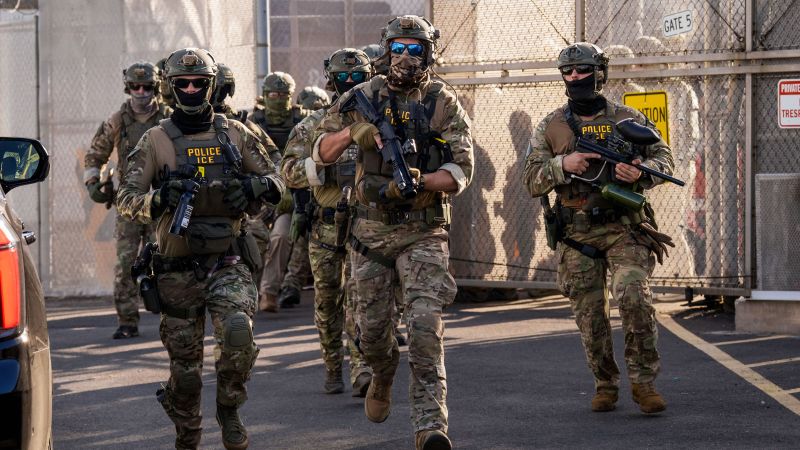
Republicans Forward $70 Billion in ICE and Border Patrol Funding to Trump
Republicans send 70 billion in ICE – On Tuesday, House Republicans transmitted a $70 billion immigration enforcement funding bill to President Donald Trump, marking the end of a prolonged legislative battle that revealed deep fractures within the GOP. The measure is designed to comprehensively support the Department of Homeland Security, particularly the US Immigration and Customs Enforcement (ICE) and US Customs and Border Protection (CBP), for the duration of Trump’s second term. This move, which has been a key focus for Republicans since the spring, came after Democrats had previously blocked Congress from allocating even a single dollar to ICE or border patrol following the fatal shootings of two U.S. citizens in Minnesota.
The bill’s passage follows a contentious negotiation process that highlighted the challenges of uniting the Republican Party. While the top GOP leaders had initially aligned on the strategy, disagreements emerged over how to navigate the potential for a government shutdown. These tensions came to a head as the Senate faced a critical juncture in its debate, with some Republican senators opposing the inclusion of Trump’s Justice Department settlement fund—a provision critics argue could act as a slush fund for his allies.
A Party-Line Victory Amid Division
Hours before the final vote, the bill encountered further drama in the House as conservative members demanded a commitment to a separate, stricter immigration enforcement bill. Despite GOP resistance within the closely divided chamber, lawmakers managed to secure the necessary votes through a party-line tally. The House approved the measure by a 214-212 margin, with independent Rep. Kevin Kiley of California casting the sole dissenting vote. Kiley cited concerns over the absence of key enforcement limits and the procedural method used to pass the bill, which relied on budget reconciliation rather than the standard appropriations process.
“We didn’t see that: body cameras, training, identification, judicial warrants to enter homes, not enforcement zones around schools,” Kiley stated. “I think the vast majority of Americans support this.”
He also warned that the use of budget reconciliation—a tool that allows for expedited legislative action—would intensify partisan divides. “Polarization in Congress is at an all-time high right now, and I think that this is going to make things worse,” he added. Despite these criticisms, the bill advanced, reflecting the broader GOP consensus on funding immigration agencies even as some members voiced reservations about the lack of oversight.
Defections and the Strain on Republican Majorities
The final approval of the bill came despite a growing number of defections from within the Republican ranks on Capitol Hill. These internal splits underscored the fragility of the party’s majority and the increasing pressure on lawmakers to address public concerns about the agency’s actions. The ongoing debate over funding ICE and CBP has intensified as the president’s approval ratings fluctuate, with Republicans now facing scrutiny over their ability to maintain unity.
While the package grants most of Trump’s initial requests, one major priority was left unfulfilled: his call for $1 billion in security upgrades for the White House. The Senate GOP’s original version included nearly $1 billion for “security adjustments and upgrades” to the East Wing ballroom project, alongside additional funds following the shooting at the White House Correspondents’ Dinner this spring. However, administration officials clarified that only about $200 million would be allocated to the East Wing, with the remaining portion directed toward other security initiatives. This adjustment led to resistance from some Senate Republicans, who questioned the overall allocation.
Scrutiny Over Enforcement and Accountability
Amid the funding debate, critics from both sides highlighted the lack of accountability measures for ICE and CBP. GOP Rep. Tom McClintock of California, who supported the bill, described it as a victory that breaks Democrats’ control over funding for the agencies. “This bill breaks the Democrats’ stranglehold over ICE and CBP funding,” he said on the House floor. Yet, opponents argued that the measure failed to address long-standing issues with the enforcement agencies.
“With $70 billion, we could end homelessness in America,” said Democratic Rep. Morgan McGarvey of Kentucky. “Just about anything would be better than giving it to ICE.”
Pramila Jayapal, a Washington-based immigration rights advocate and a long-time critic of the GOP’s stance, accused the party of passing the bill without “guardrails” to prevent excessive use of federal enforcement powers. Her comments reflect the growing divide between lawmakers who prioritize security and those who emphasize the need for reform.
The anti-weaponization fund, which Trump had sought to establish, was another point of contention. This provision aimed to provide payouts to rioters who attacked police during the January 6, 2021, Capitol attack. Although some Senate Republicans had pushed to include a prohibition on the fund, it was ultimately removed from the final version. Acting Attorney General Todd Blanche assured lawmakers the fund would not proceed, but the debate over its inclusion demonstrated the challenges of passing major initiatives in a divided Congress.
As the bill moved through both chambers, the final hours were marked by intense negotiations. Multiple GOP senators initially held up the package due to concerns about the anti-weaponization fund but eventually supported it. In the Senate, only Sen. Lisa Murkowski of Alaska voted against the measure, signaling a narrow but decisive victory for the Republican leadership.
The passage of the $70 billion funding bill marks a significant milestone for Trump’s administration, enabling the continued operation of ICE and CBP without immediate congressional interruption. However, it also underscores the challenges Republicans face in balancing their support for enforcement priorities with the need for reform. As the debate continues, the focus will shift to how these agencies will use the allocated resources and whether the measures will address public concerns or further deepen partisan divides.
With the final vote secured, the question remains whether this funding package will serve as a temporary solution or a long-term strategy for the GOP. The decision to rely on budget reconciliation, while expedient, may have consequences for the party’s ability to pass other major legislation in the coming months. As lawmakers prepare to address other pressing issues, the outcome of this funding battle highlights the evolving dynamics within the Republican Party and its relationship with the president’s agenda.
