Saudi oil pipeline shut down after attack triggers fires

Daftar Isi
Saudi Arabia Halts Major Oil Pipeline After Projectile Attack Sparks Fires
Earthguardiansonline.com – Saudi Arabia temporarily shut down a crucial oil pipeline system after projectiles struck the network on Thursday, setting off fires near pumping facilities and raising fresh concern over the security of the kingdom’s energy exports.
The Saudi Ministry of Energy said Friday that the pipeline had come under attack and was taken offline as a precaution. The ministry said the incident involved multiple strikes, caused several injuries and prompted teams to secure the route and inspect its condition.
“was shut down as a precautionary measure.”
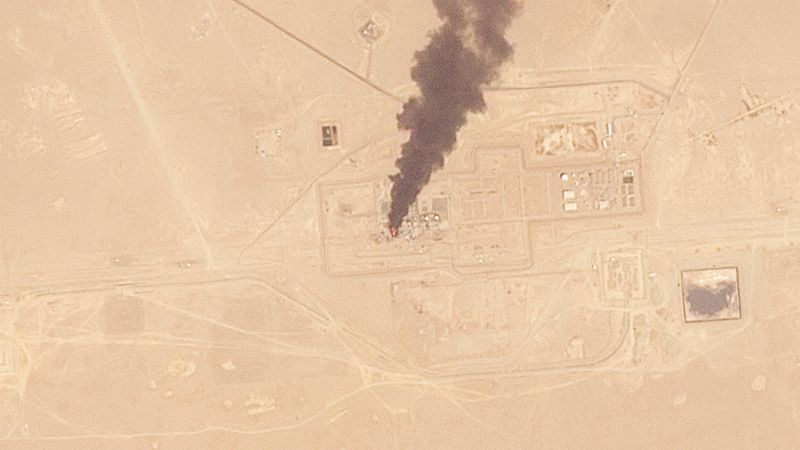
Early assessments indicated that pumping stations positioned alongside the pipeline were among the targets. Satellite imagery from Friday appeared to show widespread fire damage at one station. A separate image taken Thursday showed another site with a smaller blaze and dense black smoke rising into the air.
It remained unclear whether the pipeline itself sustained serious physical damage or who carried out the strikes. One US official said drones launched from Iraq hit the system. US authorities were gathering intelligence as they worked to establish responsibility and the full scope of the attack.
Pressure on a vital export route
The East-West pipeline has become particularly important during the continuing US-Iran war. Saudi Arabia has redirected roughly 5 million barrels of oil per day through the route after Iran effectively closed the Strait of Hormuz, the Persian Gulf waterway normally used by tankers carrying Saudi crude.
Instead of moving toward vessels waiting in the Gulf, the oil has been sent west across Saudi territory to Yanbu, a Red Sea port. That alternative route gives the kingdom another path for exports, but it also places more importance on the pipeline’s pumping stations, operating systems and surrounding security infrastructure.
The latest attack underlines the growing risks facing Saudi oil facilities at a time when regional conflict is affecting both land-based energy assets and maritime shipping lanes. Repairing damaged pumping stations could be less difficult than fixing a major rupture in the pipeline itself, US officials and energy specialists said. The extent of repairs required was not immediately known.
Saudi officials have not said when the pipeline system might return to normal operations. Aramco, the country’s state oil giant, did not immediately provide comment. The White House and State Department also did not immediately comment, while US Central Command declined to discuss the incident.
Fires detected near pipeline facilities
Satellite monitoring identified nine large fires near the East-West pipeline on Thursday. At least six of the locations appeared to match flare pits, facilities where oil and gas can be burned during an emergency. That means not every fire necessarily represented a direct hit on critical pipeline equipment, though the imagery pointed to significant disruption around the wider system.
The Ministry of Energy said personnel were carrying out safety checks after the strikes.
“taking the necessary measures to secure the pipeline and assess its safety.”
Oil markets have already reacted sharply to instability in the Middle East. Prices moved above $100 a barrel this week, with trading marked by steep swings as developments involving Iran, Saudi Arabia, shipping routes and armed groups continued to reshape supply concerns.
Saudi Arabia’s crude output had also fallen before the attack. The kingdom told OPEC that production dropped last month to its lowest level since 1990. A prolonged interruption to the East-West pipeline could add to worries about the country’s ability to move oil efficiently to international buyers, particularly while its usual Gulf export route remains constrained.
Broader threats from Iraq and Yemen
The attack came shortly after an Iranian-aligned militia seized a strategically important Red Sea port city in Yemen. That development has intensified concern about the safety of energy shipping in the region.
Houthi fighters have said they would target Saudi vessels attempting to pass through Bab al-Mandeb, the narrow passage leading out of the Red Sea. If that threat is carried out, Saudi Arabia could face pressure on both ends of its alternative export system: oil moving through the East-West pipeline toward Yanbu, and tankers seeking passage beyond the Red Sea.
Iran-aligned militia groups in Iraq have previously used drones against Saudi targets. Behnam Ben Taleblu, senior director of the Iran program at the Foundation for Defense of Democracies, said such groups may again be part of a wider Iranian effort to use regional partners to increase pressure on Arab countries and challenge the presence of US forces.
Saudi leaders had warned Washington about the possibility of this kind of escalation. In late July, Saudi Defense Minister Khalid bin Salman met President Donald Trump and Vice President JD Vance in Washington, DC. During those discussions, the kingdom conveyed its view that Iran would seek leverage through escalation and could rely on remaining proxy forces, including Iraqi militias and the Houthis.
For Saudi Arabia, the immediate priority is determining whether the damaged facilities can be stabilized and whether the pipeline can safely resume operations. The longer-term challenge is broader: protecting an export network that has become a central fallback during a conflict already disrupting the Strait of Hormuz and threatening Red Sea shipping.
Related Reading
Frequently Asked Questions
What is Saudi oil pipeline shut down after?
Saudi oil pipeline shut down after is the main topic of this guide. The article explains the context, practical details, and next steps readers should understand.
Why does Saudi oil pipeline shut down after matter?
Saudi oil pipeline shut down after matters because readers are looking for a useful answer, not just a short summary. Good content should match search intent and help them decide what to do next.