
Speaker Johnson says House will pass Trump’s voter ID bill through arduous process after GOP revolt
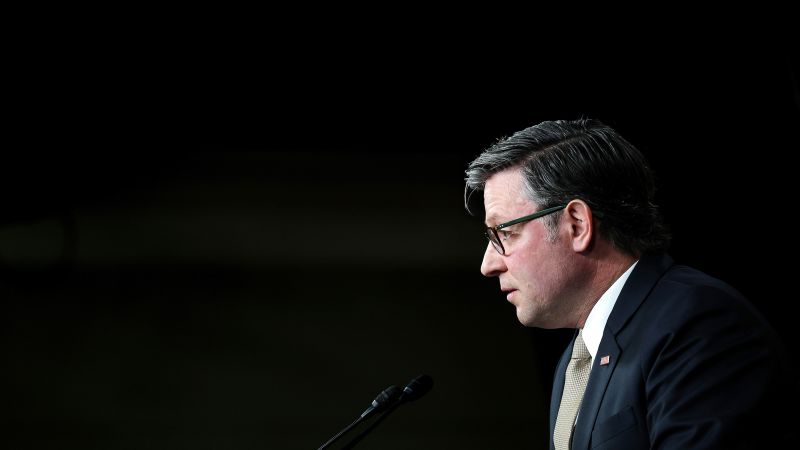
Speaker Johnson Seeks to Push Trump’s Voter ID Legislation Through Budget Reconciliation Amid GOP Resistance
Speaker Johnson says House will pass – House Speaker Mike Johnson has reiterated his commitment to advancing President Donald Trump’s voter ID bill through the budget reconciliation process, despite internal challenges within the Republican Party. The plan, which Johnson outlined during a recent interview with Fox News, aims to expedite the legislation’s passage once the House reconvenes in Washington after a summer recess. The speaker emphasized that the urgency of the bill is tied to its potential impact on securing elections, framing it as a critical component of the administration’s agenda. However, the GOP’s recent division over the measure has complicated efforts, with some lawmakers resisting its progression through the chamber’s procedural hurdles.
Johnson’s decision to send the House into an early holiday break was a direct response to a faction of conservative Republicans who stalled key legislative actions. Last week, a coalition of hardline GOP members, including Florida Representative Anna Paulina Luna, effectively halted a procedural vote to move forward with several bills, including the SAVE America Act. Their opposition stemmed from frustration over Congress’s delay in sending the legislation to the president’s desk, which they viewed as a missed opportunity to address voting reforms promptly. Johnson defended his move, stating that the break allowed lawmakers to return to their districts with renewed focus and political capital to push the bill forward.
President Trump has been vocal in his support for the SAVE America Act, which mandates stricter voter ID and proof-of-citizenship requirements. During a late-night speech on Saturday, commemorating the country’s 250th anniversary, he reaffirmed his commitment to the measure, declaring it essential for restoring American values and ensuring election integrity. “America is back, and we want to keep America great,” he said to a crowd on the National Mall, where several Republican lawmakers were present. “We will do so by approving the SAVE America Act.” This statement underscored the administration’s determination to prioritize the bill despite the political friction it has generated.
“I just decided it was best to send everybody home to go celebrate July Fourth in their districts. We’ll come back, gather everybody together,” Johnson told Fox News on Sunday.
Johnson’s strategy hinges on the budget reconciliation process, a legislative tool that requires only a simple majority in the Senate to pass bills. The House GOP leaders argue that this method is the most viable path to enact the SAVE America Act, given the current majority in both chambers. They have successfully used reconciliation in Trump’s second term to pass significant legislation, such as a major domestic policy law and funding for immigration enforcement. However, the Senate’s strict rules for budget reconciliation have raised concerns, particularly after the chamber’s parliamentarian, Elizabeth MacDonough, previously ruled that the voter ID bill did not meet the criteria for inclusion in a budget framework.
Senate Majority Leader John Thune has remained a key skeptic of the reconciliation approach, advocating for the preservation of the filibuster. While some GOP senators support the idea of eliminating the filibuster to expedite legislation, others, like Thune, believe it is crucial to maintain the procedural tool as a check against hasty decisions. Thune has resisted Trump’s calls to replace MacDonough, who is seen as a gatekeeper of the budget rules, and to remove the filibuster. This stance reflects broader concerns among Senate Republicans about the potential risks of bypassing traditional voting procedures.
Johnson, however, is confident that the bill can still succeed under the reconciliation process. During the previous attempt to advance the SAVE America Act, the Senate’s parliamentarian ruled that the bill’s expansive provisions—such as restrictions on mail ballots and transgender athletes—did not comply with the budget framework’s requirements. Johnson argues that these additional measures are not central to the legislation’s core, which includes the requirement for strict voter identification. “The core legislation the House has already passed—adding ID and citizenship requirements—will be the focus of the budget process,” he asserted, emphasizing that the final version of the bill will be “irresistible for any Republican.”
The speaker also highlighted his efforts to unify the party, stating he has engaged in extensive discussions with Thune about the strategy. Johnson claimed that the skepticism among Senate Republicans is rooted in their perception of the bill’s contents, particularly its potential to reduce fraud and increase voting affordability. “We’re going to try one more time on a budget reconciliation bill,” he said, “and I think that will be the way to get it through the Senate and finally to the president’s desk.” This approach aims to leverage the House’s existing support for the measure and pressure the Senate to adopt it without further delay.
As the House lawmakers departed for an extended holiday recess, Johnson outlined his plan to combine the SAVE America Act with a bipartisan defense policy package. This move is intended to create a package that is both essential and politically appealing, thereby increasing the likelihood of Senate approval. The defense bill, which is a must-pass item, is expected to provide additional momentum for the voter ID legislation. By linking the two proposals, Johnson hopes to demonstrate the bill’s broader support and address concerns about its feasibility within the Senate’s rules.
While the reconciliation process offers a streamlined path, it also demands compromises. The Senate’s rules require that the legislation must be “budget-related” and adhere to specific criteria, which could still pose challenges. Trump’s supporters argue that these rules are outdated and that the current political landscape justifies a shift toward faster, more decisive action. Critics, however, warn that such a move could undermine the Senate’s role as a deliberative body and set a precedent for future legislation. Despite these debates, Johnson remains undeterred, framing the effort as a necessary step to solidify the administration’s agenda.
Ultimately, the success of the SAVE America Act will depend on the Senate’s willingness to accept the bill under the reconciliation process. With the House having already passed a version of the legislation, the focus now shifts to persuading the Senate to do the same. As the political calendar tightens, the outcome of this effort could have significant implications for the future of voting procedures in the United States.
