
Brexit architect Farage under pressure as questions over funding mount
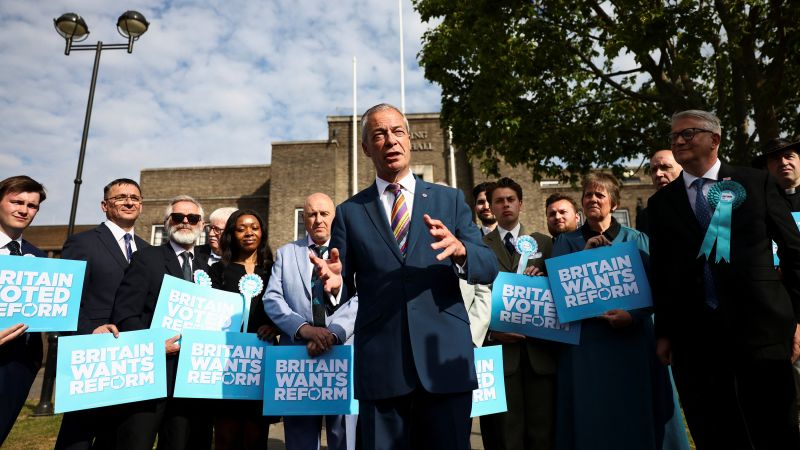
Political Storm Erupts Around Brexit Leader Nigel Farage
Brexit architect Farage under pressure as questions – British political figure Nigel Farage, the mastermind behind Brexit and a key figure in the country’s right-wing movement, is now facing mounting scrutiny over his financial practices. This comes as his Reform UK party, which has long dominated national opinion polls, grapples with challenges that threaten its influence. While Farage has historically weathered controversies with ease—much like former US President Donald Trump—recent allegations about his financial dealings are raising new concerns about his credibility and the transparency of his party’s operations.
Farage’s reputation for resilience has been built on a combative, straightforward communication style that has allowed him to deflect criticism for years. From his early days as a vocal advocate for leaving the European Union to his role as a leading anti-immigrant voice, he has maintained a public image largely unscathed by scandals. However, this latest episode appears to be testing that streak. The allegations, which emerged this week, center on his failure to disclose payments from George Cottrell, a crypto-financier and gambler who was indicted by US authorities in 2016 for orchestrating schemes involving money-laundering, wire fraud, blackmail, and extortion. Cottrell served eight months in prison and later reached a plea deal with prosecutors.
The controversy has intensified after The Sunday Times published reports detailing how Cottrell provided financial support to Farage, covering expenses such as staff salaries for his social media presence, security costs, and even the upkeep of a London townhouse. These payments, which were made before Farage entered parliament in 2024, have sparked debates about whether they comply with parliamentary disclosure rules. Reform UK’s Treasury spokesman, Robert Jenrick, has defended the situation, stating that the gifts fall under the category of “personal” support and are not required to be disclosed as long as they do not involve paid parliamentary advice. “No rules have been broken,” Jenrick asserted to the BBC, framing the issue as a matter of private financial arrangements rather than corruption.
“No one cares about the payment,” Farage’s spokesperson told CNN, dismissing the allegations as “baseless and contrived.”
Yet the scrutiny has not eased. The UK Parliament’s standards watchdog has launched an investigation into the matter, and the issue has drawn public attention after viral interviews showed Farage struggling to explain the payments. His reduced presence in the media since the Guardian’s earlier report about a £5 million gift from crypto-billionaire Christopher Harborne—a sum received just weeks before Farage announced his candidacy for the 2024 general election—has further fueled speculation. Harborne’s donation, which was highlighted in the Guardian, has been described as a significant financial boost for Farage’s campaign, though the exact nature of their relationship remains unclear.
Reform UK, Farage’s party, has been a dominant force in British politics, with its slim majority of eight MPs giving it outsized influence. However, recent local elections and by-elections have exposed cracks in its foundation. The party won substantial gains in May’s local contests, signaling strong public support for its policies, but translating that into more parliamentary seats has proven elusive. In two key by-elections this year, Reform UK lost to the Green Party and the Labour Party, both of which have positioned themselves as alternatives to Farage’s populist agenda. The rise of the Restore Britain party, led by former Reform MP Rupert Lowe, adds another layer of competition, as it seeks to attract voters disillusioned with Farage’s leadership.
Farage’s personal finances have also come under a microscope. Public records reveal that he has declared over £2 million in additional income since becoming an MP in 2024, a figure that surpasses the basic salary of most members of parliament by more than 20 times. The Financial Times notes that this places him second only to former Prime Minister Rishi Sunak in terms of supplementary earnings within the current parliament. Critics argue that such high levels of external income could blur the lines between personal wealth and political influence, particularly given the lack of clear transparency around its sources.
Despite these challenges, Farage remains a pivotal figure for Reform UK. His ability to shape the party’s direction and maintain its electoral appeal has been central to its success. However, the current financial allegations may test that connection. A potential suspension from parliament, which could be triggered by a 10-day absence, would force the party to hold a by-election—a scenario that could weaken its already fragile position in the polls. While the standards watchdog has yet to release its findings, the political stakes are high. If Farage is found to have violated parliamentary rules, it could mark a turning point in his career.
For now, the party continues to hold a strong position in national opinion polls, suggesting that the public may still support Farage’s vision. But the recent financial revelations have sparked a broader conversation about the ethics of political funding and the role of private donors in shaping policy. As the watchdog’s investigation progresses, the question remains: will this scandal, arriving at a time when Farage is at the peak of his political power, ultimately erode the trust that has sustained him for years?
Farage’s financial dealings have also drawn comparisons to other high-profile cases. Like the controversies surrounding his early years, such as accusations of racism during his school days, this issue has the potential to be more damaging. While past scandals were largely dismissed as minor, the current allegations involve direct financial ties to individuals with a history of legal misconduct. This has created a more complex narrative, one that could shift public perception of Farage from a resilient leader to a figure embroiled in financial controversy.
As Reform UK navigates this new chapter, its leaders are under pressure to reconcile the party’s growth with the scrutiny of its finances. Jenrick’s defense of the payments as “personal” has been met with both support and skepticism, highlighting the challenges of maintaining a clear line between private and political expenditures. Meanwhile, Farage’s strategic silence in the media has raised questions about his willingness to address the allegations head-on, a contrast to his usual assertiveness.
Whether this financial probe will redefine Farage’s legacy depends on the watchdog’s conclusions. If the findings confirm his breaches, it could lead to disciplinary action and a shift in the political landscape. But if the accusations are proven unfounded, Farage may continue to leverage his influence and resilience. For now, the tension between his personal brand and the party’s public image remains a defining feature of the ongoing crisis.
The case also underscores the broader issues of transparency in British politics. With MPs increasingly reliant on outside income, the rules governing financial disclosures have become a focal point for debate. Farage’s situation highlights the potential for personal wealth to shape political decisions, even as he remains a symbol of the populist movement that once united the nation in its desire to leave the EU. As the investigation unfolds, the question of whether his financial practices are a stain on his reputation or a necessary part of his strategy will remain central to the story.
