
Supreme Court turns toward an explosive final month with Trump’s priorities at stake
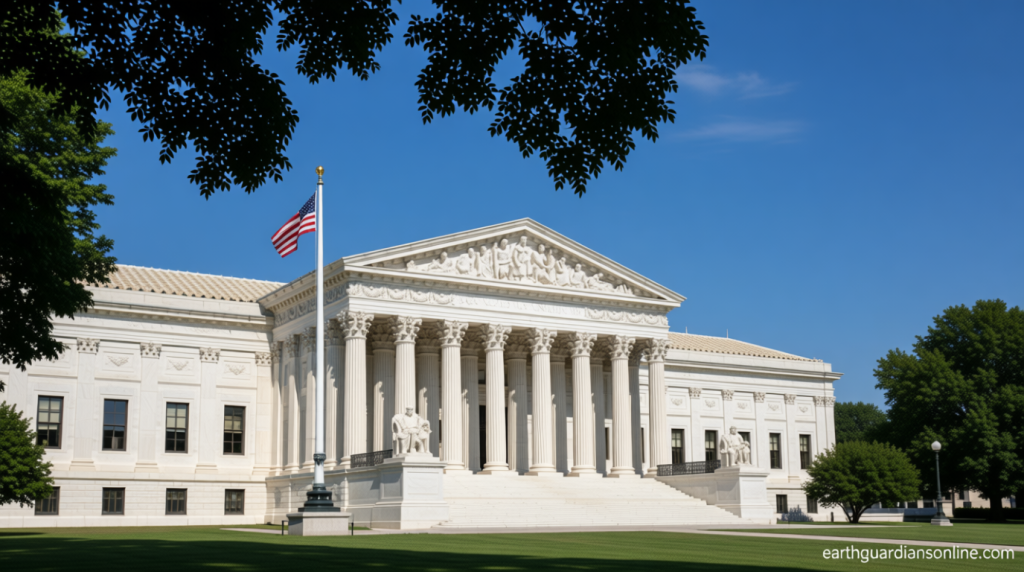
Supreme Court Turns Toward Explosive Final Month with Trump’s Policies in Focus
Supreme Court turns toward an explosive – As the Supreme Court prepares to conclude its term, the justices are entering an intense phase that could dramatically reshape the political landscape. The focus keyword, “Supreme Court turns toward an explosive,” underscores the heightened tension surrounding key cases that directly impact Donald Trump’s agenda. With a critical deadline approaching in late June, the court’s upcoming rulings will determine the future of immigration, voting rights, and executive authority. Trump, who has been actively involved in nearly all these cases, is determined to push his policies through, even as the justices face pressure to maintain judicial independence. The phrase “Supreme Court turns toward an explosive” encapsulates the stakes of this final stretch, where the president’s priorities hang in the balance.
Birthright Citizenship and Executive Power: A Volatile Combination
One of the most anticipated cases involves the president’s attempt to redefine birthright citizenship, a legal principle that has governed the United States for over a century. Through an executive order, Trump seeks to limit automatic citizenship for children born to undocumented immigrants, framing it as a systemic flaw. This move has sparked fierce debate, with the court’s decision potentially altering immigration policy for years. The phrase “Supreme Court turns toward an explosive” is evident in the urgency surrounding this case, as it could set a precedent that reshapes the rights of millions.
“They will be ruling against us on birthright citizenship, making us the only country in the world that practices this unsustainable, unsafe, and incredibly costly disaster,” Trump declared on social media in mid-May.
Trump’s frustration with the court has grown since the February ruling that overturned his emergency tariffs. At that time, he criticized the justices who dissented, calling them an “embarrassment to their families,” which highlights his tendency to use public rhetoric when faced with setbacks. This pattern suggests that the court’s decisions, particularly those related to birthright citizenship, may provoke even stronger reactions from the president. However, some legal analysts argue that the court’s conservative majority has already aligned with Trump’s vision of expanded executive power, making his influence more tangible than ever.
Testing the Court’s Resolve: Firing Officials and Independent Agencies
Amid the surge in cases, two high-profile appeals involving the firing of officials have drawn significant attention. The first case centers on Lisa Cook, a Federal Reserve governor accused of misrepresenting her primary residence. The administration is pushing to remove her, citing procedural violations, while the second involves Rebecca Slaughter, a Federal Trade Commission member who contends that the president must provide a valid reason for dismissal. These cases are not merely about individual tenure but also about the court’s stance on limiting political interference in federal agencies.
The Supreme Court turns toward an explosive month as these cases test the justices’ commitment to judicial independence. While the court initially seemed supportive of Trump’s efforts in January, its position became more uncertain in December. This shift reflects the broader ideological realignment within the court, with Chief Justice John Roberts emerging as a pivotal figure in expanding presidential authority. The phrase “Supreme Court turns toward an explosive” is particularly relevant here, as the justices are now under scrutiny for their willingness to prioritize political agendas over traditional constitutional safeguards.
Legal experts note that the court’s upcoming decisions may reveal its ideological leanings. Ben Wizner, deputy legal director of the ACLU, remarked, “This court has a long-term ideological project, and some of these cases are squarely within it. But I do think the court has lines. And I think we’ve seen some of those already.” His comments highlight the tension between the justices’ role as impartial
