
The president’s Trump Accounts didn’t initially plan for foster kids — until the first lady’s office stepped in
The President’s Trump Accounts Didn’t Initially Plan for Foster Kids — Until the First Lady’s Office Stepped In
A Shift in Focus
The president s Trump Accounts didn – President Donald Trump’s Trump Accounts, introduced earlier this year, were designed to offer Americans a form of individual retirement savings. However, child welfare advocates quickly pointed out a potential oversight: the program’s rules might exclude children in foster care. The accounts require an “authorized individual” to open them, typically a parent or legal guardian, but foster youth often have a shifting set of caregivers. This raised concerns about whether such children would be left without access to the benefits.
“Foster youth would have been left out. What would it have meant if you come into care? Who’s your custodian? Who signs up? Who is going to open the account for you? What does it look like if you go back home?”
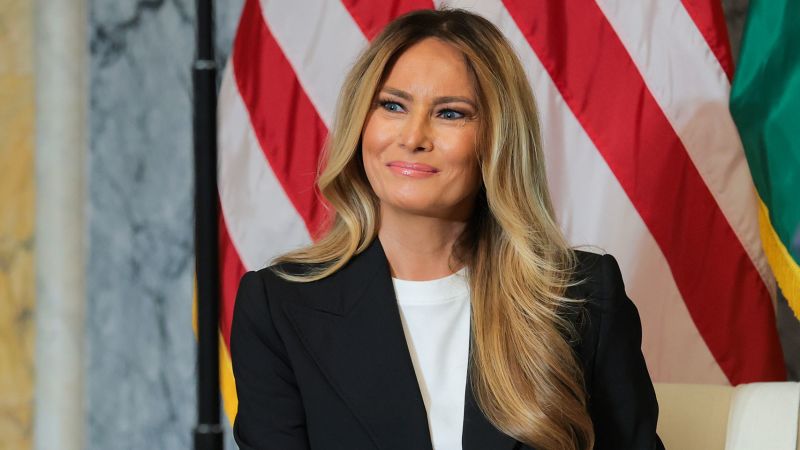
Sixto Cancel, CEO of Think of Us, a child welfare advocacy group, highlighted these issues when raising them with the office of First Lady Melania Trump. While Trump’s initiatives had traditionally focused on broader political themes, her second term has seen a renewed emphasis on supporting vulnerable populations, including foster children. Cancel noted that the first lady’s team responded swiftly to the challenge, demonstrating a commitment to addressing the gap.
Collaboration Across Levels of Government
Over the past several months, Melania Trump’s office worked closely with state governments and the Treasury Department to revise the program’s framework. This collaboration led to the introduction of “Fostering the Future Accounts,” which provide updated guidelines for state child welfare agencies and foster youth representatives to manage accounts for children in care. The effort underscores how the first lady’s influence has extended into policy areas that align with her advocacy goals.
On Thursday, Trump made the announcement alongside Treasury Secretary Scott Bessent at the Department of Treasury. The event marked a significant moment, as it highlighted the administration’s willingness to adapt policies for those in need. Bessent emphasized the broader implications of the accounts, stating that they could help reduce the challenges faced by youth aging out of the foster care system.
Program Details and Eligibility
The Fostering the Future Accounts are now open to any U.S. citizen with a valid Social Security number. This includes children who are currently in foster care, as well as those who may eventually return to their families. The accounts officially launch on July 4, offering a structured way for eligible youth to save for the future. However, the program’s rules differ from the original Trump Accounts in key ways.
For the standard Trump Accounts, children born between January 1, 2025, and December 31, 2028, are eligible for a one-time $1,000 pilot contribution from the federal government. Foster children, however, receive this contribution through a different mechanism. According to the Internal Revenue Service, a parent or foster parent can choose to have the child’s account funded if they anticipate the child will be their “qualifying child.” This approach allows for flexibility, as it accounts for the dynamic nature of foster care placements.
Additionally, states have the option to contribute federal survivor benefits and unobligated Temporary Assistance for Needy Families (TANF) funds into these accounts. This provision ensures that even children who may not have a permanent parent can benefit from the program. When foster youth reach the age of 18, they will gain access to the funds, a feature that Trump described as a “first step toward personal independence.”
The Path to Financial Stability
Approximately 400,000 American youth are in foster care, according to the U.S. Department of Education. For many, leaving the system means facing significant hurdles. Bessent noted that one in five of these children could end up homeless by the time they leave foster care, and only half attain gainful employment before turning 24. The Fostering the Future Accounts aim to address these challenges by providing a financial safety net.
Cancel, who once experienced the foster care system firsthand, praised the program’s impact. “To have that as a high schooler — to think, ‘I can use that to get an apartment’ — brings you a peace of mind that is unexplainable,” he said. This sentiment reflects the broader goal of the initiative: to empower foster youth with the tools to achieve self-sufficiency. The accounts, he argued, could serve as a critical lifeline, especially for those who may struggle to secure stable housing or employment after emancipation.
Despite the program’s progress, challenges remain. As of now, 23 states — all led by Republican governors — have opted into the initiative. Advocacy groups and Melania Trump’s office continue to push for broader participation, ensuring that the benefits reach as many children as possible. The Treasury Department has also committed to providing additional guidance and support to state agencies, helping them navigate the complexities of implementation.
The revised accounts represent a bridge between federal policy and local action, creating a more inclusive financial system for children in need. While the Trump Accounts were initially conceived for a general audience, their adaptation for foster youth highlights the importance of tailored solutions. Cancel’s advocacy played a pivotal role in this shift, proving that even the most unexpected voices can influence policy direction.
For families and advocates, the program offers hope. It not only provides a way to save for the future but also acknowledges the unique circumstances of foster children. By allowing state agencies and representatives to open accounts on behalf of these youth, the initiative ensures that no child is left behind. This marks a turning point in how the Trump administration approaches child welfare, blending fiscal responsibility with social impact.
As the program prepares to launch on July 4, its success will depend on how effectively it addresses the needs of foster youth. With support from multiple levels of government and a growing coalition of advocates, the Fostering the Future Accounts stand as a testament to the power of collaboration. For the children who stand to benefit, this could be more than just a financial tool — it could be a step toward independence and a brighter future.
