
Trump alleged China took US election data. Its leader is still planning for a lavish state visit to the US
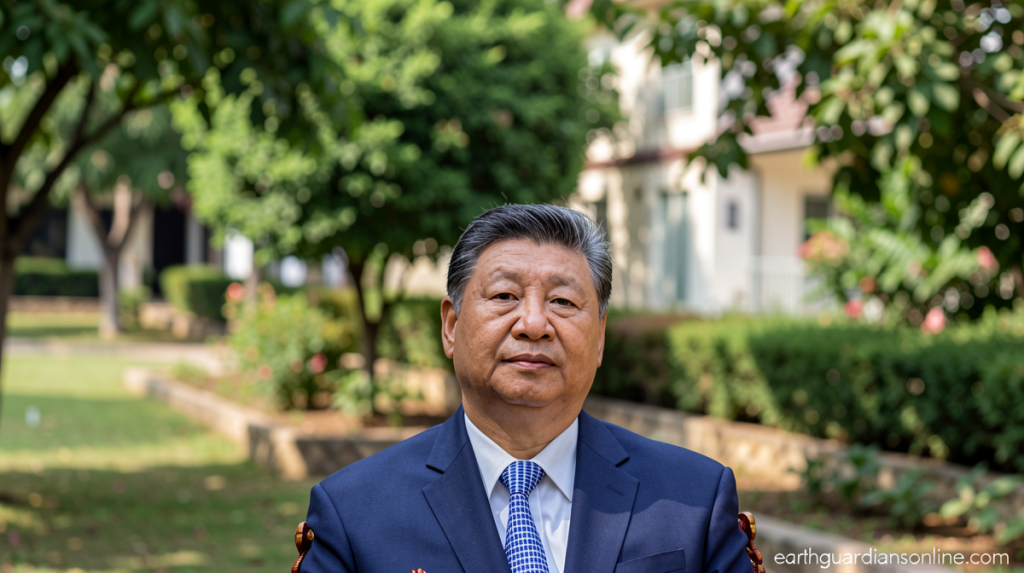
Contradictory Signals: Accusations Meet Diplomatic Warmth
Trump alleged China took US election – Typically, a severe allegation leveled by the American President against a global superpower signals a significant deterioration in bilateral relations. However, this week presented a complex scenario where President Donald Trump publicly accused Beijing of massive electoral interference while simultaneously maintaining a course toward a grand diplomatic celebration. Speaking on Thursday from the East Room, the Commander-in-Chief announced that the People’s Republic of China had executed what intelligence sources consider the most substantial theft of voting information ever recorded. This declaration appeared to stem from a personal grievance, as Trump suggested that, according to a minority perspective within the intelligence community, Beijing had actively sought to weaken his prospects during the 2020 presidential race.
During his address, the President articulated his reasoning for why the Asian nation would target his campaign. He asserted that the Chinese leadership desired for the American presidency to change hands because they recognized his strategic acumen. Specifically, Trump noted that he had imposed heavy financial levies on Chinese goods and simultaneously strengthened the nation’s armed forces to unprecedented levels. Despite the gravity of these statements, which were neither entirely novel nor fully substantiated by immediate proof, the response from Chinese authorities was swift and sharp. Nevertheless, the President did not couple his accusations with any immediate threats of retaliation or sanctions against the Chinese government.
Administrative Actions and Diplomatic Continuity
While the political rhetoric was heated, the machinery of government continued to operate with surprising consistency regarding high-level engagements. By Friday, a representative from the White House confirmed that preparations for Chinese leader Xi Jinping’s upcoming state visit to Washington were proceeding without delay. The visit is scheduled to take place in two months, marking another chapter in the evolving relationship between the two nations. When questioned about potential consequences stemming from the alleged historic data breach, officials remained vague, offering no concrete details on whether punitive measures were being considered.
In a separate development that highlighted Trump’s forward-looking approach to international cooperation, the President spoke at a reception for the World Cup in New York. He floated an innovative concept for future tournaments, suggesting that the United States should team up with Beijing rather than relying solely on its North American neighbors. Crediting the suggestion to FIFA President Gianni Infantino, Trump explained the logistical benefits of such a partnership. He remarked, “We do China, United States. So you have a short flight in between games. The players would love that.” Notably, this optimistic vision for global sports did not reference his recent claims regarding election tampering.
Re-litigating the Past While Building the Future
The divergence in Trump’s behavior toward different entities reveals a deeper narrative. While he accused American intelligence officials of hiding crucial information about China from him during his previous term, he simultaneously tasked four distinct federal agencies with conducting thorough investigations. His instructions were clear: those responsible for any alleged cover-up should be dismissed, and criminal proceedings should be initiated if warranted. This dual approach underscores his ongoing fixation on revisiting the 2020 election results, which he ultimately lost to Joe Biden, while also demonstrating a pragmatic desire to maintain stability with Xi following a challenging initial year back in the Oval Office.
Trump’s recent interactions with Xi have been characterized by an effort to build personal rapport through face-to-face meetings. At the NATO summit held in Turkey last week, the President expressed his admiration for his Chinese counterpart. He stated, “I’m a big fan of President Xi,” and commended Beijing for largely remaining neutral during the conflict in Iran, despite early concerns that the Asian power might supply military aid to Tehran. This warmth contrasts with the formal denial issued by China’s foreign ministry following Trump’s Thursday night speech. Spokesperson Lin Jian emphasized that Beijing had “no factual ground” for the accusations, reiterating that China follows a policy of non-interference in the internal matters of other nations.
“China adheres to the principle of non-interference in other countries’ internal affairs. We have no interest in interfering in the US elections and have never done so,” Lin Jian said, adding that the US should reconsider its actions to better support bilateral ties.
Stabilizing the relationship has become a central goal for the administration after a difficult period marked by trade disputes and tariff conflicts. The diplomatic calendar is already packed with significant events. Xi previously hosted Trump for a ceremonial state visit in Beijing this past May, and the two leaders are set to convene again in Washington during late September. Furthermore, Trump has indicated a possibility of traveling to China this November to attend the Asia-Pacific Economic Cooperation summit in Shenzhen. Conversely, Xi might travel to the United States to participate in the Group of Twenty summit that Trump is organizing in Miami.
Throughout his numerous engagements with Xi over the last twelve months, Trump has consistently avoided bringing up Chinese cyber activities in public forums, even though FBI experts are currently examining several sophisticated espionage campaigns targeting American
