
Trump says US “couldn’t build a plane like this” as Qatari-gifted Air Force One embarks on inaugural flight
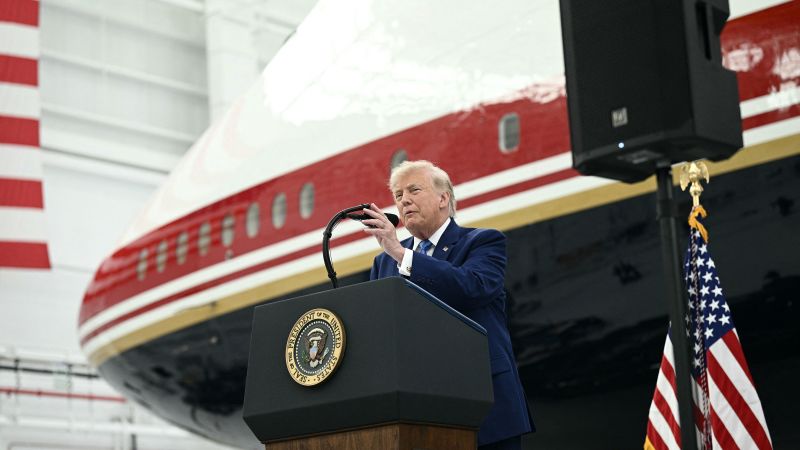
Trump Praises Qatar-Gifted Air Force One, Calls It “Unmatched in Luxury”
Trump says US couldn t build – President Donald Trump highlighted the debut of the newly configured Air Force One, a presidential aircraft provided by Qatar, during a recent event at Joint Base Andrews. Speaking to reporters ahead of his journey to North Dakota for an America 250 celebration, he emphasized the plane’s advanced features and opulence, asserting that the United States “couldn’t build a plane like this.” This statement underscored his admiration for the Qatari-funded aircraft, which is set to begin its operational debut.
“I’m excited about the first flight,” Trump remarked, noting the plane’s completion and its tailored design for a president. “They made it appropriate for a president, that means the security and all of the different bells and whistles they put on. Very complex now, but it’s really quite something,” he added, his tone reflecting both pride and curiosity about the aircraft’s capabilities.
While the United States continues to develop its own next-generation planes, Trump will rely on this Qatari-supplied jet until the new American-built models are ready in approximately two years. The president acknowledged that the Qataris had invested heavily in the project, stating, “Frankly, we couldn’t build a plane like this because we wouldn’t be willing to spend the kind of money necessary. They spent top dollars,” he said, highlighting the financial commitment from the Gulf nation.
The inauguration of the aircraft marks a significant shift in the presidential transport fleet, as three modified Boeing 747-800s are now being prepared as VC-25Bs. This transition replaces the aging Boeing 747-200, which has served as Air Force One since 1990. The Qatar-gifted plane, one of the three, is designed to fill the gap until the final two Boeing-modified aircraft are completed, a timeline that aligns with the expected launch of the new fleet.
White House officials recently posted social media messages bidding farewell to the retired 747-200, which has been a staple of presidential travel for over three decades. The aircraft, originally introduced in the early 1990s, has undergone numerous upgrades but is now being phased out as newer models take over. The three VC-25Bs, including the Qatar-provided one, represent a modernization effort to enhance security, technology, and comfort for the U.S. president.
Trump’s remarks during the unveiling event at Joint Base Andrews underscored the aircraft’s luxurious appeal. Describing it as “the world’s most luxurious plane,” he praised its design and amenities, which include state-of-the-art communication systems, reinforced security protocols, and a customized interior. The Qatar gift, however, is not just about aesthetics; it symbolizes a strategic collaboration between the U.S. and Qatar, with the latter contributing significant resources to the project.
The Boeing 747-800, chosen for its size and versatility, has been adapted to meet the demands of high-level travel. Its modifications include advanced avionics, enhanced fuel efficiency, and upgraded seating arrangements. The two additional U.S.-built planes, currently in the development phase, are expected to incorporate similar features, ensuring a seamless transition for the presidency.
Historically, Air Force One has been a cornerstone of American presidential mobility, evolving over the years to reflect technological advancements and security needs. The 747-200, for instance, was the first to be designated as the official presidential aircraft, a role it fulfilled for nearly three decades. Its replacement, the 747-800, marks a new era with improved capabilities and a more sophisticated layout.
Trump’s reliance on the Qatar-gifted plane has sparked discussions about the role of international partnerships in U.S. military and diplomatic operations. While some view the donation as a gesture of goodwill, others question whether it reflects a strategic shift in funding priorities. The president’s comments, however, suggest a focus on the aircraft’s performance and design rather than its origin.
As the new fleet prepares for service, the transition is expected to streamline presidential travel logistics. The Qatar-provided jet, now in operation, will serve as a temporary solution until the U.S.-built models are ready. This interim arrangement highlights the importance of maintaining a continuous presidential transport capability, even as new technology is developed.
The unveiling of the aircraft at Joint Base Andrews was a key moment in the transition, with officials showcasing the plane’s advanced features to the media. The event also provided an opportunity to discuss the broader implications of the fleet’s modernization, including its impact on national security and diplomatic relations. Trump’s enthusiasm for the project has been consistent, framing the new plane as a symbol of American leadership and innovation.
While the U.S. has traditionally managed its presidential aircraft, the Qatar donation has added a unique dimension to the program. This collaboration has not only accelerated the availability of the new planes but also reinforced Qatar’s growing influence in international affairs. The president’s comments during the event reflect a blend of personal satisfaction and recognition of the donor’s contribution.
Experts note that the Qatar-gifted plane is a temporary measure, allowing the U.S. to maintain its presidential travel operations without interruption. The two Boeing-modified aircraft, which are expected to be completed within the next two years, will eventually replace the current fleet, ensuring long-term capabilities for the nation’s leaders. Until then, the Qatar-provided jet will serve as a critical asset, bridging the gap between the old and new systems.
The significance of this transition extends beyond the immediate operational needs. It raises questions about the balance between domestic manufacturing and international collaboration in critical infrastructure projects. Trump’s assertion that the U.S. “couldn’t build a plane like this” has reignited debates about funding priorities and the role of private versus public investment in military aviation.
As the aircraft embarks on its inaugural flight, the focus shifts to its performance in real-world scenarios. The journey to North Dakota will serve as a test of its reliability, comfort, and security, with Trump’s team closely monitoring the experience. The success of this plane could influence future decisions about the presidential fleet, potentially setting a precedent for further international partnerships.
White House officials have taken to social media to announce the departure of the retired 747-200, marking the end of an era in presidential travel. The farewell posts, while brief, highlight the emotional and historical weight of the aircraft, which has been a trusted companion for numerous leaders. The Qatari-gifted jet, in contrast, represents a bold step into the future, blending cutting-edge technology with a touch of global diplomacy.
This developing story is likely to see further updates as the transition unfolds. The new fleet’s readiness will depend on the progress of the Boeing modifications and the integration of the Qatar-provided plane into the presidential logistics network. Meanwhile, the public and media will continue to follow the evolution of Air Force One, a symbol of presidential power and national prestige.
Ultimately, the inauguration of the Qatar-gifted aircraft reflects a broader trend in modern governance: the strategic use of international resources to bolster domestic capabilities. Trump’s comments during the event not only celebrated the plane’s debut but also reaffirmed the importance of global alliances in supporting the U.S. government’s needs, even in the realm of luxury travel.
