
Trump’s advanced age and threats to his life serve as reminders of his own mortality
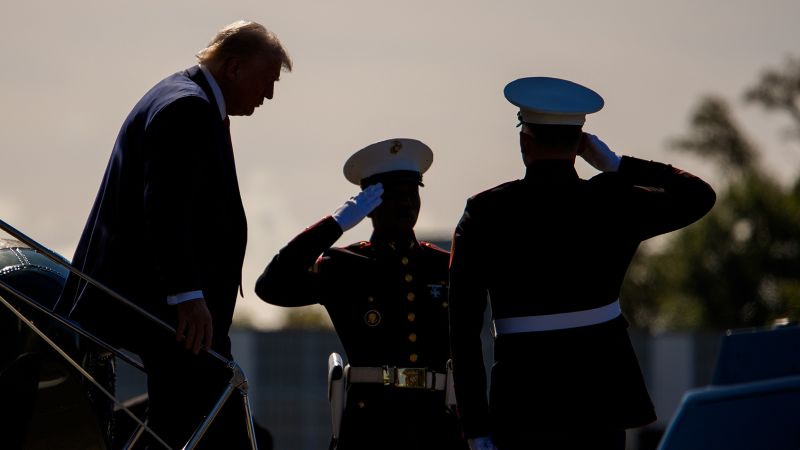
Trump’s advanced age and threats to his life serve as reminders of his own mortality
A Check-Up with More Than Just Checkmarks
Trump s advanced age and threats – As President Donald Trump concluded his recent hospital visit Tuesday, he asserted that the physical evaluation had gone “PERFECTLY,” signaling his confidence in his health. Yet, this declaration seems unlikely to allay lingering concerns about his well-being. Even as he continues to present himself as a vibrant leader, his remarks occasionally hint at a deeper awareness of his time on Earth. During an event in the East Room earlier this year, he mused, “I don’t know how long I’ll be around,” a reflection that underscored the fragility of his position. “I have a lot of people gunning for me,” he added, framing his mortality within the context of personal security.
The Silent Shadows of Health Concerns
Trump’s visit to Walter Reed National Military Medical Center marked his third such appearance since taking office as the oldest president in U.S. history. While the White House described the assessment as “routine annual dental and medical evaluations,” the timing of the exam—just weeks after he had already seen a dentist in Florida twice this year—raised eyebrows. Despite his team’s insistence on his boundless energy and sharpness, visible signs of aging, such as leg swelling and hand bruising, have become more frequent. These moments, when he appears to doze during meetings, are often brushed aside with characteristic defiance, yet they reveal an undercurrent of vulnerability.
The Weight of Time and Threats
Presidential health disclosures are not mandatory, which means every statement is a calculated choice. Trump’s administration has consistently framed him as a resilient figure, but recent events have exposed cracks in that narrative. The repeated attempts on his life by would-be assassins, combined with his advancing years, have served as stark reminders that even the most formidable leaders are not immune to the passage of time. This year alone, two individuals close to him—Japanese Prime Minister Shinzo Abe and conservative activist Charlie Kirk—were slain by lone gunmen during public appearances, highlighting the precariousness of his position.
On Saturday, the Secret Service acted swiftly, shooting and killing a man who fired at officers at a checkpoint near the White House while Trump was inside. The incident underscored the constant security threat he faces, a reality he often references but rarely lets overshadow his public image. During a recent press event, he emerged from a briefing room in a tuxedo, his composure unshaken despite a panic-filled dinner earlier that evening. “It’s a dangerous life,” he shrugged, as if the near-miss with a gunman at the event’s venue were just another obstacle in his routine.
From Strength to Self-Reflection
While Trump’s public persona emphasizes vigor and determination, private moments reveal a more introspective side. A comment made during a White House welcome for King Charles III last month offered a glimpse into his thoughts on aging. Citing his parents’ 63-year marriage, he quipped, “That’s a record we won’t be able to match, darling,” as he acknowledged the brevity of his own time. This brief admission, though framed with his signature humor, signaled a shift in how he perceives his mortality.
Historically, presidents have often concealed health challenges to maintain a facade of invincibility. Trump’s own physician, Harold Bornstein, once declared in 2015 that he would be “the healthiest individual ever elected to the presidency” if Trump won office. However, that assertion now seems like a relic of a past where physical frailty was less visible. Today, the president’s team shrugs off any evidence of decline, even as his movements and speech patterns occasionally betray his age. His frequent comparisons to former President Joe Biden, whom he derides as “Sleepy Joe,” reflect a desire to distance himself from the perception of aging.
The Unseen Battle for Public Perception
Trump’s aides are adept at highlighting his late-night work sessions, such as the weekend when a communications aide reported him in the Oval Office at 9:30 p.m. This habit of showcasing his dedication, even as he declines to acknowledge his own age, has become a cornerstone of his political brand. “I’m much younger than you,” he insisted at a Florida retirement community this month, a statement that rang hollow to many who had watched his stamina wane over the years. Yet, his insistence on this image of youth persists, despite the growing frequency of his physical limitations.
His approach to health has also evolved. While his earlier public statements about vitality were unchallenged, the recent focus on his mortality has prompted a more nuanced conversation. The president’s team still promotes him as a leader with unyielding energy, but the subtle hints of aging have grown more pronounced. His occasional pauses during meetings, the way he moves with deliberate effort, and the visible fatigue in his voice all suggest a leader grappling with the reality of his advancing years.
Legacy and Vulnerability
As Trump continues to navigate the complexities of his presidency, the interplay between his public image and private vulnerabilities becomes more evident. The repeated threats to his life, both from foreign adversaries and domestic critics, have created a backdrop of uncertainty. Iran, a nation he is currently at war with, has long plotted against him, while his own team has faced sudden tragedies. These events have not only shaped his security protocols but also deepened the public’s scrutiny of his health.
Even as his team downplays any signs of physical deterioration, the president has allowed moments of self-awareness to slip through. His comments on aging and mortality, while often framed as lighthearted quips, reveal a leader who is no longer immune to the inevitability of time. Whether it’s the bruises on his hands or the occasional moment of drowsiness, these details serve as quiet reminders that his invincibility is a carefully maintained illusion. The balance between projecting strength and acknowledging vulnerability has become a defining aspect of his presidency.
Trump’s journey from a candidate who once promised to be the “healthiest ever elected” to a leader now contemplating his own legacy is a testament to the passage of time. While his public appearances continue to exude confidence, the underlying narrative of his mortality has taken root. The threats to his life, both real and perceived, have become a constant companion, ensuring that even in moments of triumph, the specter of impermanence looms large. As he faces the challenges of his third term, the interplay between his physical condition and political resolve remains a compelling story—one that is far from over.
