
Fidel Castro’s daughter has no love for the Cuban regime but warns against underestimating it
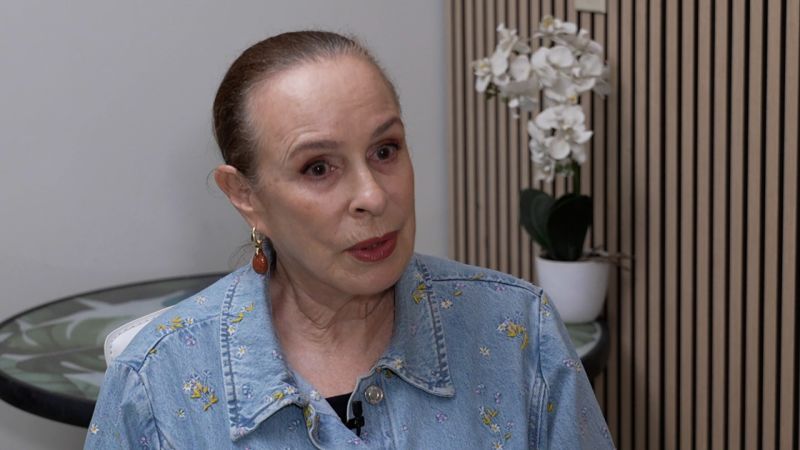
Fidel Castro’s daughter has no love for the Cuban regime but warns against underestimating it
Fidel Castro s daughter has no love – Alina Fernández, the daughter of Fidel Castro, has long harbored a critical view of the Cuban government. Despite her personal connection to the leader, she recalls her childhood memories with a sense of distance, shaped by the relentless presence of Castro’s public persona. Growing up in Havana, her earliest recollections centered around the endless speeches her father delivered on television, a staple of daily life that often left her longing for something more mundane. “We would gather around the TV, waiting for him to finish speaking so we could finally watch our cartoons,” she recounted in a recent CNN interview. “That’s how I was raised.” Yet, as she matured, her perspective on Castro’s influence evolved, revealing a complex relationship that is far from the idealized image many associate with his rule.
From Family to Foe
Fernández’s understanding of her father’s role in her life began to shift when she discovered his identity as her biological parent. At the age of 10, she officially learned the truth, a revelation that felt less like a shock than a confirmation of what she had always sensed. “My mother told me that the man who visited our home every evening was my father,” she said. “It wasn’t a big surprise.” Castro, whom she later recognized as her father, had been a frequent guest in their household during the 1950s, a time marked by political upheaval and personal turmoil. The two met during the revolution, embarking on a relationship that would shape the trajectory of both their lives. While Fernández’s birth in 1956 symbolized the beginning of Castro’s era of power, her mother’s affection for him remained steadfast, even as Castro’s political dominance grew.
“He was an assiduous visitor,” Fernández reflected. “But what surprised me was that everyone seemed to know before I did.”
Her mother’s devotion to Castro, despite his absence from their lives for much of the early years, left Fernández puzzled. “My mother, for being very revolutionary, and I, for being very counterrevolutionary,” she said, highlighting the ideological divide that permeated her family. While Castro’s speeches and revolutionary fervor defined the nation, Fernández saw a different reality. “As a child, I could already tell that the glory and the rhetoric didn’t match the everyday struggles,” she noted. This early disillusionment would later fuel her decision to oppose the Cuban regime.
Exile and the Threat of US Action
Living in Miami, Fernández has become a vocal critic of the Cuban government, yet she remains cautious about the potential consequences of American intervention. The Trump administration’s aggressive stance toward Havana has raised concerns, and she believes the United States risks overlooking the resilience of the Cuban regime. “The current rhetoric against Cuba is more about pressure than preparation,” she said. “They keep saying an invasion is imminent, but we’ve been in this state for 67 years.” Her warning echoes that of Cuban President Miguel Díaz-Canel, who has described any US military strike as a “bloodbath.” Fernández agrees, emphasizing that the regime’s willingness to place civilians in harm’s way is a critical factor in its survival.
“We know these regimes put civilians on the front line,” she said. “When there’s military or political violence, it’s very worrying. I’m sure they are prepared. I don’t know how they will respond.”
Her mother, who passed away in 2015, was a symbol of unwavering loyalty to Castro, a trait that Fernández finds hard to grasp. “She loved him with all her heart, even though he was often absent,” she explained. “I still can’t fully understand that.” Her mother’s affection for Castro, combined with the family’s intimate connection to his legacy, created a backdrop of both admiration and resentment. Fernández’s journey from a child of the revolution to an exile advocating for change is a testament to the generational divide in Cuba.
Why She Left Cuba
Fernández’s decision to leave Cuba in 1993 was driven by her desire to protect her daughter from the same hardships she endured. “I realized that raising my child in a system that oppresses its own people would be difficult,” she said. “Someone pointed it out to me: I was subjecting my daughter to the same experiences I faced.” This epiphany led her to relocate to Miami, a city she describes as the “only comfortable place” she has ever known. Despite the vibrant anti-Castro community, she insists she doesn’t feel unique. “I feel like every other Cuban,” she said. “I’m just another woman who chose exile, another victim of the regime.”
Her home in Miami, a modest duplex adorned with colorful wallpaper and folk art, reflects her current identity as a Cuban exile. Yet, she often reflects on her past, particularly the tension between her mother’s revolutionary zeal and her own counterrevolutionary instincts. “There are moments when you notice things as a child, and others when you don’t,” she said. “But from a young age, I saw that the ideals Castro promoted didn’t always align with the reality people lived.” This realization, she believes, was the catalyst for her growing disillusionment with the Cuban government.
The Influence of Cuban-American Politics
Fernández has also criticized the role of Cuban-American leaders in shaping US policy toward Havana. While she acknowledges Donald Trump’s impact, she argues that the more bellicose tone in recent years is largely due to Secretary of State Marco Rubio. “I believe it owes far more to the presence of Marco Rubio in the government than to President Trump himself,” she said. The indictment of her uncle, Raúl Castro, has further fueled her skepticism, seeing it as a strategic move to justify broader US actions. “It’s a fig leaf for more intense measures,” she remarked, underscoring her belief that the Cuban regime remains a formidable force.
As she watches events unfold from Miami, Fernández remains focused on the legacy of her father and the lessons of the past. Her mother’s love for Castro, despite his shortcomings, serves as a reminder of the deep emotional ties that bind many Cubans to the revolution. Yet, Fernández’s journey shows that not everyone is bound by the same loyalty. “My mother’s devotion was incredible,” she said. “But I don’t see what she saw in him. He wasn’t the one who loved her as much as she loved him.” Their affair, which began during the revolution, was a source of both passion and conflict, a dynamic that shaped her early life and later fueled her opposition to the regime.
In an era of shifting political tides, Fernández’s perspective offers a unique insight into the Cuban experience. While she does not share her father’s ideological beliefs, she recognizes the power of the Cuban government, a reality that continues to challenge both the island and its exiles. “I’ve always lived according to my truth,” she said. “Leaving Cuba was a choice, but it was also a necessity.” Her voice, though critical, carries the weight of a generation that once revered Castro, now navigating the complexities of a divided homeland. As the Trump administration inches closer to military action, Fernández’s warnings serve as a reminder that the Cuban regime, for all its flaws, remains a resilient entity worth taking seriously.
