
Trump’s ICE problem is back and risks spiraling out of control
Immigration Enforcement Crisis Returns to Trump Administration
Deadly Incidents Spark Political Reckoning
Trump s ICE problem is back – Among the most consequential moments of President Donald Trump’s second presidency, few rival the aftermath of federal agents fatally shooting two demonstrators opposing immigration enforcement in Minneapolis during January. That tragedy prompted significant administrative adjustments, with two senior officials responsible for overseeing the crackdown stepping down, notably including Homeland Security Secretary Kristi Noem. The White House quietly conceded that enforcement operations had escalated beyond reasonable bounds.
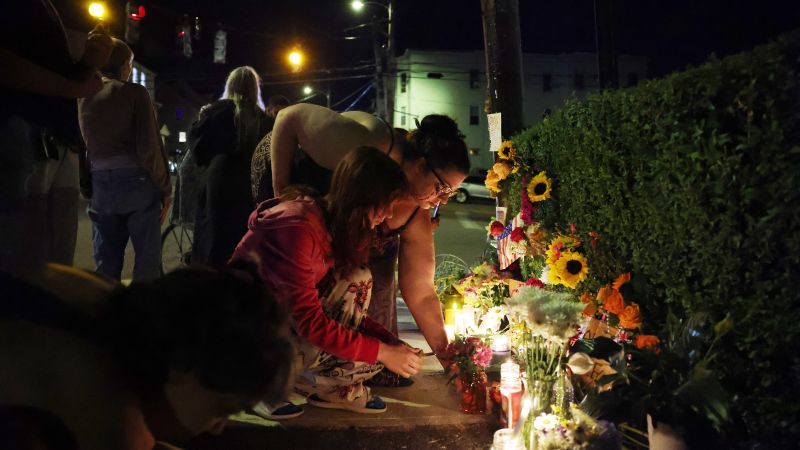
Public opinion data confirmed the political damage inflicted by those deaths. Yet the administration now faces a similar crisis emerging, arriving at a particularly sensitive political juncture. Following a period of relative calm regarding major deportation controversies, federal agents have taken two lives this month—first in Texas last week, followed by another incident in Maine on Monday.
Similar to the Minneapolis cases involving Renee Good and Alex Pretti, these recent episodes threaten to challenge both public patience with Trump’s immigration priorities and the government’s institutional credibility. The Department of Homeland Security has a pattern of making questionable or outright incorrect statements about such incidents, and scrutiny is intensifying once again.
Questionable Official Accounts
Particularly noteworthy regarding the Maine shooting is that DHS declined to assert the deceased individual posed any threat to officers. Instead, officials merely stated he was running from the scene and that the Immigration and Customs Enforcement officer was “fearing for public safety.” Such reasoning typically falls short of justifying lethal force.
The political ramifications of these incidents warrant careful examination. Minneapolis clearly left a lasting impression on public sentiment. Despite Trump’s notable achievement in bringing illegal border crossings down to unprecedented levels, immigration remains a vulnerability for his administration. A Reuters-Ipsos survey conducted last month revealed that 55 percent of Americans disapproved of Trump’s handling of immigration compared to 37 percent who approved.
Furthermore, respondents indicated immigration policy was heading in the wrong direction by a 51 percent to 35 percent margin. These figures closely mirrored results from a February poll conducted shortly after the Minneapolis killings. Quinnipiac University research demonstrated modest improvement in Trump’s immigration standing since February—moving from a 21-point deficit to a 13-point deficit—but he remained considerably underwater.
ICE Faces Mounting Unpopularity
ICE, whose personnel were involved in both shootings this month, has become increasingly unpopular even prior to these latest incidents. A Marquette Law School survey from May indicated that 61 percent of Americans held an unfavorable view of the agency compared to 36 percent with favorable opinions. This roughly 6-in-10 disapproval rate matched findings from other polling organizations in January following the Minneapolis deaths.
Simply having ICE featured prominently in news coverage appears detrimental to the Trump administration given the agency’s historical unpopularity. Polling data extending back twelve months—long before the Minneapolis incidents—already showed ICE reaching previously unrecorded levels of public disapproval. Americans apparently harbored concerns about deportation execution for an extended period.
The January killings elevated this preexisting concern in ways that proved politically damaging. That represents the central danger posed by the Maine and Texas incidents. While considerable uncertainty remains and these situations differ somewhat from Minneapolis, one critical distinction involves the absence of substantial video documentation. Minneapolis benefited from numerous protesters who recorded the events.
Agents involved in both recent shootings apparently lacked body cameras despite post-Minneapolis initiatives to equip such personnel. The Minneapolis footage not only contradicted initial administration statements but also led Americans to overwhelmingly conclude that immigration agents bore responsibility.
Political Response and Future Implications
Republican Senator Susan Collins of Maine has stated that her state’s shooting “raises sufficient critical questions,” prompting her to request that DHS suspend non-urgent vehicle stops—an action DHS appears to have accepted. Both Collins and Maine Senator Angus King, an independent who aligns with Democrats, are advocating for mandatory body cameras and prohibiting ICE from conducting internal investigations.
It has become increasingly evident that the Trump administration has overextended its deportation program beyond what Americans find acceptable. Public sentiment suggests broad support for immigration enforcement in principle, but concerns about methods and accountability continue growing.
The administration tacitly acknowledged that things had gotten out of hand.
As these situations develop, the political landscape may shift considerably depending on how investigations proceed and whether additional incidents emerge. The administration must navigate these challenges while maintaining its broader immigration objectives.
