
Trump’s proposed 250-foot ‘triumphal arch’ likely poses no risk to aviation, FAA says
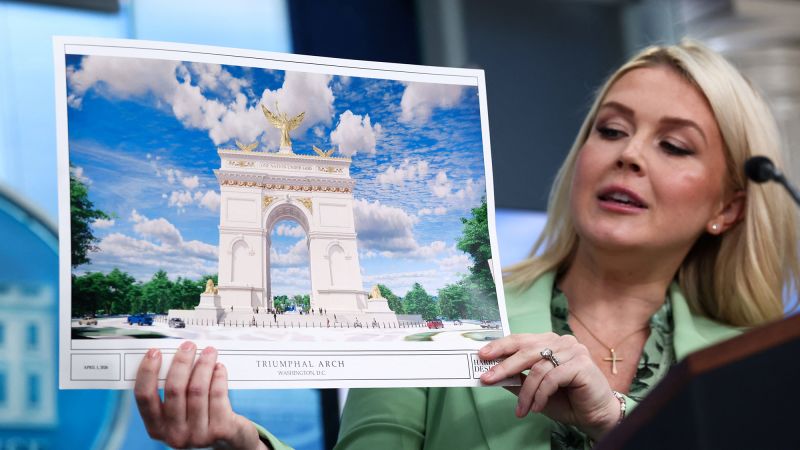
Trump’s 250-Foot Triumphal Arch Likely Safe for Aviation, FAA Says
Trump s proposed 250 foot triumphal – The Federal Aviation Administration (FAA) has concluded that Trump’s proposed 250-foot triumphal arch near Reagan National Airport poses minimal risk to air traffic. The agency’s feasibility study, released recently, states that the structure, located just two miles from the airport, would “have no significant adverse effect on airspace and visual/instrument procedures.” However, the FAA recommends equipping the arch with red obstruction lights to ensure visibility for pilots, given its height. The analysis follows a thorough evaluation of the arch’s potential impact on the surrounding aviation environment, addressing concerns raised by critics and supporters alike.
Structural Details and Location
Trump’s proposed 250-foot triumphal arch is set to be constructed on a grassy area at the end of Memorial Bridge, adjacent to Reagan National Airport. The structure’s total height, when accounting for the elevation of the land, reaches approximately 279 feet. This measurement is critical for determining whether the arch requires obstruction lighting, which is mandated for any building exceeding 200 feet in height. The FAA’s findings suggest that while the arch is unlikely to interfere with flight paths, its prominence in the sky necessitates additional safety measures.
“The study confirms that Trump’s proposed 250-foot triumphal arch would not significantly disrupt air navigation,” FAA officials stated. “Nevertheless, its height demands red obstruction lights to enhance pilot visibility during critical maneuvers.”
FAA Review Process and Timeline
The FAA’s assessment is part of a broader review process that includes analyzing flight paths, air traffic patterns, and potential hazards. While the agency aims to complete such evaluations within 45 to 90 days, the process often extends to nine months due to the complexity involved. The current study was initiated by the Trump administration as part of its efforts to develop federal structures in Washington, D.C. The report emphasizes that its findings are a limited review, not a replacement for a more detailed aeronautical study.
Historical Context and Flight Path Risks
The north approach corridor, where the arch would be placed, has a history of aviation incidents. Last year, a midair collision between an American Airlines plane and a Black Hawk helicopter raised safety concerns in the area. Additionally, a 1982 crash into the 14th Street Bridge during takeoff highlighted the risks associated with navigating near prominent landmarks. The FAA’s analysis suggests that Trump’s proposed 250-foot triumphal arch, though tall, would not add new hazards to this already challenging airspace.
Existing obstructions like the Pentagon and Washington Monument require pilots to execute precise maneuvers. The FAA notes that even with these structures in place, the arch’s design and placement would allow for seamless operations. While the study is reassuring, it acknowledges that the final decision on the arch’s construction rests with the National Capital Planning Commission and the Commission of Fine Arts, which oversee design and architectural projects in the nation’s capital.
Political Implications and Approval Process
Trump’s proposed 250-foot triumphal arch has become a focal point of political debate, with some viewing it as a symbolic gesture of the administration’s legacy. The project now awaits final approval from the Commission of Fine Arts and the National Capital Planning Commission, which have already begun evaluating its merits. Critics argue that the decision-making process could be influenced by political allies, who may prioritize the arch’s visual impact over its potential impact on air traffic safety.
Similar to other Trump initiatives, such as the White House ballroom expansion or the Kennedy Center renaming, the arch is seen as a blend of political symbolism and public infrastructure. The FAA’s findings support its safety, but the final green light will depend on the oversight bodies’ approval. This highlights the intersection of government policy and aviation standards in shaping Washington, D.C.’s skyline.
