
Tulsi Gabbard is resigning as director of national intelligence
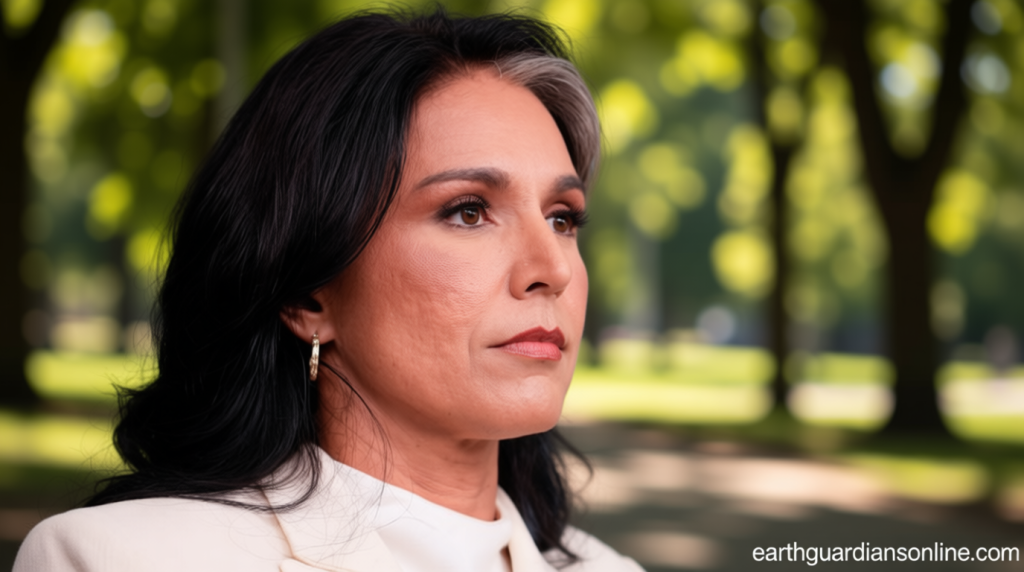
Tulsi Gabbard Steps Down as Director of National Intelligence
Tulsi Gabbard is resigning as director – On Friday, Director of National Intelligence Tulsi Gabbard confirmed her decision to resign from the position, effective June 30, 2026. Her announcement came after months of speculation about her future in the administration, with the White House previously hinting at potential tensions within the intelligence community. In a letter to President Donald Trump, Gabbard outlined her reasons for leaving, emphasizing her family’s needs during a critical time. “I must submit my resignation, effective June 30, 2026,” she wrote, “due to the recent diagnosis of my husband, Abraham, with a rare form of bone cancer.”
A Personal Decision Amid Public Service
Gabbard described the health challenge as a pivotal moment, stating that she could no longer balance her professional duties with the demands of being a supportive spouse. “He faces significant obstacles in the coming weeks and months,” she explained, “and I must step away from my responsibilities to be by his side.” The letter highlighted her commitment to her family, noting that her husband had been a steadfast presence during her career, including her deployment to East Africa as part of a Joint Special Operations mission and her involvement in various political campaigns. “His strength and love have sustained me through every trial,” she wrote, “and I cannot in good conscience ask him to endure this battle alone while I remain in this demanding role.”
“Her wonderful husband, Abraham, has been recently diagnosed with a rare form of bone cancer, and she, rightly, wants to be with him, bringing him back to good health as they currently fight a tough battle together,” Trump wrote on Truth Social, praising Gabbard’s performance and expressing his appreciation for her contributions. “She has done an incredible job, and we will miss her.”
The White House had been quietly discussing Gabbard’s potential exit for several weeks. However, just two weeks prior to her formal resignation, a senior administration official noted that she had been denying any plans to leave. On Friday, Gabbard met with Trump in the Oval Office to formally present her letter, according to a source close to the event. This meeting marked the culmination of her decision, which had been in the works for some time.
Tensions and Controversies During Her Tenure
Despite her recent resignation, Gabbard’s time in the role was characterized by internal disputes and conflicting narratives, particularly concerning the U.S. military actions against Iran. Her statements on the conflict occasionally diverged from the White House’s messaging, leading to scrutiny from Trump and his advisors. One senior official confirmed that officials had grown increasingly frustrated with her approach, especially in the months leading up to the war’s outbreak in late February.
CNN reported in June 2025 that Gabbard’s handling of the Iran situation had become a point of contention. Days before the U.S. launched strikes on Iranian nuclear facilities, multiple West Wing insiders expressed disillusionment with her performance. Trump, in particular, viewed her as “off message,” according to a White House adviser, due to her critical stance on the Israel-Iran conflict. This criticism peaked when Gabbard released a video warning that the world was “closer to the brink of nuclear annihilation than ever before,” accusing “political elites and warmongers” of fueling “fear and tensions between nuclear powers.”
“I think they were very close to having it,” Trump remarked to reporters after the video was shared, suggesting he saw it as a subtle critique of his support for Israel’s attacks on Iran. Many within the administration concurred, with some describing Gabbard’s remarks as a departure from the official narrative.
The conflict between Gabbard and the White House escalated as the war against Iran unfolded. In a congressional testimony less than a month after the initial strikes, Gabbard stated that the operation had “obliterated” Iran’s nuclear enrichment program. However, she did not read this portion aloud during the hearing, a detail that raised questions about her prepared remarks. When asked about the omission, she explained that her “time was run,” indicating a possible shift in her strategic approach.
A Legacy of Leadership and Challenges
Gabbard’s tenure at the Office of the Director of National Intelligence (ODNI) was marked by efforts to enhance transparency and restore credibility to the intelligence community. In her letter to Trump, she acknowledged the progress made but also highlighted the ongoing work required. “While we have made significant strides at the ODNI—advancing unprecedented transparency and reviving the integrity of the intelligence community—I recognize that there is still much to accomplish,” she wrote.
Her resignation comes at a time when several Cabinet members have departed from the Trump administration. Following the ousting of Homeland Security Secretary Kristi Noem and Attorney General Pam Bondi, Gabbard joins Labor Secretary Lori Chavez-DeRemer as the latest to leave. The White House had previously criticized her for contradictions in her messaging, particularly on Iran’s nuclear program. For instance, while Trump and his team justified the war by claiming Iran was rebuilding its capabilities after the June 2025 strikes, Gabbard asserted that the operation had “obliterated” the program, leaving no room for further development.
Gabbard’s remarks were met with mixed reactions. Some analysts praised her for providing a clear assessment of the war’s impact, while others argued that her timing was questionable. The intelligence community had long been divided on the effectiveness of the strikes, and Gabbard’s testimony added another layer to the debate. Her husband’s diagnosis, however, became the central focus of her decision, overshadowing the political tensions that had previously defined her role.
Broader Implications for the Trump Administration
As Gabbard exits the administration, her departure underscores the evolving dynamics within the Trump team. The intelligence chief’s resignation highlights the personal sacrifices made by public servants in high-profile roles, as well as the challenges of maintaining alignment with the executive branch’s priorities. Trump’s swift endorsement of Aaron Lukas as acting director signals a desire to maintain continuity, though the transition may face hurdles given the recent controversies surrounding Gabbard’s leadership.
Her time in the position also serves as a case study in the complexities of managing a Cabinet role during a period of intense geopolitical conflict. While Gabbard aimed to position herself as a critical voice within the intelligence community, her statements occasionally clashed with the administration’s broader strategy. This tension reflects the broader challenges of balancing independent analysis with the need to support the president’s agenda, a task that has become increasingly difficult in recent months.
As the U.S. continues its military engagement in the region, the role of the Director of National Intelligence remains vital. Gabbard’s resignation marks the end of an era for the ODNI, with her legacy defined by both her personal sacrifices and the political challenges she navigated. Her husband’s illness, though a deeply personal matter, has become a symbol of the human side of leadership in the face of national crises.
