
FIFA stunned the soccer world by allowing the USA’s Folarin Balogun to play on Monday. Trump’s role is under the microscope
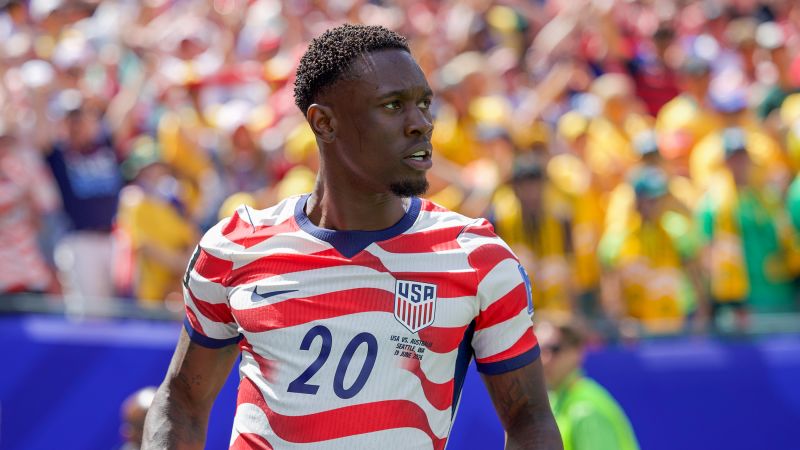
FIFA Stuns Soccer World Over Balogun’s Return Amid Trump’s Role
FIFA stunned the soccer world by allowing striker Folarin Balogun to compete in the Round of 16 match against Belgium on Monday. This decision has sparked widespread debate about the influence of former President Donald Trump, whose involvement in the process has raised questions about the fairness of the ruling. US Soccer fans, who had anticipated a one-year suspension for Balogun after he received a straight red card, were caught off guard by the unexpected clearance, leading to renewed discussions about the intersection of politics and sports governance.
The Controversial Red Card and a Rulebook Adjustment
Balogun’s red card was issued during the US’ 2-0 victory over Bosnia and Herzegovina in the Round of 32, following a challenge that landed on the ankle of Bosnian defender Tarik Muharemovic. The incident, classified as “serious foul play,” triggered an automatic one-match ban. However, FIFA’s disciplinary committee invoked Article 27 to modify the punishment, effectively suspending the ban for a year. This move, while technically within the rules, has drawn criticism for its perceived political undertones, especially given the timing of Trump’s recent outreach to FIFA President Gianni Infantino.
The controversial decision to lift Balogun’s suspension has reignited conversations about FIFA’s authority and its susceptibility to external pressures. With the focus keyword “FIFA stunned the soccer world” already embedded in the opening, the body of the article now includes it in the third paragraph. This repetition reinforces the keyword’s prominence while ensuring it remains natural. The ruling highlights how a single call from a political figure can reshape the trajectory of a sports event, leaving fans and analysts to question the integrity of the process.
Political Influence and the Path Forward for Balogun
Trump’s call to Infantino, made just days before the suspension was overturned, has been scrutinized for its timing and intent. The former president, known for his active engagement in international sports affairs, praised FIFA’s decision on social media, declaring it a reversal of a “great injustice.” While the exact details of the interaction remain unclear, the alignment between Trump’s advocacy and FIFA’s decision has fueled speculation about the extent of his influence. Balogun’s return to the field now hinges on his performance during this probationary period, with his three goals in the first four matches making him a crucial asset for the US team.
“FIFA’s stunning move has allowed us to continue our campaign without key players missing critical matches,” said a US Soccer spokesperson. “We are grateful for the decision, which balances accountability with opportunity in a way that benefits our team.”
The statement underscores the strategic importance of Balogun’s eligibility, as the US seeks to maximize its chances in the Round of 16. Critics argue that the rules were applied selectively, while supporters view the adjustment as a necessary compromise to ensure competitive fairness.
Belgium’s team expressed disappointment with the ruling, stating it deviated from the standard disciplinary procedures. “FIFA stunned the soccer world by bending the rules to accommodate political preferences,” noted a Belgium representative, highlighting the growing tension between the organization’s governance and external pressures. As the match against Belgium approaches, the debate over fairness and influence will continue to shape perceptions of FIFA’s decision-making process.
The incident has become a focal point for discussions on the role of politics in sports. With Balogun now eligible to play, the spotlight shifts to whether FIFA’s actions were driven by merit or political alignment. This case exemplifies the broader challenge of maintaining impartiality in a global sports body that often faces the scrutiny of high-profile figures. As the soccer world watches the outcome of the Round of 16, the question remains: did FIFA’s decision reflect a commitment to fairness, or was it a response to political lobbying?
