
Small plane makes hard landing into New York’s East River, officials say
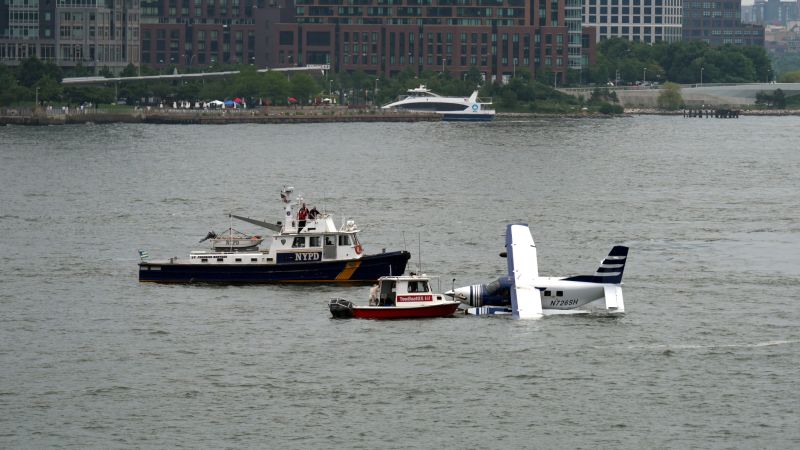
Small Plane Makes Hard Landing into New York’s East River, Officials Say
Small plane makes hard landing into – On Sunday afternoon, a seaplane experienced a difficult landing in the East River, approximately 10 miles east of Manhattan. The incident occurred just after noon, as reported by New York City authorities. The aircraft, which was operating in the vicinity of the Brooklyn-Manhattan boundary, came to rest in the river north of the Williamsburg Bridge, according to the New York Fire Department (FDNY).
The FDNY responded swiftly to the emergency, dispatching teams to assist with the recovery of the eight individuals aboard the plane. Two of the passengers sustained minor injuries during the crash but opted to forgo further medical treatment at the scene. The remaining six were safely evacuated without significant complications. Officials confirmed that the plane landed upright in the water, which helped minimize the risk of a more severe accident.
Emergency services received the initial report at 12:01 p.m., just minutes before the incident. The plane, registered as a Kodiak 100 model, had departed from the East Hampton Airport in Long Island at 11:24 a.m., as per flight records. The aircraft’s owner, whose identity remains undisclosed, is under investigation by the Federal Aviation Administration (FAA). The FAA has stated that the crash may have been caused by a snapped wing strut, which compromised the plane’s stability during the landing.
Audio from Air Traffic Control (ATC) recordings provided a firsthand account of the event. A pilot from a different aircraft, stationed near the crash site, transmitted a mayday signal at the height of the emergency. “Mayday, mayday, mayday,” the pilot said, “Plane down in the water.” The call highlighted the urgency of the situation, as the seaplane was in immediate danger of sinking. As the FDNY crews worked to stabilize the aircraft, two boats were observed approaching the downed plane, possibly to assist with the rescue efforts.
The NYPD helicopter pilot, who was monitoring the situation from the air, relayed updates to the ground team. “It looks like the pilot is OK,” the helicopter operator said, as captured in the ATC.com audio. This reassurance came after the pilot’s initial distress call, which prompted a rapid response. Despite the initial impact, the pilot was able to remain conscious and provide clear communication, which proved critical for the rescue operation.
While the exact cause of the incident is still under review, the FAA has initiated an investigation to determine the circumstances surrounding the hard landing. Preliminary findings suggest that the aircraft’s wing strut fractured due to the rough impact, leading to a loss of control. The FAA’s investigation will examine both the mechanical condition of the plane and the pilot’s actions during the approach and landing.
The Kodiak 100 seaplane, which is commonly used for short-haul flights and water-based operations, was built in the previous year. This information comes from FAA ownership records, which indicate the plane was relatively new at the time of the incident. However, the absence of a publicly listed owner raises questions about the aircraft’s maintenance history and the operator’s preparedness for such an event.
Local authorities have emphasized the importance of the East River’s role in New York’s transportation network, noting that the area is frequently used for both commercial and recreational flights. The crash site, near the Williamsburg Bridge, is known for its heavy maritime and air traffic, which could have contributed to the difficulty of the landing. While no major structural damage to the riverbank was reported, the incident has prompted a review of safety protocols for seaplane operations in the region.
As the plane was towed back to a nearby dock, crews worked to assess the situation and prepare for potential further complications. The FDNY’s efforts were aided by the quick response of the NYPD helicopter, which provided real-time updates and coordinated with ground teams. The successful recovery of all passengers is a testament to the preparedness of emergency services in handling such incidents.
The incident has also drawn attention to the challenges faced by seaplane pilots, who must navigate both air and water environments. The East Hampton Airport, from which the plane took off, is a key hub for small aircraft, often used for charter flights and local transport. The crash underscores the need for continued vigilance and training for pilots operating in complex, urban settings.
City officials have expressed concern over the event, with a spokesperson stating, “We are grateful that all passengers were accounted for and that the situation was managed effectively.” The FAA’s ongoing investigation will likely provide more clarity on the cause of the accident and whether any regulatory oversights were involved. Meanwhile, the community remains hopeful that the incident will serve as a learning opportunity to enhance safety measures for future flights.
Earlier reports had mistakenly attributed the mayday call to the plane’s pilot, but the FAA has since clarified that the signal was issued by a separate pilot. This correction highlights the importance of accurate information in emergency situations and the potential for confusion during high-pressure events. The story has been updated to reflect this clarification, ensuring that the source of the distress call is correctly identified.
As the investigation continues, experts are analyzing the plane’s flight data and reviewing the conditions on the day of the incident. The FAA has also reached out to the pilot’s training records and maintenance logs to identify any possible contributing factors. While the full details of the crash are still emerging, the immediate response from emergency crews has been praised for its efficiency and coordination.
Residents of the surrounding areas reported hearing the impact of the crash, with some describing the sound as a “loud thud” followed by the distant roar of helicopters. The East River, known for its bustling maritime activity, became a temporary scene of chaos as emergency responders worked to recover the aircraft and ensure the safety of all involved. The event has since been characterized as a minor incident, though the potential for more serious consequences was evident from the outset.
CNN’s Aaron Cooper and Sarah Dewberry contributed to the reporting of this story, which has been updated with new details. The original version had incorrectly identified the source of the mayday call, but this has been resolved with the assistance of ATC.com audio recordings. The revised report now accurately reflects the sequence of events, providing a clearer picture of the incident’s unfolding.
With the seaplane now back at the dock and passengers safe, the focus shifts to the aftermath. Investigators will examine the aircraft’s mechanical integrity, pilot training, and environmental factors such as weather conditions and air traffic. The FAA’s findings are expected to offer insights into the cause of the hard landing and inform future safety guidelines for similar operations.
This incident serves as a reminder of the risks associated with air travel, even in well-established routes. While the East River is a popular location for seaplane landings, the challenge of navigating urban airspace and water conditions remains a critical factor in aviation safety. The successful evacuation of all passengers and the swift response from emergency teams have been widely acknowledged as key elements in preventing a more severe outcome.
As the investigation progresses, the FAA will release a detailed report outlining the findings. In the meantime, the community and aviation authorities are working to ensure that lessons learned from this event are applied to improve safety standards and reduce the likelihood of similar incidents in the future.
