Former NBA players not eligible for WNBA, sources say

Daftar Isi
WNBA Confirms Two Former NBA Players Will Not Enter 2027 Draft
Earthguardiansonline.com – The Women’s National Basketball Association has effectively closed the door on two high-profile former NBA players who had signaled their intent to compete in the league’s upcoming draft class. Enes Kanter Freedom and Royce White, both of whom announced last month that they now identify as women, are not eligible to participate in the 2027 WNBA draft, according to multiple sources familiar with internal league discussions. The information surfaced on Monday, with ESPN breaking the story before it spread across the sports media landscape.
The announcement lands at the center of one of the most heated cultural debates in American athletics: how, when, and whether transgender athletes should be permitted to compete in women’s professional sports. For years, the WNBA has operated without a single transgender player on its rosters. That absence is about to become a defining feature of the league’s next chapter, as the organization navigates a topic that has drawn passionate advocacy from both sides of the gender-eligibility question.
The Draft Declarations and the League’s Response
Both Freedom and White made their intentions public last month, stating they would enter the 2027 draft pool. Their declarations arrived amid a national conversation that has intensified over the past two seasons, with state legislatures, college athletic conferences, and professional leagues all grappling with how to define eligibility categories. The WNBA, which governs 13 teams and roughly 200 active players, has historically maintained straightforward eligibility criteria tied to amateur status and age, but the question of how those criteria intersect with gender identity has remained largely untested at the professional level.
League sources described the draft declarations not as genuine competitive pursuits but as calculated publicity moves. In their characterization, the announcements were designed to mock the organization, sow division among fans and players, and force the league into a reactive posture by framing the issue as one of demeaning others. The sources were emphatic: there are no legitimate or immediate eligibility questions that require the WNBA to take any administrative action at this time.
The league’s own public messaging has been measured. Officials have stated they intend to approach the broader subject “thoughtfully” in consultation with their primary stakeholders — the players, the team owners, and the Women’s Professional Basketball Players Association. They added that they would not permit “outside pressure or manufactured controversy to dictate” internal decision-making processes or compel a response to what they framed as efforts intended to demean others. The language signals an organization that views the issue as one of internal governance rather than external imposition.
A Courtside Incident in Chicago
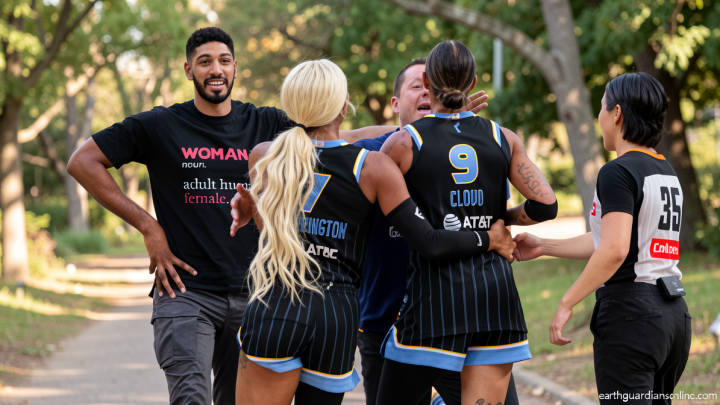
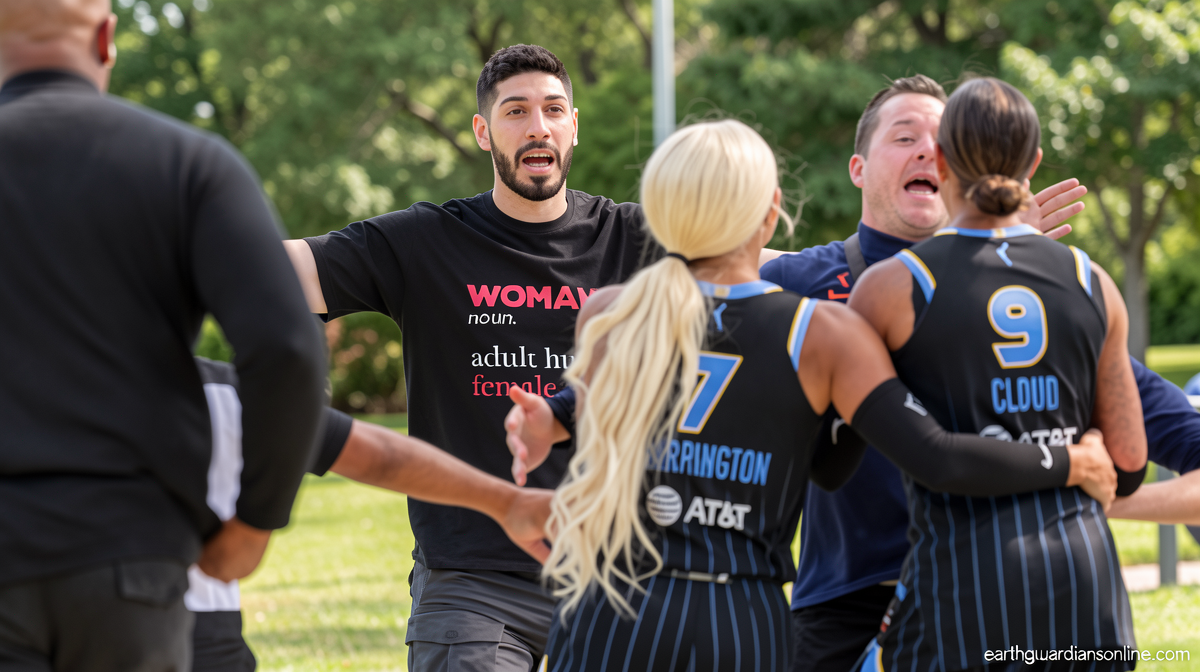
The eligibility question gained additional visibility on Sunday, when Freedom was ejected from a WNBA game at Wintrust Arena in Chicago. The incident occurred during the third quarter of a matchup between the Indiana Fever and the Chicago Sky. Freedom, seated along the baseline in the stands, was wearing a shirt that displayed the dictionary definition of a woman. That detail became a focal point of the controversy that followed.
During a stoppage, Freedom engaged in a heated verbal exchange with Natasha Cloud, a guard for the Sky. The confrontation drew attention from the crowd and was captured on video, quickly circulating across social media platforms. After the game concluded, Freedom took to X to comment on the episode.
“It’s always women hating on other women,” Freedom wrote.
No formal disciplinary ruling or game ban has been issued as of Monday. The WNBA has not announced whether it will review the incident under its conduct rules or issue any additional sanction beyond the ejection itself. The absence of a formal decision leaves the matter in a state of administrative limbo, with fans and commentators on both sides of the debate filling the vacuum with speculation.
Broader Context and What Comes Next
The WNBA’s draft process typically opens in the spring, with players registering their intentions months before the event. Eligibility is governed by a combination of amateur-status rules, age thresholds, and league-specific bylaws. The question of how those rules apply to athletes who have competed at the men’s professional level — and who subsequently identify as women — has no clear precedent in the league’s history. That lack of precedent is precisely what makes the current standoff so consequential.
The broader landscape has shifted dramatically since 2023, when several state legislatures passed laws restricting transgender athletes’ participation in women’s sports at the public-school and collegiate levels. The WNBA, as a private professional league, is not directly bound by those statutes, but its players, sponsors, and fan base exist within the same cultural ecosystem. The league’s decision to frame the issue as an internal governance matter — to be resolved “thoughtfully” with its own stakeholders — represents a deliberate choice to insulate its processes from the political pressures that have shaped the debate elsewhere.
For the 2027 draft class, the practical effect of Monday’s confirmation is straightforward: Freedom and White will not appear on the list of eligible prospects. The league’s next steps remain unspecified beyond the stated commitment to consult its stakeholders. Whether that consultation produces a formal policy statement, a revised bylaw, or simply a reaffirmation of existing rules is unclear. What is clear is that the WNBA has chosen, at least for now, to control the pace and framing of its own conversation rather than respond to external provocations.
The courtside episode in Chicago, meanwhile, will likely remain a reference point in the ongoing debate. Whether it leads to further disciplinary action, additional public statements from the league, or simply fades into the background of a longer institutional discussion, the incident has already done what its participants — and critics — intended: it placed the question of transgender eligibility in women’s professional basketball squarely in front of a national audience, and forced the league to articulate, however briefly, where it stands.
Related Reading
Frequently Asked Questions
What is Former NBA players not eligible for WNBA?
Former NBA players not eligible for WNBA is the main topic of this guide. The article explains the context, practical details, and next steps readers should understand.
Why does Former NBA players not eligible for WNBA matter?
Former NBA players not eligible for WNBA matters because readers are looking for a useful answer, not just a short summary. Good content should match search intent and help them decide what to do next.