UEFA set to drop boycott threat, handing FIFA some breathing room, AP says

Daftar Isi
UEFA Withdraws FIFA Boycott, Clearing Path for Poland’s Women’s U-20 World Cup
Earthguardiansonline.com – The six European squads set to compete at next week’s FIFA Women’s Under-20 World Cup in Poland will now travel as scheduled, after UEFA moved to formally rescind its threatened boycott of upcoming international tournaments. A person familiar with the internal deliberations confirmed on Wednesday that UEFA’s member associations are expected to vote Thursday to lift the sanction, effectively ending a months-long standoff between Europe’s continental confederation and the global governing body.
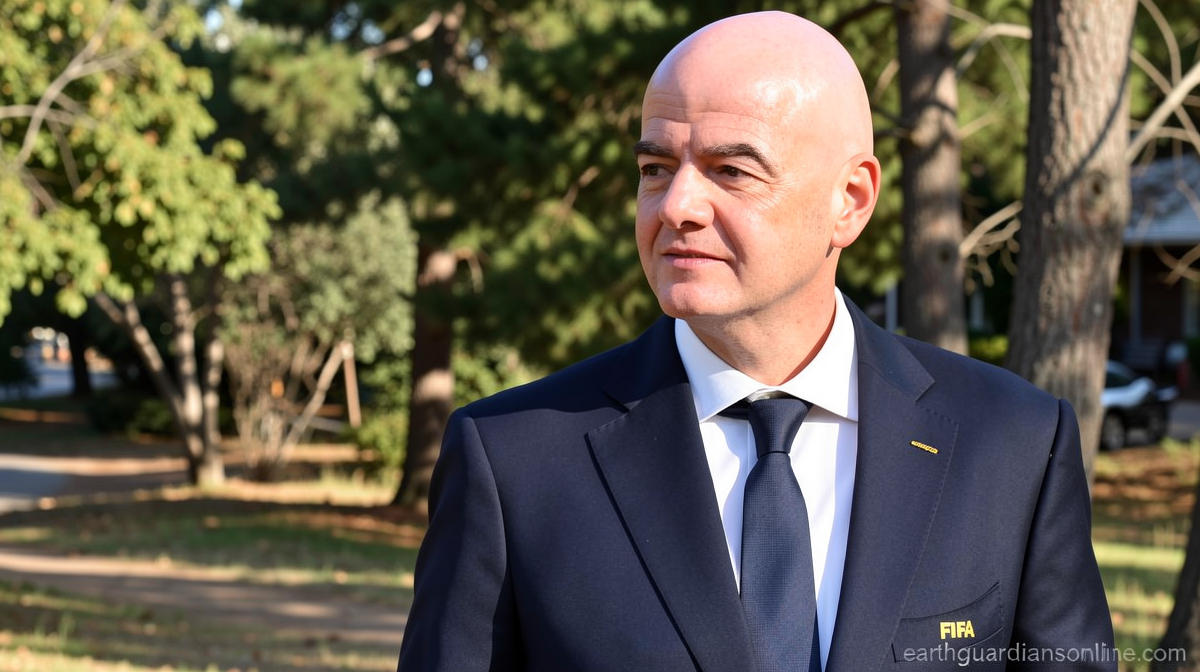
The decision removes an immediate crisis: without the withdrawal, all six European entries — including Poland itself as host nation — would have been forced to pull out of the tournament, leaving the competition hollowed out on the eve of kickoff. The move also hands FIFA president Gianni Infantino a significant reprieve in what has become the most sustained institutional challenge to his leadership since he assumed office.
How the Dispute Unfolded
The rupture traces back to the leak of a proposal internally branded the FIFA Forward Enterprise, or FFE. Under that scheme, FIFA would have carved out a slice of its commercial and operational rights attached to the World Cup and sold them to outside investors — a structural shift that would have altered how the sport’s flagship property generates revenue and who controls its day-to-day commercial machinery. When details surfaced, UEFA reacted with open hostility, directing criticism at both the organization’s governance model and at Infantino personally.
In July, UEFA’s member associations voted to boycott all future FIFA tournaments. The signal was unambiguous: Europe, home to the wealthiest leagues and the deepest talent pools in world football, would simply stop playing. Earlier this month, even after FIFA publicly scrapped the FFE proposal and issued an apology describing its own handling of the matter as involving “mistakes,” UEFA reaffirmed its position. The confederation’s leadership judged that an apology was insufficient without structural guarantees.
Those guarantees, it appears, have now been delivered. Following a series of closed-door discussions between UEFA and FIFA officials, European delegates reportedly received assurances that no equivalent commercial-privatization project will be tabled again. That reassurance was the condition under which the Thursday vote to end the boycott could proceed.
FIFA’s Public Response
A FIFA spokesperson issued a written statement welcoming the resolution:
“FIFA is pleased that all qualified teams will be participating in the upcoming FIFA U-20 Women’s World Cup. FIFA strongly believes that football has the power to unite, even in challenging circumstances, and looks forward to welcoming all teams and players to Poland.”
“We remain committed to how we can further support the global development of the game, through our competitions, through the FIFA Forward programme and through our various other initiatives, and in full dialogue with the Confederations and stakeholders.”
The language is deliberately forward-looking, steering attention away from the near-crisis and toward ongoing cooperation. The reference to the “FIFA Forward programme” — distinct from the scrapped FFE enterprise — signals that FIFA intends to keep its broader development and infrastructure agenda alive while drawing a firm line around the specific commercial-privatization concept that triggered the revolt.
Infantino’s Narrow Escape
For Infantino, the episode has been the gravest test of his tenure. UEFA is not a peripheral confederation; it commands the most financially powerful national associations in the sport and wields disproportionate influence over FIFA’s revenue architecture. A sustained European boycott would have threatened not only tournament participation but the commercial credibility of FIFA’s sponsorship and broadcasting deals. The fact that UEFA held its position through August, even after the FFE was withdrawn, underscored how close the institution came to a governance fracture.
With the boycott now set to lapse, Infantino regains operational breathing room. Yet the political pressure has not fully dissipated. UEFA president Aleksander Čeferin recently told The Rest is Politics podcast that he expects Infantino either to resign voluntarily or to face a formal challenge at next year’s presidential election. Čeferin’s remarks suggest that, in Europe’s view, the FFE episode was a symptom rather than the root cause of deeper governance grievances.
The Numbers Game Ahead
FIFA’s presidential election mechanics make the coming contest a question of arithmetic. There are 211 national associations in the global membership, and candidates must lodge their nominations by November 18. As of now, no formal challenger has announced a bid, but the deadline leaves roughly three months for a coalition to crystallize. The contest will ultimately turn on which blocs — continental confederations, regional groupings, individual associations — align behind or against the incumbent.
UEFA’s withdrawal of the boycott does not mean European associations will automatically vote for Infantino. It removes the most dramatic lever — the threat of collective non-participation — but it does not erase the underlying disagreements over commercial governance, revenue distribution, and decision-making transparency that fueled the original revolt. The Thursday vote will close one chapter. The next one opens in November.
Related Reading
Frequently Asked Questions
What is UEFA set to drop boycott threat?
UEFA set to drop boycott threat is the main topic of this guide. The article explains the context, practical details, and next steps readers should understand.
Why does UEFA set to drop boycott threat matter?
UEFA set to drop boycott threat matters because readers are looking for a useful answer, not just a short summary. Good content should match search intent and help them decide what to do next.