
How Lionel Messi and Argentina sent the World Cup into a state of sporting nirvana
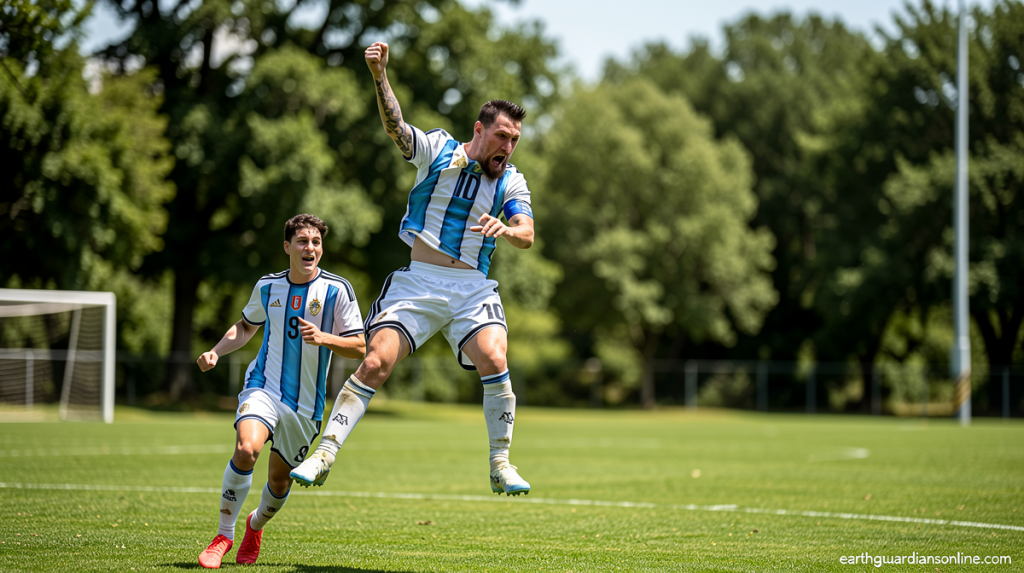
A Night of Magic: Argentina’s Epic Comeback Captivates Atlanta
How Lionel Messi and Argentina sent – There are certain instants in life that slip away unnoticed, leaving us with only the faintest memory of their existence. We blink, and they vanish into the ether, prompting quiet regrets that we didn’t pause to appreciate them fully. Yet occasionally, we encounter moments so profound that we sense their magnitude even as they unfold. These are the occasions when time seems to stretch, allowing us to absorb their significance before they solidify into history. For the vast crowd exceeding 68,000 spectators gathered at Mercedez-Benz Stadium in Atlanta on Tuesday evening, such an experience arrived in spectacular fashion.
The catalyst was Lautaro Martínez, who drifted toward the right flank of Argentina’s offensive push. With deliberate calm, he assessed the field before delivering a precise cross. What followed was nothing short of cinematic. The ball arced gracefully through the air, bypassing Egypt’s Yasser Ibrahim before finding Enzo Fernández at the apex of the penalty area. In those fleeting seconds, spectators could almost hear themselves thinking: this is it, they have scored. The anticipation built as the blue-and-white supporters prepared for an eruption of joy.
Fernández delivered without hesitation, powering a header that will be remembered as one of the tournament’s finest moments. This single strike capped a remarkable three-goal surge within just thirteen minutes, propelling the Albiceleste into the quarterfinals with a 3-2 victory over the Egyptians. The triumph arrived after two days of anxiety surrounding rumors that the World Cup might be tarnished by a telephone conversation between US President Donald Trump and Gianni Infantino concerning Folarin Balogun’s dismissal.
The Underdog Spirit That Defined the Match
Argentina and Egypt reminded everyone present of what makes this competition extraordinary. The combination of resilient underdogs and determined champions produced drama of the highest order. Those fortunate enough to witness it firsthand will carry the memory for the remainder of their lives.
Before kickoff, most observers expected Argentina to cruise past their opponents. The squad’s collective brilliance positions them as potential back-to-back champions, an achievement rarely accomplished in modern football history. Egypt certainly possessed quality, particularly through Mohamed Salah, though the star forward has moved slightly past his absolute peak. Nevertheless, as Cape Verde demonstrated against Argentina the previous week, World Cup fixtures are decided by courage and opportunity rather than reputation alone.
The Pharaohs approached the contest with fierce determination. Rather than yielding to the defending champions, they matched Argentina’s intensity from the opening whistle. That resolve paid dividends when Yasser Ibrahim elevated himself above the Argentine defense to redirect a header past goalkeeper Emiliano Martínez. Egyptian supporters in attendance erupted with pure elation, removing shirts and celebrating wildly alongside their team’s exuberance on the pitch.
Fortune seemed to favor Egypt further when Lionel Messi’s penalty attempt was denied by Mohamed Shobeir. The Egyptian goalkeeper performed heroically throughout the first half, constructing an impenetrable barrier between the ball and his goal. Argentina appeared unsettled by his performances, while Egyptian fans in the upper tiers felt emboldened to challenge the larger Argentine contingent behind them.
Controversy and Redemption
A moment destined to be etched into Egyptian folklore arrived during the fifty-fifth minute. Mostafa Ziko appeared to extend Egypt’s advantage with a brilliant strike. As celebrations commenced, referee François Letexier consulted the Video Assistant Referee screen regarding a potential foul in the preceding sequence. The official ultimately disallowed Ziko’s effort, ruling that an infraction had occurred just eighteen seconds earlier.
Post-match reactions from Egypt’s manager Hossan Hassan and Ziko himself expressed considerable frustration with Letexier’s decisions. Questions arose about missed penalty appeals, unpenalized aggressive challenges, and inconsistent calling patterns that seemed to favor Argentina in similar situations. The referee’s performance ensured he would not receive a warm reception upon his return to Egypt.
Ziko eventually secured his second goal of the evening, capitalizing on a swift counterattack to establish what seemed an insurmountable 2-0 advantage. Even with Egypt’s grievances about officiating, a stunning upset appeared inevitable. Yet any squad featuring Lionel Messi remains perpetually dangerous. Observing the Argentine maestro is akin to watching a conductor orchestrate a symphony. His positioning dictates Argentina’s flow—when he moves one way, the play shifts accordingly, but when he accelerates forward, the ball naturally follows his lead. He communicates constantly with teammates, directing passes and creating space through his intelligent movement.
What transpired in Atlanta was more than a football match. It was a reminder that the World Cup continues to deliver moments of pure magic, capable of elevating sport into something transcendent.
