
Iran to commute to World Cup games from Mexico after US refusal, Sheinbaum says
Iran to Commute to World Cup Games from Mexico after US Refusal, Sheinbaum Says
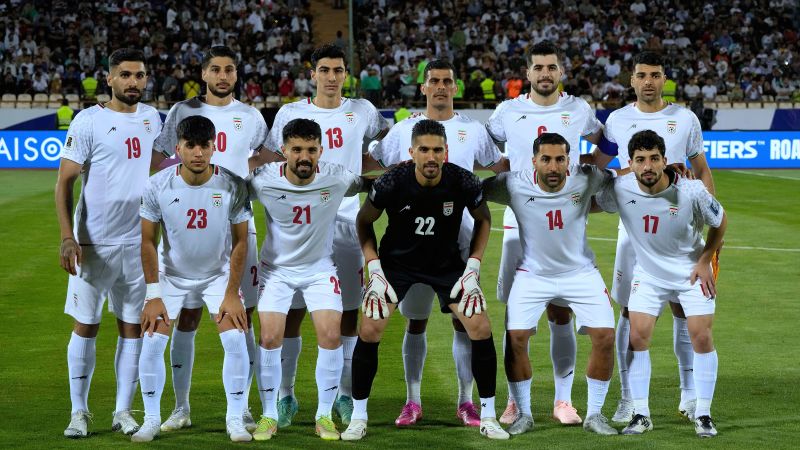
Iran to commute to World Cup games – Following the United States’ decision to exclude Iran from hosting the nation’s soccer team during the upcoming World Cup, Mexican President Claudia Sheinbaum announced that Iran will be based in Mexico for the tournament. This will allow the squad to travel to the United States on the days of their matches, a move confirmed by FIFA on Monday. The adjustment comes after Washington officials expressed concerns about Iran’s presence in the country throughout the June 11 to July 19 competition, despite the team’s scheduled matches in the U.S.
FIFA’s Role in the Decision
Sheinbaum revealed that FIFA had reached out to her government in response to the U.S. authorities’ hesitation. “We have no reason to deny them the possibility of staying in Mexico,” she stated during her daily press briefing, emphasizing the country’s willingness to accommodate Iran. The Mexican president’s comments follow months of uncertainty surrounding Iran’s participation, with the U.S. administration citing safety concerns as the primary reason for its stance.
“We have no reason to deny them the possibility of staying in Mexico,” said Mexican President Claudia Sheinbaum.
The Iranian team is set to compete in three Group G matches, two of which will take place in Los Angeles on June 15 and June 21. Their third game is scheduled for June 26 in Seattle. While the U.S. will host these matches, Iran will remain in Mexico for the rest of the tournament, with its training base located in Tijuana. The shift is expected to streamline logistics and reduce potential complications.
Logistical Adjustments and Safety Concerns
Iran’s football federation head, Mehdi Taj, confirmed the team’s relocation to Tijuana, a city near the Mexican border, as a strategic decision to address safety and logistical challenges. “The change in location will help avoid visa-related issues and ensure direct flights from Iran Air to Mexico,” Taj explained. This move also simplifies travel for the squad, as Tijuana is geographically close to Los Angeles, where two of Iran’s matches are slated.
“In the previous training camp, the distance between the hotel and the training camp was considerable, but this problem does not exist in the Mexican training camp,” said Iran’s Minister of Sport, Ahmad Donyamali.
Donyamali highlighted the advantages of the new setup, noting that proximity to Los Angeles will allow the team to efficiently prepare for their matches. The Xolos football club, based at the Xoloitzcuintle Center in Tijuana, issued a statement welcoming Iran to the city. “Tijuana is an open, friendly, and hospitable city; a city that embraces the world through its culture, its people, and its passion for sports,” the club said.
Background on the US-Iran Tensions
The decision to base Iran in Mexico has been influenced by ongoing geopolitical tensions. Since late February, the U.S. has aligned with Israel in targeting Iran, leading to concerns about the country’s willingness to send its team to the World Cup. The conflict sparked doubts about Iran’s commitment to the tournament, with some fearing that the geopolitical climate might deter the team from participating.
Despite these tensions, FIFA has remained steadfast in its support of Iran’s involvement. President Gianni Infantino reaffirmed this stance, stating that Iran will participate in the U.S.-hosted World Cup “for sure.” The decision to keep the tournament schedule unchanged was made after discussions between FIFA and the U.S. government, which ultimately opted to let Iran compete in the U.S. while moving its training base to Mexico.
Reactions from Mexican Officials
Mexican officials have warmly welcomed the Iranian team, with Governor Marina del Pilar of Baja California expressing readiness to host them. “Tijuana will be the setting for their preparation for the 2026 FIFA World Cup, and Baja California is ready to welcome them as if they were at home,” Del Pilar said in a message on X. This support underscores Mexico’s role in facilitating Iran’s participation, even as the U.S. declines to provide full accommodation.
The relocation also addresses practical concerns. Previously, Iran’s training camp was based in Arizona, requiring the team to travel long distances to match locations. The switch to Tijuana eliminates this challenge, as the city is near the U.S. border, making it easier for the squad to move between training and match sites. “This adjustment ensures a more efficient and comfortable setup for the team,” said Taj, who added that the move was made in consultation with FIFA and local authorities.
Historical Context and Qualification
Iran’s inclusion in the World Cup is a continuation of its strong tradition in international football. The team qualified for its fourth consecutive World Cup by securing top spot in its Asian qualifying group last year. This achievement highlights Iran’s consistent performance and dedication to the sport, despite the political challenges it has faced.
The 2026 World Cup, co-hosted by the U.S., Canada, and Mexico, represents a unique opportunity for Iran to compete on a global stage. The decision to base the team in Mexico, however, reflects the broader implications of the U.S.-Iran conflict. While the U.S. has allowed Iran to play its matches, the exclusion of the team from the country’s hotels and training facilities signals a cautious approach.
International Reactions and Speculation
The controversy over Iran’s participation has drawn international attention. In April, Trump’s envoy for global partnerships, Paolo Zampolli, suggested that Italy might replace Iran in the tournament, prompting a swift response from Italian officials and FIFA. They dismissed the idea, reiterating their support for Iran’s inclusion. This exchange highlights the political nature of the situation, as sports diplomacy plays a role in easing tensions between nations.
Despite the initial skepticism, Iran’s presence in the tournament remains a key point of discussion. The team’s ability to adapt its schedule and training base to Mexico demonstrates its flexibility and determination to compete. As the World Cup approaches, the focus will shift to ensuring that the Iranian squad can perform at its best, regardless of the challenges posed by the geopolitical climate.
The Mexican Football Federation (FMF) has also confirmed the team’s new base in Tijuana, emphasizing the city’s readiness to host international athletes. “We are very proud to have been notified by FIFA that Tijuana will be part of the 2026 FIFA World Cup as the base camp for the Iranian national team,” the FMF stated in a press release. This partnership between Mexico and Iran underscores the importance of sports in fostering international relations, even amid political disagreements.
As the World Cup draws closer, the Iranian team will focus on its preparation, with Tijuana serving as a temporary home. The logistics of moving between the Mexican base and U.S. match locations will be critical, but officials believe the arrangement will provide the necessary support for the squad. With the tournament set to begin on June 11, the road to the final rounds will be paved by the collaboration between FIFA, Mexico, and the Iranian team, ensuring that the country’s athletes can compete without major disruptions.
The White House and the State Department have not yet commented on the decision, leaving the U.S. stance on hosting Iran somewhat ambiguous. However, Trump’s earlier remarks remain relevant, as he had expressed reservations about Iran’s presence in the U.S. “I do not believe it was appropriate for Iran’s team to be in the United States for their own life and safety,” Trump said in March. This sentiment has been echoed by some U.S. officials, but the broader support for Iran’s participation persists.
With the World Cup schedule finalized and the team’s relocation confirmed, the focus now turns to the upcoming matches. The Iranian squad will have to balance its training in Mexico with the demands of playing in the U.S., but the flexibility of the new arrangement offers a viable solution. As the tournament unfolds, the story of Iran’s adaptation to the changing circumstances will be one of resilience and strategic planning.
