
An astronaut suddenly couldn’t speak in space. What does that mean for future missions?
Unexpected Loss of Communication in Space
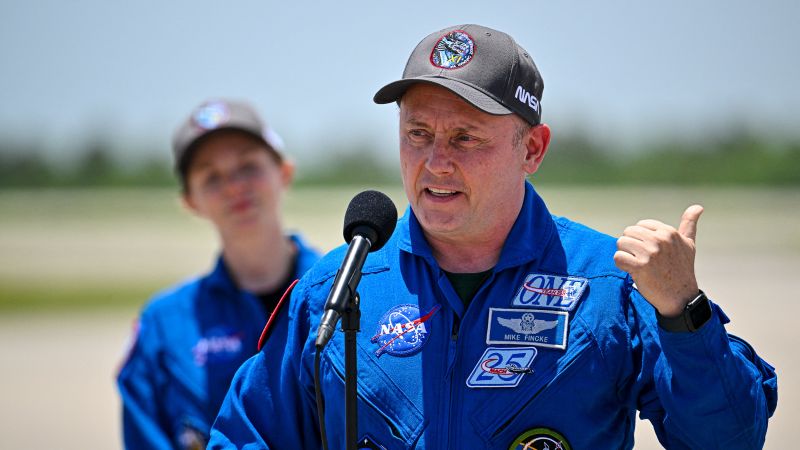
An astronaut suddenly couldn t speak – During the fifth month of his fourth mission aboard the International Space Station, NASA astronaut Mike Fincke faced an unexpected medical challenge. While dining just hours before a scheduled spacewalk, he abruptly lost his ability to speak. The incident, which occurred in January 2026, lasted approximately 20 minutes, leaving Fincke without vocal communication and visibly distressed. Though he experienced no physical pain, his sudden inability to articulate raised immediate concerns among his crewmates and mission control. “It was completely out of the blue. It was just amazingly quick,” Fincke later recounted to the Associated Press. The crew quickly recognized his struggle, prompting an urgent response to stabilize his condition.
A Medical Emergency in Orbit
Despite the crew’s swift action, the situation required NASA to make an unprecedented decision. The agency decided to terminate the SpaceX Crew-11 mission, bringing Fincke and three other astronauts back to Earth a month ahead of schedule. This marked the first time in over 290 years of space station visits that a mission was cut short due to a health issue. The station, which was already operating with a reduced crew, was left with only three personnel to manage its systems. “We will capture any relevant lessons learned to inform preparations for subsequent missions,” said NASA administrator Jared Isaacman during a post-splashdown briefing. He emphasized that the early return was a result of a “serious medical condition,” highlighting the importance of having contingency plans for astronauts in space.
While the crew used the station’s onboard ultrasound equipment to assess Fincke’s condition, the exact cause remains under investigation. The team likely relied on guidance from mission control to evaluate his vital signs and determine the urgency of the situation. “I think they probably looked to assess the overall function of the heart and perhaps some of the other structures,” noted Scott, a crew member involved in the response. The incident, though brief, underscored the unpredictable nature of human health in microgravity and the need for rapid decision-making in space.
Understanding the Risks of Long-Duration Missions
As NASA pushes forward with extended space missions, the incident with Fincke raises critical questions about the challenges astronauts face beyond Earth’s orbit. The agency has long studied the physiological effects of prolonged exposure to space, grouping them into five primary categories: radiation, isolation, distance, microgravity, and hostile environments. These factors collectively impact the human body in ways that are not fully understood, even after decades of research. Fincke’s case, however, introduces a new dimension to this discussion—how quickly medical conditions can escalate in the vacuum of space.
Microgravity, in particular, is known to alter fluid distribution in the body. On Earth, gravity pulls fluids downward, but in space, they shift toward the upper torso and head. This redistribution can lead to various complications, including changes in blood flow, vision impairment, and cardiovascular strain. A 2019 study involving 11 astronauts revealed that six experienced stagnant or reversed blood flow, one developed a blood clot, and another had a partial clot. These findings suggest that the body’s circulatory system may be vulnerable to disruptions in microgravity, potentially causing temporary neurological symptoms like speech loss.
The Role of Transient Ischaemic Attacks (TIAs)
Dr. Farhan Asrar, a University of Toronto medical professor, explained how space’s unique conditions could contribute to such episodes. “There is something known as a TIA, or Transient Ischaemic Attack, which is basically a brief episode of neurological dysfunction caused by interrupted blood flow to the brain,” he said. TIAs, often referred to as mini-strokes, are temporary and typically resolve without permanent damage. Symptoms include dizziness, confusion, and loss of balance, which align with what Fincke described during his ordeal. While NASA has not confirmed whether Fincke’s episode was a TIA, the possibility highlights the connection between space travel and neurological health.
Fincke himself hinted at the space-related nature of his symptoms, stating that the incident was “likely space-related” without disclosing a formal diagnosis. His early return, though not an emergency evacuation, still marked a significant shift in mission strategy. The fact that the crew was able to return to Earth safely within eight days demonstrates the effectiveness of current emergency protocols, but it also raises the question: How will future missions, which may take years to complete, handle similar situations?
Medical Privacy and Future Planning
NASA has maintained a tradition of protecting astronaut privacy, especially in medical matters. Details about Fincke’s condition were initially withheld, with the agency focusing on the broader implications rather than the specific diagnosis. This approach ensures that sensitive health information remains confidential, even as researchers analyze the data. When studies examine the effects of space on the human body, identities are often anonymized to maintain discretion. Fincke, however, chose to reveal his early exit was due to health concerns, though he stopped short of confirming the exact medical cause.
Isaacman noted that while astronauts undergo rigorous training, the ability to return to Earth is a vital safety measure. “This is what we trained for. It’s built in our planning,” he emphasized. The incident with Fincke serves as a case study for future missions, particularly those venturing deeper into space. As the duration of missions increases, the risks of health complications may become more pronounced. For example, long-duration flights to the Moon or Mars could expose astronauts to prolonged microgravity and radiation, both of which have been linked to various health issues. “The environment of space can be disabling, and the strains of space can impact virtually every aspect of your body,” Asrar warned. This perspective underscores the need for continuous research and adaptive protocols to mitigate risks.
Implications for Space Exploration
The incident has sparked discussions about how to balance mission objectives with astronaut safety. While cutting a mission short can be disruptive, it ensures the well-being of crew members, especially in high-risk scenarios. For NASA, this event reinforces the importance of incorporating medical contingencies into flight plans. The agency is now evaluating whether the current system of emergency responses is sufficient for future missions, where astronauts may be farther from Earth and less able to return quickly.
Fincke’s experience also highlights the complexity of diagnosing health issues in space. Without access to Earth-based medical facilities, crews must rely on limited diagnostic tools and remote guidance. This challenge is compounded by the fact that some symptoms may not be immediately recognizable, as the body adapts to microgravity in ways that are not yet fully understood. As space travel becomes more routine, the need for comprehensive medical training and real-time monitoring will only grow. “We’ve been studying these effects for over 50 years, but we’re still learning,” Isaacman admitted. “This incident is a reminder that even the most prepared missions can face unforeseen challenges.”
Ultimately, Fincke’s episode may shape the design of future space missions, encouraging the development of more advanced health monitoring systems and flexible mission timelines. While the immediate cause of his speech loss remains unclear, the event has already prompted a reevaluation of how NASA prepares for and responds to medical emergencies in orbit. As the agency aims to send humans farther into space, the lessons learned from this case will be crucial in ensuring the safety of astronauts on longer, more ambitious journeys.
