
Real Madrid signs José Mourinho to second stint as club manager
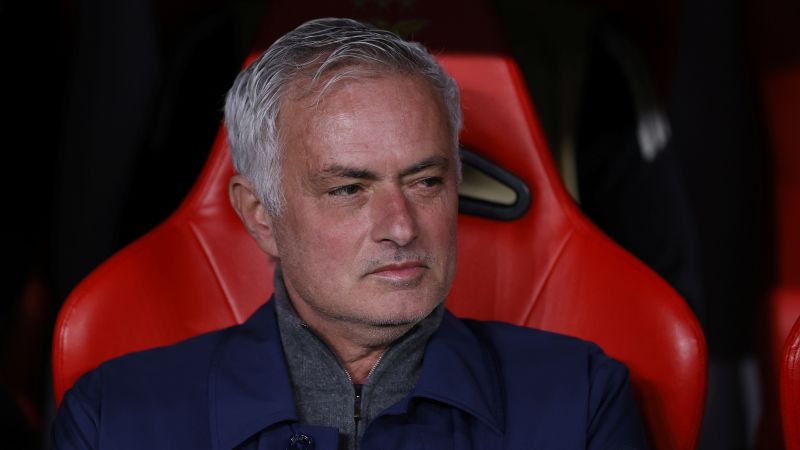
Real Madrid Announces Jose Mourinho’s Return as Manager
Real Madrid signs José Mourinho to second – Real Madrid has officially appointed Jose Mourinho as its new manager, securing a three-year contract that will see the Portuguese tactician lead the team until June 30, 2029. The announcement, made on Thursday, signals a dramatic resurgence for the two-time Champions League winner, who is set to take charge of the club on July 13, 2026, coinciding with the start of the official preseason. This move has sparked widespread excitement among fans, who see it as a bold attempt to reignite the club’s competitive edge after years of inconsistency.
A Turbulent Chapter for Real Madrid
Real Madrid’s current season has been marked by a series of challenges, including a lack of major trophies and a string of controversial decisions that have left both global media and local supporters questioning the club’s direction. Amid this uncertainty, the decision to bring back Jose Mourinho has been framed as a strategic response to the need for stability and a return to glory. The 55-year-old coach, known for his ability to transform teams, is expected to leverage his experience to navigate the turbulent waters of La Liga and the Champions League.
Following his departure from the club in 2013, Real Madrid entered a period of transition that saw its performance fluctuate. The team’s struggles were compounded by internal strife and a lack of clear vision, leading to a series of managerial changes. However, with Florentino Perez’s successful re-election as club president, the search for a reliable leader has intensified. Perez, who has long championed Mourinho’s philosophy, made the Portuguese coach a central figure in his campaign, ensuring that the return to the Santiago Bernabéu was not just a possibility but a certainty.
Mourinho’s Legacy at Real Madrid
Jose Mourinho’s first tenure at Real Madrid from 2010 to 2013 is remembered as a pivotal era for the club. During his three seasons, he guided Real to three major trophies: the 2010-11 Copa del Rey, the 2011-12 La Liga title, and the 2012 Spanish Supercup. His arrival marked a turning point, as the team emerged from a period of mediocrity to reclaim its place among Europe’s elite. Under his leadership, Real made it to the Champions League semifinals three consecutive times, ending a six-year streak of round-of-16 exits.
“The Special One,” as Mourinho is affectionately known, was instrumental in reshaping the club’s identity. His tactical discipline and ability to foster a winning culture revitalized Real Madrid’s reputation on the global stage. The coach’s reputation for intense preparation and high standards was evident in his demanding approach, which resonated with players and fans alike. His success at the Bernabéu solidified his status as one of the most respected figures in football, despite his later departure under contentious circumstances.
Why Mourinho’s Return Matters
The decision to rehire Mourinho is seen as a calculated risk, aimed at combining his proven track record with the current squad’s potential. The Portuguese coach has a history of adapting to new environments, having managed clubs across Europe, including Porto, Chelsea, and Inter Milan. His return to Madrid is expected to bring a mix of experience and fresh perspective, addressing the team’s shortcomings while maintaining its high ambitions.
Mourinho’s ability to attract top talent and his strategic use of the transfer market have been key factors in his past successes. With Real Madrid’s budget remaining robust, the club is in a position to invest heavily in key positions, potentially strengthening its squad for future competitions. Analysts suggest that Mourinho’s presence could provide the necessary structure to rebuild a competitive edge, particularly in the Champions League, where Real has struggled to find consistent success in recent years.
Reactions from Fans and Analysts
The news of Mourinho’s appointment has been met with a mix of optimism and skepticism. While some fans are thrilled at the prospect of the coach’s return, others are cautious, recalling his previous tenure’s ups and downs. Social media platforms have already been flooded with discussions, memes, and humorous posts celebrating the “crusade” Mourinho is expected to lead. One fan’s reaction, captured in a widely shared post, encapsulates the excitement: “After years of uncertainty, Mourinho’s back to lead us to victory.”
Analysts have noted that Mourinho’s return aligns with Real Madrid’s desire to blend tradition with innovation. His emphasis on defensive solidity and counter-attacking play could complement the team’s existing strengths, particularly if the squad is reshaped to suit his vision. However, the pressure to deliver results is immense, with expectations for trophies and European dominance heightened by the club’s global status. Mourinho’s ability to manage this pressure will be crucial in determining the success of his second stint.
As the club prepares for the new season, the focus is on how Mourinho will integrate his methods with the current roster. His management style, which has been both praised and criticized, will need to adapt to the evolving dynamics of the team. The Portuguese coach’s presence is also expected to inspire confidence in the squad, particularly as they aim to overcome past challenges and reclaim their place at the top of European football.
In the context of Real Madrid’s history, Mourinho’s return represents a significant moment. The club, which has been a dominant force in world football for decades, is looking to reaffirm its legacy under his guidance. With the Santiago Bernabéu once again set to host some of the most anticipated matches, the question remains: can Mourinho lead Real to another era of success? The answer will be revealed as the 2026-27 season unfolds, with the entire football world watching closely.
