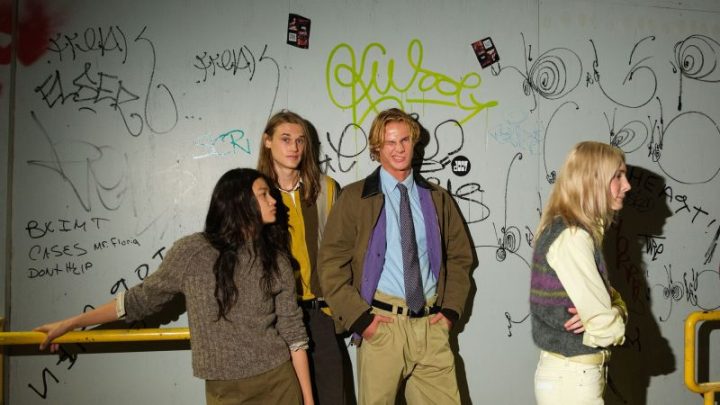
God save the drag kings of England

Daftar Isi
A Mustache in a Tupperware Container: How One Drag King Is Rewriting a Brexit Town’s Conversation
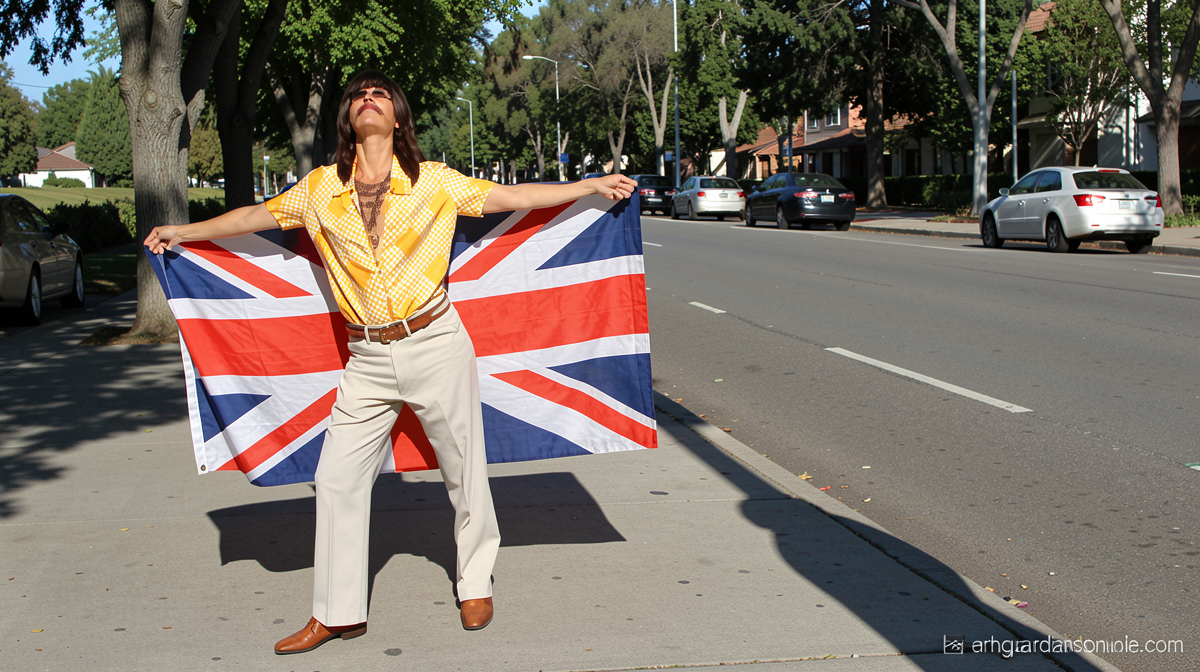
Earthguardiansonline.com – In a port town on England’s southeast coast where strings of Union Jacks still snap in the harbour wind, a woman is gluing a furry mustache to her upper lip. The moment the prop clicks into place, something shifts. The voice drops an octave. The shoulders square. A rolling swagger replaces the walk, and every woman in the room receives a raised eyebrow and a drawl: “Alright ‘luv?” The woman has left the building. In her place stands Pat Riarchy, a drag king who wields a Union Jack flag, wears a leopard-print G-string beneath a flowing mullet, and finds the acronym LGBTQIA+ genuinely baffling.
The woman behind the act is Trudi Jackson, a 52-year-old actor and performance coach who grew up in a mining town in south Wales. For five years she has inhabited Pat, a character she describes as “a little bit like an inappropriate uncle at a family gathering in the 1970s” – leery, sexist, and delighted by making women squirm. But Pat is also, in Jackson’s telling, a vehicle for something far more pointed than a joke.
The Making of a King
The transformation takes roughly an hour. Jackson carves a chiselled jaw with brush and sponge, paints dragon tattoos across her forearms, tapes down her breasts, and glues hair to her chest. She calls the chin her favourite step – “I get to do the dimple” – but it is the mustache, transported in its own Tupperware container, that triggers the full personality shift.
On stage, Pat brandishes a Union Jack and attempts to make sense of a world where, in his words, “it’s hard being a bloke.” He jokes about “the girls taking our jobs.” At his “Karablokey” nights he performs an original number titled “While Yer Down There Luv.” During a Pride festival appearance at a local swimming pool, he addressed the gathered swimmers with the declaration: “I am not a professional aqua aerobics instructor. But like all blokes, I can turn my hand to anything.”
Screaming Alley and the Six-Week Masterclass
Jackson and Pat now call Ramsgate home. The town, tucked into the Thanet district of Kent, carries the same economic contradictions as many English seaside communities: pockets of deep deprivation alongside a growing influx of artists and London transplants seeking a quieter pace of life. It is also a place that voted strongly for Brexit in 2016, and in the decade since, the hard-right populist party Reform UK has taken root as a major political force.
Tucked at the back of a local barber shop is Screaming Alley, a cabaret production company that supports independent artists. Descending a hot-pink stairwell plastered with posters of George Michael and Madonna, visitors arrive at the Alley Bar and its small stage. On any given evening the space hosts an open mic, a community workshop, or – more recently – Jackson’s masterclass for aspiring drag kings.
Over six weeks, students develop their own characters, studying masculinity, costume, make-up, and movement, with the goal of performing to a live audience by the end of the course. What makes the programme unusual is its setting: these drag classes are unfolding in the kind of working-class coastal town where traditionalist masculinity is not just a cultural relic but a live political brand.
Politics, Class, and the Posh Boy
Reform UK’s leader, Nigel Farage, has cultivated an image of the everyman who makes campaign stops in the pub, railing against what he frames as social wokeism that prevents “young men being young men.” It is precisely the type of macho imagery that drag kings delight in subverting.
“We’re living through a time when conversations around gender, identity, class and power have become increasingly polarized, and Thanet reflects that as much, if not more, as anywhere else,” says Lara Clifton, co-director of Screaming Alley. “What interests me is creating a space in the middle of those conversations – not to tell people what to think, but to invite them to play, laugh and spend time together.”
Pat himself would never vote for Reform. Jackson, speaking in character’s voice, dismisses the affluent, private-school-educated Farage as “a posh boy.” Class is a load-bearing element of the act. The so-called liberal elite are educated, Jackson adds, and that education is itself a privilege.
“It’s a privilege to be woke. And rather than shaming people for their viewpoint, let’s have the conversation: ‘is it true? Is that real?'”
Laughing at the Man, Not Silencing Him
Jackson has been performing Pat for five years, but the character grew out of observations she made years earlier about cancel culture and the way public debate was narrowing. Her argument is that silencing drives people underground, and that underground is where the manosphere exploded.
“My feeling is, let’s shine the light on it and laugh at it – let’s laugh at Pat, not silence him.”
The logic is not merely theatrical. In a district where traditionalist masculinity has moved from the pub to the ballot box, a drag king who performs that masculinity with exaggerated tenderness – who makes the audience squirm, then laugh, then sit with the discomfort – is doing something that a lecture or a hashtag rarely can. He makes the audience complicit in the joke, and then, in the silence after the laugh, leaves them holding the question: what exactly did we just find funny, and why?
For Jackson, the act is also personal catharsis. “It’s my playing out of what it’s like to be born female in a world of this masculinity which was hugely toxic when I was growing up,” she says. The mining-town childhood, the hours of make-up, the Tupperware mustache, the six-week classes in a hot-pink stairwell in a Brexit port town – all of it folds into a single, sustained argument: that the most effective response to toxic masculinity is not silence, but a raised eyebrow, a deepened voice, and a very specific question delivered with a swagger.
“Alright ‘luv?”
Related Reading
Frequently Asked Questions
What is God save the drag kings of England?
God save the drag kings of England is the main topic of this guide. The article explains the context, practical details, and next steps readers should understand.
Why does God save the drag kings of England matter?
God save the drag kings of England matters because readers are looking for a useful answer, not just a short summary. Good content should match search intent and help them decide what to do next.