
These unassuming wedding photos poke holes in the patriarchy
EDITOR’S NOTE
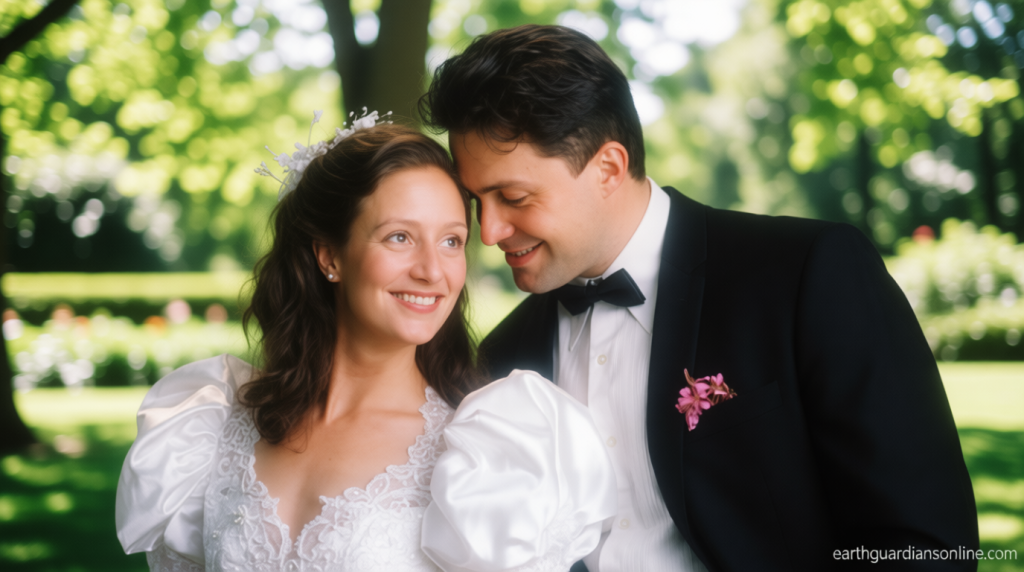
These unassuming wedding photos poke holes – In the realm of visual storytelling, a single photograph can carry profound significance, shaping narratives and challenging societal norms. This piece explores such a moment through the lens of Vibeke Tandberg, a Norwegian artist whose groundbreaking work questions the traditional portrayal of women in wedding photography. Her 1993 series, “Bride,” emerged as a bold critique of patriarchal ideals, blending art, performance, and media manipulation to subvert expectations.
THE SERIES THAT CHALLENGED TRADITION
Vibeke Tandberg, now a celebrated artist, first gained attention in the summer of 1993. At the time, she was a student at Bergen Academy of Art and Design, working on a photography project that would later redefine her career. The concept was simple yet provocative: she posed as a bride, but not for a single groom. Instead, she invited 11 different men—each a stranger—into the frame. These men were not her husbands but participants in a staged yet authentic portrayal of matrimony.
“I was choosing the men, I was the center of the photograph,”
Tandberg explained during a video call from her home in Bergen. The project’s premise was to challenge the long-standing tradition of wedding photography, which often reduces women to a singular, idealized image. By placing herself in a white dress, she aimed to reclaim the narrative, making the bride the focal point rather than a passive figure.
THE BAR AS A STAGE FOR MATRIMONY
Meeting her “husbands” was surprisingly straightforward. The men were selected from her favorite student hangout, a bar in Bergen. “It was my student years,” she said with a wry smile. “I spent six days a week there.” The casual setting added an ironic twist to the formal act of marriage, highlighting the performative nature of the photos. Each man was a different character, yet they all shared the same role in the visual story.
The photographs were taken in a professional studio with a purple backdrop, a choice that further contrasted the traditional wedding aesthetic. Tandberg borrowed her dress from a local bridal shop, agreeing to let the shop use the images as advertisements. Her bouquets were crafted from flowers she gathered from Bergen’s public flower beds, emphasizing the simplicity and accessibility of her setup.
“For him, it was business as usual,”
Tandberg remarked. The photographer treated the shoot like a typical wedding, choreographing poses and capturing the essence of a marital union. This collaboration allowed the artist to step back from the camera, creating a dynamic shift in the creative process.
THE MEDIA’S ROLE IN VERIFYING REALITY
The series was initially displayed at Fotogalleriet in Oslo, where it caught the eye of the Swedish photography magazine Index. It was the first to uncover the artistic stunt, sparking a wave of media attention. Tandberg submitted the photos to 23 regional Norwegian newspapers, presenting them as genuine wedding portraits. Many publications accepted the submissions, often publishing them on the same day or the following one, lending an air of authenticity to the series.
“The meaning of it was to have it confirmed, verified,” she said. The newspapers’ participation transformed the images into a collective testimony, reinforcing the idea that even in a fictional context, media can elevate a story to the realm of truth. The attention from the press propelled Tandberg into national prominence, but the project’s deeper implications remained less obvious.
EMOTIONAL RESONANCE BEYOND THE FORMALITY
Despite the conceptual angle, the series struck a personal chord. Tandberg described the moment she first saw herself in the wedding outfit as a revelation. “Oh my God,” she said, “it touched me somehow.” The men she recruited, often seen as tough and macho, also experienced unexpected emotions. “Some of them would actually tear up at the sight of me,” she recalled. “We were all young, and no one had done this before.”
This emotional connection revealed how deeply ingrained the institution of marriage is in cultural consciousness. Even in a staged scenario, the participants embodied the same yearning and vulnerability as real couples. Tandberg’s work, while rooted in postmodern irony, exposed the raw humanity beneath the formal rituals.
THE ENDURING POWER OF TRADITION
Though “Bride” was designed as a subversive act, it inadvertently highlighted the enduring strength of traditional wedding imagery. Tandberg noted that the project’s success depended on the audience’s belief in the authenticity of the photographs. “We don’t have the same belief in what we read and see and hear,” she observed. “We are skeptical.”
This skepticism makes her work even more compelling in the modern age, where social media and AI challenge the reliability of visual narratives. Yet, the emotional resonance of the series suggests that even with technological advancements, the human connection to cultural symbols remains powerful. Tandberg’s collaboration with the bar scene and the professional studio created a bridge between everyday life and artistic expression, proving that truth can be both constructed and felt.
Today, “Bride” is part of an exhibition at Kode Bergen Art Museum, a testament to its lasting impact. The series not only redefined the role of the bride in photography but also sparked conversations about the intersection of art, identity, and media. For Tandberg, the project was a milestone in her journey as an artist, demonstrating how a single photograph can provoke thought, challenge norms, and connect with people across generations.
