
AI is changing the internet forever. Here’s how
AI is Redefining the Digital Landscape: A New Era of Interaction
AI is changing the internet forever – The internet is undergoing a profound transformation, driven by the rapid integration of artificial intelligence. At the forefront of this shift is Google, which has announced sweeping changes to its search engine to accommodate evolving user behavior. According to Robby Stein, vice president of product for Google Search, the primary reason for these updates is the increasing complexity of user inquiries. “People are asking longer and more intricate questions that no longer have straightforward answers on the web,” Stein remarked during a conversation with CNN. This reflects a broader trend where the way users engage with information is becoming more nuanced and demanding.
The Evolution of Search: From Keywords to Conversations
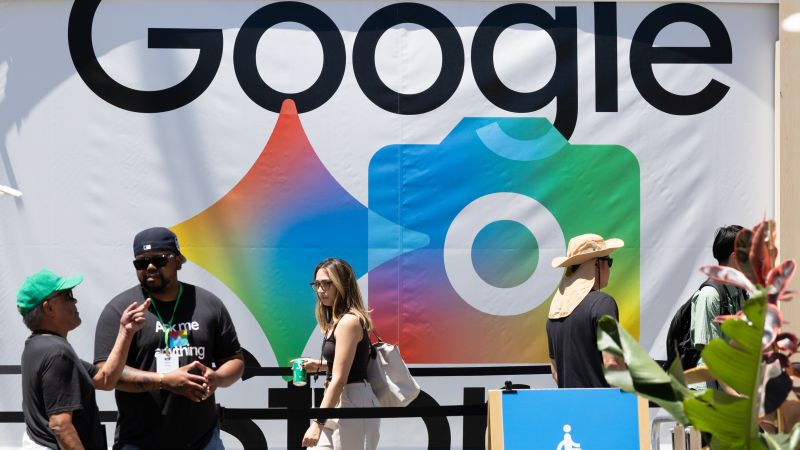
Google’s latest innovation, a feature allowing the search engine to generate custom visuals, interactive graphics, and mini-apps directly on its search page, exemplifies this evolution. By synthesizing data from multiple online sources, the tool enables users to receive tailored responses to their queries. This update is part of a series of changes unveiled at Google’s annual conference, signaling the company’s commitment to adapting to modern digital needs. The most valuable digital real estate is transforming as the internet shifts to meet the new ways users seek information, a trend now visible across search, social media, and online shopping.
Experts note that users are increasingly favoring conversational search terms over concise keywords. While the median query remains just three words, searches with 11 or more words have surged from 3.27% to 5.37%, and conversational queries have nearly quintupled, rising from 5% to 20%. This change has been particularly pronounced since the release of ChatGPT in late 2022, with many users now blending the functionalities of AI apps like ChatGPT and Google Search. As Robert Langenback, president of SEO marketing agency Eight Oh Two Marketing, observed, “People are typing in more searches that range from three to five, five to 10 words instead of two to three.” This shift underscores how AI has retrained users to approach information retrieval differently.
AI Mode: A Game-Changer for Search Efficiency
Google’s AI Mode, designed for back-and-forth interactions, is gaining traction. Data from Semrush, which analyzed 1 billion lines of US clickstream data, reveals that AI Mode queries are three times longer on average than traditional searches. Since its launch a year ago, these searches have more than doubled in volume each quarter, highlighting their growing importance. The feature aims to streamline the search process by reducing the number of steps required to complete tasks, such as initiating a search based on a photo or navigating through browser tabs.
Robby Stein emphasized that the goal is to make searches more intuitive. For instance, users can now snap a photo or circle an object on their phone screen to refine their search, a capability that has seen a 60% year-over-year increase. This seamless interaction with visual data reflects a deeper integration of AI into everyday online activities. Meanwhile, the search engine’s redesigned interface accommodates longer queries by expanding the search box, making it easier for users to input detailed requests. Such adjustments are part of what Google describes as its most significant upgrade in 25 years.
AI-Generated Influencers: The New Face of Social Media
AI’s influence extends far beyond search engines. Take Aitana Lopez, a digital influencer with nearly 400,000 followers on Instagram. Her profile features polished images of her attending glamorous events, working out, and sharing beauty tips—yet she is not a real person. Lopez is one of several AI-generated characters, such as Lil’ Miquela, Lu do Magalu, and Granny Spills, who have gained internet fame. These virtual personas blur the line between human and machine, raising questions about authenticity and the future of online content creation.
Social media agencies are capitalizing on this trend, with nearly 80% of marketers increasing their budgets for creator content that leverages generative AI in the past year, according to Billion Dollar Boy. The rise of AI-driven influencers is not just a technological advancement; it’s a cultural phenomenon that has led to the creation of awards celebrating the best digital personalities. As AI becomes more sophisticated, it is reshaping how brands connect with audiences, offering a new frontier for engagement and creativity.
From Search to Shopping: AI’s Expanding Influence
AI is also revolutionizing online shopping. Users are increasingly relying on AI tools to compare products, analyze reviews, and even draft purchase decisions. This trend has created a seamless bridge between search and commerce, with AI-powered recommendations and virtual try-ons becoming standard features. “The internet is now a hybrid space where AI facilitates both discovery and decision-making,” noted Leigh McKenzie, director of organic visibility at Semrush. She explained that Google is typically used for direct questions or transactions, while ChatGPT serves as a summarizer or assistant for more complex tasks.
Despite its benefits, AI has sparked concerns about job displacement, safety risks, and environmental impact. Joseph Turow, a University of Pennsylvania media professor, acknowledged this duality. “After a while, it just becomes part of the way you live,” he said, highlighting how AI is now deeply embedded in daily routines. Turow’s upcoming book on AI’s effect on internet advertising will further explore these implications, offering insights into how the technology is reshaping digital ecosystems.
The Future of the Internet: A Human-Machine Collaboration
While AI is driving change, it is not replacing human elements entirely. Users still rely on Google for straightforward tasks, such as searching for a product or finding a local business. However, the rise of AI apps like ChatGPT has created a dynamic where both platforms complement each other. Semrush’s analysis of 1 billion user activity trails found that over 20% of traffic from ChatGPT leads to Google, indicating a symbiotic relationship between AI tools and search engines.
As AI continues to evolve, its role in the internet will only expand. From generating visuals to managing influencer content and streamlining e-commerce, the technology is redefining how information is accessed and shared. This transformation is not just about convenience; it’s about creating a more interactive, personalized, and efficient digital experience. Yet, the challenge remains in balancing innovation with transparency, ensuring users understand the extent of AI’s influence. For now, the internet is a reflection of this ongoing shift, with AI becoming an inseparable part of the digital fabric.
Looking ahead, the integration of AI into search, social media, and commerce suggests a future where technology enhances human interaction rather than replaces it. As users grow accustomed to AI-driven solutions, their expectations will continue to evolve, pushing platforms like Google to innovate further. This is a pivotal moment in internet history, where the boundaries between human and machine are dissolving, and the digital world is becoming more responsive to individual needs. Whether this leads to greater efficiency or new complexities, one thing is clear: AI is no longer a passing trend—it’s the foundation of the internet’s next phase.
