
80 years after World War II, Okinawa’s battle sites are still giving up bones and bombs
80 Years After WWII: Okinawa’s Battle Sites Still Reveal History
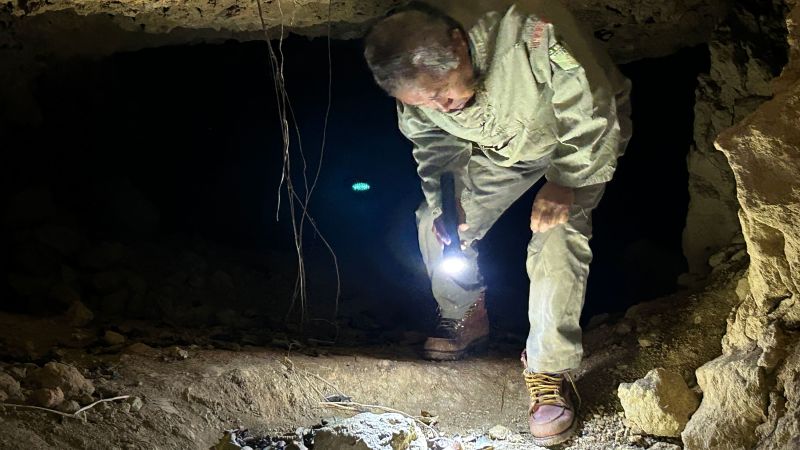
Earthguardiansonline.com – 80 years after World War II, the island of Okinawa continues to yield its wartime secrets. A slender figure navigates through a narrow opening in the rocky hillside of Okinawa’s dense forest. This is Takamatsu Gushiken, known locally as a bone digger. With practiced movements, he squeezes his frame through the cave entrance, mindful of jagged limestone overhead. His forehead lamp illuminates the ground as he works with a small gardening implement, searching for human remains left behind from the Second World War. Gushiken dedicates his spare hours to exploring caves throughout Okinawa, Japan’s southernmost prefecture. His mission centers on honoring those who perished during one of the Pacific theater’s most brutal engagements. When asked about his purpose, he offers a simple response: “They are human, and I am human too.” His voice trembles slightly as he speaks these words. At this particular location, Gushiken has uncovered fragments of a skull near the ear region, tiny bones that might belong to a foot, and even smaller pieces possibly from a young child. He also discovered a bullet casing and formed a theory about events that transpired here nearly eighty years ago. Perhaps a mother and her child sought shelter while combat erupted around them. As American soldiers worked to clear Japanese defenders from caves, these civilians became caught in the crossfire.
The Human Cost of the Battle
These individuals would join approximately 240,000 people who died or disappeared during the Battle of Okinawa. The conflict began when American forces landed on April 1, 1945, and concluded with the United States declaring victory on June 22. According to the National World War II Museum in Louisiana, this total encompasses roughly 100,000 civilians, 110,000 Japanese military personnel and local conscripts, plus over 12,000 American and allied soldiers. The devastation resulted from overwhelming American military might. US forces deployed 1.1 million 105-millimeter howitzer shells across the island, along with more than half a million mortar rounds. Machine gun ammunition totaled over 16 million rounds, while rifle bullets numbered 9 million.
Physical Remains of the Conflict
Today, visitors can encounter tangible evidence of this history. On Ie Shima, an offshore island covering 23 square kilometers, a pawn shop building remains as the sole surviving structure from the intense fighting. This island housed a crucial airfield during the war. In Tomigusuku, the former Japanese Navy underground headquarters displays walls marked by shrapnel. A memorial inscription outside states: “Vice Admiral Minoru Ota and his 4,000 men … committed suicide in this underground headquarters on June 18, 1945.” Near the Sefa Utaki Sacred Site in Nanjo, an unexploded grenade sits beside an unmarked cave entrance, positioned just off a frequently traveled road. Inside, smooth pickaxe marks reveal the cave’s original construction. Ascending a pathway from the Okinawa Peace Park on the southern coastline brings visitors to a cave where Japanese garrison commander General Mitsuru Ushijima ended his life on June 22, 1945, as American troops approached from below.
Preserving Memory Through Archives
Gushiken points out where rifle and machine gun rounds have scarred the rock near a jungle cave. Visitors can document their journey by saving locations on their phone’s map application, then visiting the Okinawa Prefectural Archives to view historical photographs. Archivists have paired American military surveillance images with today’s landscape, creating a powerful visual comparison. Kazuhiko Nakamoto leads efforts to collect and preserve these historical records. He shares how his mother, merely six years old in 1945, survived the battle while separated from her parents. Her grandmother carried her through southern Okinawa, seeking refuge as fighting intensified. “It was like a miracle that she survived,” Nakamoto explains, noting his family belonged to the fortunate ones. Working alongside Nakamoto are archivists Akira Yoshimine and Eriko Nishiyama. Together, they emphasize that Okinawans suffered as casualties of a conflict they did not create. When Tokyo established military garrisons on the island, many residents believed the Japanese forces would protect them from American invasion.
Visiting Okinawa’s War Sites Today
Travelers interested in exploring these historical locations can plan their visits around the island’s many preserved sites. The Okinawa Peace Park offers panoramic views and access to several caves, while the Tomigusuku headquarters provides an intimate look at underground wartime operations. Many sites remain accessible year-round, though visitors should check local conditions before exploring caves. The Okinawa Prefectural Archives maintains regular hours for those wishing to view historical photographs and documents. For a comprehensive experience, visitors often combine cave exploration with museum visits to understand both the physical and human dimensions of this pivotal battle.
Frequently Asked Questions
Q: When did the Battle of Okinawa take place? A: The Battle of Okinawa began on April 1, 1945, and concluded on June 22, 1945, when the United States declared victory.
Q: How many people died during the Battle of Okinawa? A: Approximately 240,000 people died or disappeared, including 100,000 civilians, 110,000 Japanese military personnel and local conscripts, and over 12,000 American and allied soldiers.
Q: What can visitors see at the Okinawa Peace Park? A: The Okinawa Peace Park offers panoramic views and access to several caves, including one where General Mitsuru Ushijima ended his life on June 22, 1945.
Q: Where can I view historical photographs of Okinawa’s battle sites? A: The Okinawa Prefectural Archives maintains historical photographs and documents, with archivists pairing American military surveillance images with today’s landscape.
