
China loves historic sites. Tourists don’t mind if they’re not the originals
China’s Fake History Towns: Why Tourists Love the Illusion
Earthguardiansonline.com – China takes immense pride in its storied past, yet a considerable portion of that heritage has vanished through centuries of conflict, natural disasters, theft, and political upheaval. To fill this void, the nation has embraced fanggu—a concept translating to “historical imitation.” These attractions replicate ancient Chinese life with meticulous attention to detail, creating entire villages that appear centuries old despite being constructed recently.
Every element receives careful consideration during construction. Vines are moved en masse to create aged appearances, while roof tiles are mechanically broken to simulate weathering. The outcome produces an impressive, occasionally peculiar blend of architectural styles, historical periods, and regional characteristics that captivates modern visitors.
The Emotional Appeal of Faux Heritage
According to Yang Jinsong, who directs the International Institute at the China Tourism Academy, contemporary travelers demonstrate growing willingness to invest in meaningful experiences. Speaking with People’s Daily in June, he noted that consumers increasingly seek emotional resonance and cultural significance through immersive activities. For domestic visitors navigating economic uncertainty, these recreated historical environments provide an ideal retreat.
Costs remain accessible for most tourists. Visitors typically spend approximately $15 to select from numerous traditional Hanfu garments. Adding makeup, accessories, professional photography services, and editing brings the total to roughly $25. These portrait sessions have achieved viral status on Xiaohongshu, also known as RedNote, where the pale complexion and crimson lips aesthetic dominates feeds.
International tourists have begun participating as well. The Chinamaxxing phenomenon, driven by social media enthusiasm, has inspired numerous young travelers to schedule journeys to China specifically to experience its cultural aesthetics firsthand.
Gubei: A Northern Water Village That Never Was
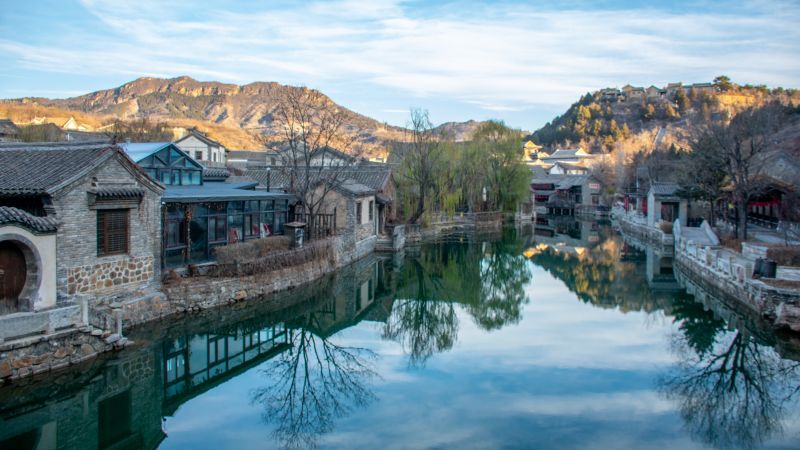
Located at the base of the Simatai segment of the Great Wall, Gubei presents canals, stone pathways, teahouses illuminated by lanterns, and residences featuring gray roofing tiles. The destination offers boat excursions along banks shaded by ancient willow trees and exploration of central plazas where weathered signs emerge from climbing vegetation.
Guides frequently ask whether Qing Dynasty riverside living isn’t wonderfully romantic. Gubei markets itself as a quintessential Jiangnan water village, despite the geographical contradiction—Jiangnan literally means “south of the Yangtze River,” placing it approximately 800 miles from this northern location.
Unlike genuine historical sites, Gubei emerged in 2014 through a state-supported development project. This $600 million endeavor merged two of China’s most treasured landmarks: the northern Great Wall and southern water towns. Accessibility improved dramatically as well; what once required a two-hour flight from Beijing now demands only a two-hour drive.
Recent years have seen Gubei capture both local and international attention. Travel aggregation platforms such as Klook now package the Great Wall visit with the water town experience, advertising an escape from urban chaos into an “ancient village setting.” By July 2026, the platform recorded more than 10,000 reservations and 2,200 customer evaluations, yielding an impressive 4.9-star average score.
Accommodation options span from modest guest houses to luxury resorts managed by state enterprises, with premium rooms reaching $500 nightly. After ascending the Great Wall, relaxing in a lantern-lit villa offers ideal recovery.
Transparency Concerns and Global Appeal
Most visitors accept Gubei’s modern origins without issue, though some desire greater honesty about its construction. Minyada “Minnie” Chotichaicharin, a Thai student studying abroad, explored Gubei in April. Her two-hour itinerary included traditional crafts, archery demonstrations, hot spring visits, and a boat excursion.
Upon discovering Gubei’s relatively recent origins, Minnie expressed mild disappointment.
“I wouldn’t mind that it’s rebuilt,” she explained, “but it’s hard to not feel tricked.”
Xi’an’s Modern Revival
Meanwhile, Xi’an continues its transformation. Around 750 A.D., this city ranked as the world’s largest and most diverse urban center. Serving as a crucial Silk Road connection, it welcomed merchants from Asia, Europe, and the Middle East. Today, Xi’an maintains strong Chinese identity while embracing contemporary entertainment.
Along pedestrian thoroughfares, tourists photograph statues honoring Tang Dynasty poets. A sophisticated bakery displays an impressive dragon sculpture crafted entirely from baguettes. The city, which served as China’s capital for over a thousand years, now features Datang Everbright City—a vibrant recreation of the Tang Dynasty’s golden era.
Red pagodas illuminate the night while Chinese electronic dance music pulses through the streets. Positioned near the location of ancient curfews, the 2,100-meter pedestrian corridor attracts approximately 75 million visitors annually. While historical interest draws some crowds, the majority arrive for the neon-lit entertainment scene that keeps the city awake well past midnight.
Related Reading
Frequently Asked Questions
What is China loves historic sites Tourists don t?
China loves historic sites Tourists don t is the main topic of this guide. The article explains the context, practical details, and next steps readers should understand.
Why does China loves historic sites Tourists don t matter?
China loves historic sites Tourists don t matters because readers are looking for a useful answer, not just a short summary. Good content should match search intent and help them decide what to do next.
