
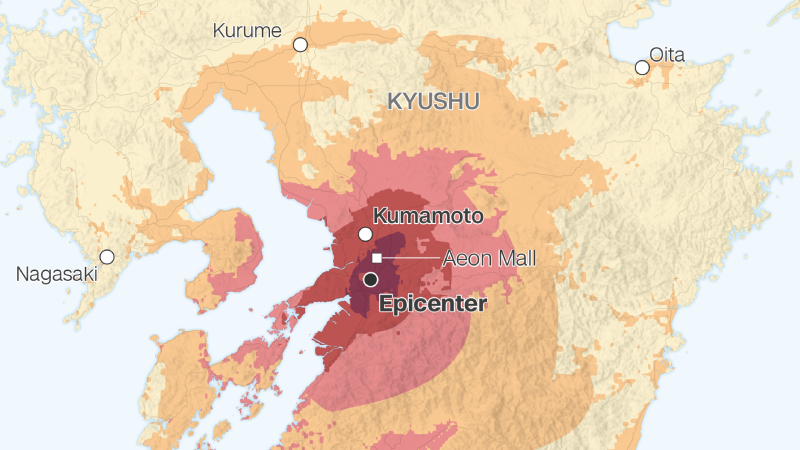
Tracking the impact of the Japan earthquake in maps and charts
Seismic Activity in Kumamoto: New Earthquake Adds to Region’s Ongoing Recovery
A Powerful Tremor Strikes Southern Japan
Earthguardiansonline.com – Residents of Kumamoto prefecture in southern Japan are once again facing the challenges of earthquake recovery following a significant seismic event on Tuesday. The 6.8 magnitude earthquake, one of the strongest recorded in the region in recent years, caused structural damage to buildings and resulted in multiple fatalities alongside dozens of injuries. This powerful tremor serves as a stark reminder of the persistent seismic threats that affect one of the world’s most earthquake-prone nations.
The earthquake was registered on Kyushu, which stands as the southwesternmost of Japan’s four principal islands. Located approximately 550 miles from Tokyo, the nation’s capital city, Kumamoto has a long history of seismic activity that continues to shape life in the region. The timing of this earthquake is particularly notable given that the area is still recovering from a devastating series of earthquakes that occurred in 2016.
Historical Context: Kumamoto’s 2016 Disaster
The 2016 earthquake sequence remains etched in the collective memory of Kumamoto residents. That catastrophic event claimed hundreds of lives and injured thousands more across the prefecture. Beyond the human toll, the 2016 quakes inflicted widespread devastation on both the local economy and critical infrastructure. Perhaps most visibly, the historic Kumamoto Castle, a beloved landmark and symbol of regional pride, suffered extensive damage that required years of restoration work.
Now, with this latest earthquake, the region finds itself navigating another chapter in its ongoing relationship with seismic activity. The proximity in time to the 2016 disaster means that many communities are still rebuilding, and the new tremor has added fresh challenges to recovery efforts.
Understanding the Magnitude and Impact
According to data from the US Geological Survey, this earthquake ranks among more than 200 significant seismic events recorded in Japan since the year 2000. Its estimated magnitude of 6.8 places it on the higher end of this historical scale, indicating a substantial release of energy during the event.
Earthquakes in Japan are measured using a standardized magnitude scale that helps scientists and the public understand the relative strength of each event. A magnitude of 6.8 is classified as “strong” and carries considerable potential for structural damage, particularly in areas with older buildings or infrastructure that may not have been fully upgraded following previous seismic events.
Aftershock Activity Continues
Seismic monitoring has revealed that the earthquake has been followed by additional activity in the region. At least six more quakes have been recorded since the main event, with magnitudes ranging from 4.4 to 5.6. These aftershocks, while smaller than the primary earthquake, can still cause damage and pose risks to residents and emergency responders.
CNN has been tracking the impact of this earthquake through detailed maps and charts that provide visual context for the affected areas. These resources help illustrate the geographic scope of the damage and the regions most impacted by the seismic event.
Japan’s Seismic Resilience
As one of the most earthquake-prone countries globally, Japan has developed sophisticated systems for monitoring and responding to seismic activity. The nation’s experience with earthquakes like Tuesday’s event has led to improved building codes, early warning systems, and community preparedness programs that help minimize casualties and damage.
While the full extent of the damage from this earthquake is still being assessed, the region’s history of recovery suggests that Kumamoto will once again demonstrate resilience in the face of natural disaster. The combined efforts of local authorities, national agencies, and international support will be crucial in the coming days and weeks.
CNN’s Hanako Montgomery contributed to this report.
Related Reading
Frequently Asked Questions
What is Tracking the impact of the Japan?
Tracking the impact of the Japan is the main topic of this guide. The article explains the context, practical details, and next steps readers should understand.
Why does Tracking the impact of the Japan matter?
Tracking the impact of the Japan matters because readers are looking for a useful answer, not just a short summary. Good content should match search intent and help them decide what to do next.
