Getting naked in the world’s largest department store

Daftar Isi
Discovering Korea’s Bathing Heritage in the World’s Largest Department Store
Earthguardiansonline.com – South Korea’s southern coastal city of Busan offers visitors something truly distinctive—a chance to immerse themselves in centuries-old bathing traditions within one of the most modern retail environments imaginable. While American malls typically feature fast-food chains and clothing retailers, Korean shopping centers have evolved into comprehensive wellness destinations where relaxation and commerce coexist seamlessly.
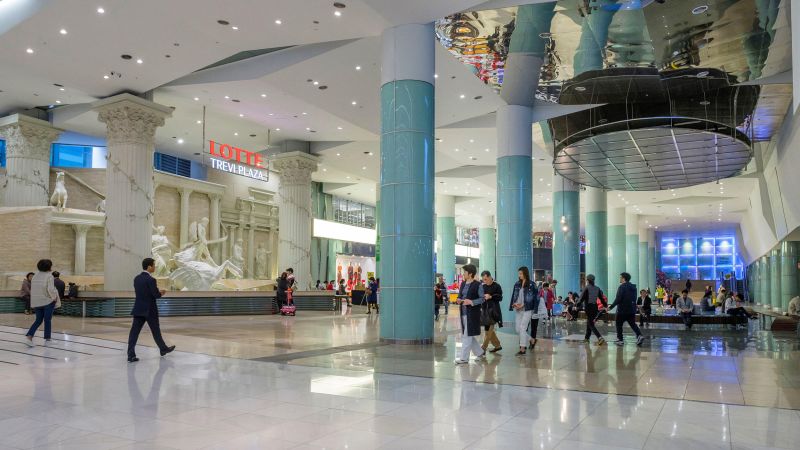
At the heart of this transformation stands Shinsegae Centum City, a magnificent silver and white architectural marvel that initially resembles either an upscale residential tower or contemporary art gallery. Spanning an impressive 3.16 million square feet, this retail behemoth holds the title of the world’s largest department store. Beyond its glittering Chanel cosmetics counters and endless corridors of luxury handbags lies an unexpected treasure: Spa Land, a traditional jjimjilbang that has become a cornerstone of Korean social life.
The Evolution of Korean Bathing Culture
The concept of communal bathing in heated spaces traces its roots back to Korea’s Joseon dynasty, according to Lee In-hye, author of “History of Bathing.” During this historical period, families utilized ondol—a sophisticated underfloor heating system—to warm their living quarters. Rather than simply heating rooms, people would lie directly on these warm floors, creating an early form of therapeutic body treatment that combined warmth with rest.
Jjimjilbangs – comprised of two Korean words, jjimjil (heated therapy) and bang (room) – are like a Japanese onsen crossed with a Finnish sauna.
As South Korea rapidly modernized throughout the twentieth century, urban populations migrated from traditional Korean houses into apartment complexes equipped with centralized heating. For many residents, this transition meant losing access to the communal heating experience that had defined daily life for generations. In response, a group of Busan women pioneered a solution by creating a shared building with heated floors, essentially recreating the ondol experience in an urban setting. This innovation marked the birth of the modern jjimjilbang.
From Local Innovation to National Institution
The Busan model proved so successful that it quickly spread to Seoul, particularly gaining popularity in the densely populated Gangnam district. By July 1995, the South Korean government formally recognized jjimjilbangs as legitimate establishments and established comprehensive guidelines for their operation. This official recognition helped legitimize what had previously been considered an informal social practice.
Today, thousands of jjimjilbangs operate throughout the country, each offering increasingly sophisticated services to attract and retain customers. These establishments have evolved into full-service wellness centers featuring beauty treatments, snack bars, nail salons, cafes, and dedicated sleeping rooms. Many incorporate specialized saunas using salt, clay, or charcoal, while committed visitors can spend entire days without needing to interact with the outside world.
A Unique Social Experience
For international visitors, removing clothing in a shared public space may initially feel awkward. However, this vulnerability often transforms into empowerment as guests observe the natural, unselfconscious interactions between locals. Multigenerational groups of women frequently visit together, creating scenes where grandmothers, mothers, and granddaughters relax side by side. Friends help each other pin up hair, while younger visitors assist older guests in navigating the slippery pool areas.
The atmosphere promotes genuine body positivity, where physical appearance matters less than the shared experience of relaxation and community. This social dimension distinguishes Korean jjimjilbangs from Western spa experiences, where privacy and individual treatment dominate.
Why Busan Remains Special
While Seoul attracts the majority of international tourists, Busan provides a more relaxed alternative that complements the capital’s energy. The city’s geographical advantages extend beyond its coastal setting—natural spring water pumped from deep underground feeds into Busan’s jjimjilbangs, enhancing the therapeutic qualities of the bathing experience.
The global phenomenon known as hallyu, or the Korean Wave, has transformed how international travelers approach South Korea. A decade ago, most foreign visitors spent only one or two days in Seoul before departing. Today’s tourists increasingly explore beyond the capital, and Busan’s combination of natural beauty, cultural authenticity, and modern amenities makes it an ideal destination.
For first-time visitors to South Korea or anyone new to communal spa culture, Spa Land at Shinsegae Centum City offers an accessible introduction. Its English-friendly staff, convenient location within the world’s largest department store, and straightforward layout make it an excellent starting point for understanding this uniquely Korean tradition of heated therapy and social connection.
Related Reading
Frequently Asked Questions
What is Getting naked in the world s largest?
Getting naked in the world s largest is the main topic of this guide. The article explains the context, practical details, and next steps readers should understand.
Why does Getting naked in the world s largest matter?
Getting naked in the world s largest matters because readers are looking for a useful answer, not just a short summary. Good content should match search intent and help them decide what to do next.