Low water in Rome’s drought-hit Tiber river exposes ancient ruins of Nero’s Bridge

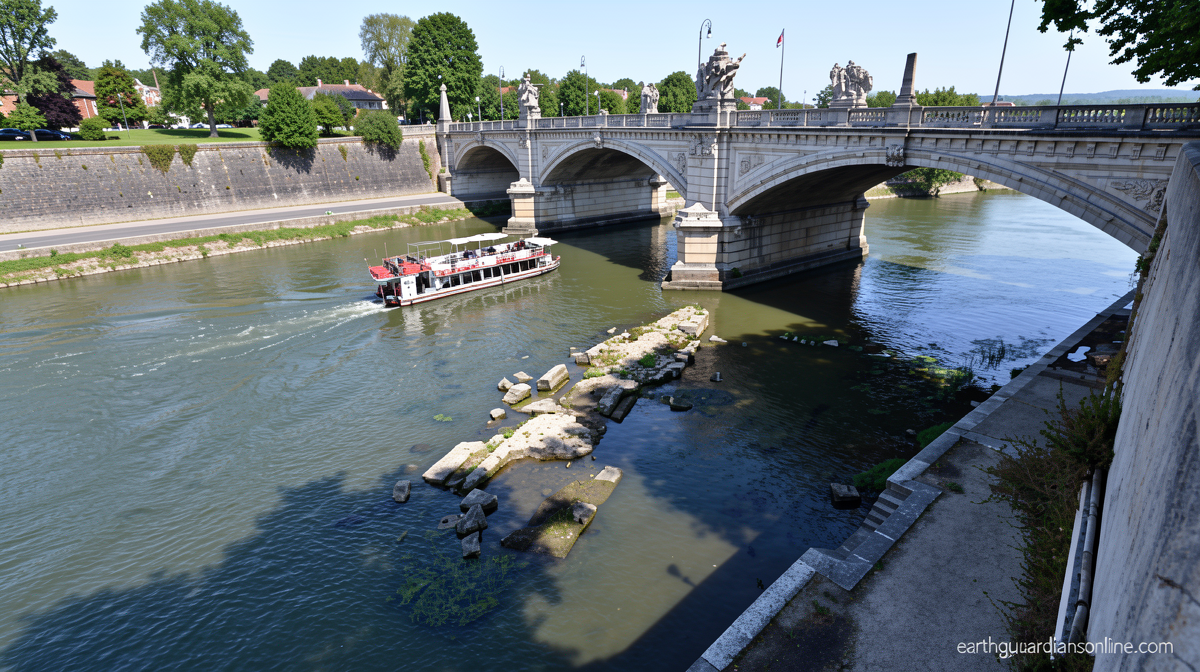
Nero’s Bridge Revealed as Rome’s Drought Lowers Tiber Levels
Earthguardiansonline.com – Low water in Rome s drought has transformed the Tiber River into an archaeological showcase. Visitors and locals alike are marveling at the exposed ancient ruins of Nero’s Bridge, a monumental stone structure that has lain hidden beneath the river’s surface for nearly two millennia. The severe summer heatwave, combined with an extended dry season, has turned the normally flowing waterway into a stage for historical discovery.
Unprecedented Water Levels Create Archaeological Opportunity
The Tiber’s current flow rate has plummeted to less than 80 cubic meters per second, representing a dramatic decline from typical seasonal patterns. Giovanni Giganti, who coordinates civil protection efforts for Rome, has characterized the situation as a significant water emergency. The coordinator explained that despite receiving substantial precipitation during the previous winter, the region experienced extended periods without rainfall that ultimately depleted reservoirs and river levels.
“We are facing a major water crisis. And it is a crisis that is also due to the fact that this winter we did have quite abundant rainfall, but then the dry periods … were quite long,” Giganti told the Associated Press.
This hydrological situation has created conditions rarely seen in modern times. The river, which draws its waters from tributaries originating in the northern Apennine Mountains, has dropped to approximately half of its normal volume for this season. Such dramatic reductions expose not only the ancient bridge but also various objects that have accumulated in the riverbed over decades of urban life.
A Monument with Imperial Origins
The exposed structure carries a name that reflects the complex history of Roman imperial succession. Historical records indicate that Emperor Caligula originally commissioned the bridge around 39 AD as a triumphal monument celebrating military victories. However, the structure bears the name of Caligula’s nephew, Nero, who ruled from 54 to 68 AD. During his reign, Nero systematically renamed numerous ancient buildings and monuments after himself, a practice that ensured his legacy would endure long after his death.
The bridge served as a vital connection between two of Rome’s most historically significant districts. On one side stood the ancient Campus Martius, an area that today encompasses the famous Spanish Steps, the Piazza del Popolo, and the luxurious shopping district surrounding Via Condotti. On the opposite bank lay the Circus of Nero, the stadium where the apostle St. Peter met his martyrdom. This sacred site would eventually become the foundation for both St. Peter’s Basilica and the entire Vatican City complex.
Archaeological Significance and Public Access
For most of the year, the Pons Neronianus remains completely submerged, accessible only to divers and underwater archaeologists. This year’s drought has revealed substantial portions of the ancient stonework, allowing researchers unprecedented access to study the construction techniques and materials used by Roman engineers. The best vantage point for viewing the exposed structure is from the Bridge of Angels, which provides a direct pathway to Castel Sant’Angelo near the Vatican.
Beyond the bridge itself, the receding waters have uncovered a surprising collection of modern artifacts. Further upstream from the ancient structure, investigators have discovered electric bicycles, motor scooters, household refrigerators, and even an automobile that have settled into the riverbed over time. These contemporary objects create a fascinating juxtaposition with the two-thousand-year-old Roman engineering marvel.
Broader Implications for Rome and Italy
The current drought situation reflects broader climate patterns affecting the Mediterranean region. While the exposed bridge offers a visual spectacle for tourists and a scientific opportunity for archaeologists, it also signals potential challenges for the city’s water management infrastructure. Rome’s reliance on the Tiber for drinking water, agriculture, and flood control makes sustained low water levels a concern for municipal planners.
The last time the Pons Neronianus emerged from the river was during a comparable drought event in 2022. However, experts suggest that such occurrences may become more frequent as climate patterns shift. The exposed monument serves as both a reminder of Rome’s imperial past and a barometer for the environmental challenges facing the modern city.
Frequently Asked Questions
When did the drought begin in Rome? The drought started earlier this year, with the Tiber River reaching record-low levels during the summer months of 2026.
How low has the Tiber River dropped? The river has fallen to approximately half of its normal volume for this season, with flow rates below 80 cubic meters per second.
What can visitors see at Nero’s Bridge? Visitors can view the ancient stone structure, along with modern artifacts like electric bicycles, motor scooters, and even a car that have settled in the riverbed.
Is this the first time the bridge has been exposed? No, the Pons Neronianus was last exposed during a similar drought event in 2022.
What are the implications for Rome’s water supply? Sustained low water levels pose challenges for Rome’s drinking water, agriculture, and flood control systems, prompting concerns among municipal planners.