12 killed after Missouri plane crashes in one of the deadliest US skydiving incidents in decades, officials say

Missouri Skydiving Plane Crash Claims 12 Lives, Officials Report
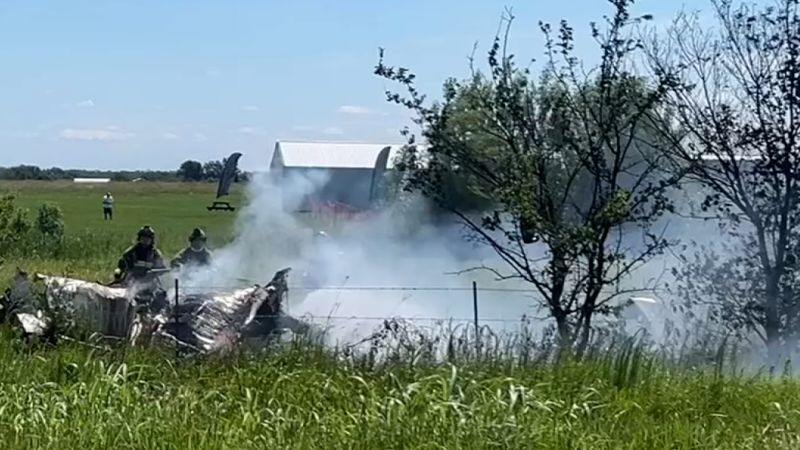
12 killed after Missouri plane crashes – Sunday’s tragic incident at Butler Memorial Airport in western Missouri left 12 people dead when their plane crashed shortly after departure, marking one of the most severe skydiving-related aviation disasters in decades, according to local authorities. The Federal Aviation Administration (FAA) confirmed the crash occurred around 11:35 a.m. local time, with the aircraft failing to gain altitude before veering sharply left and plummeting into a field adjacent to the runway. The exact cause remains under scrutiny, and the National Transportation Safety Board (NTSB) may take up to two years to finalize its findings.
Acting airport manager Dennis Jacobs, who also serves as Bates County emergency management director, described the sequence of events. “The plane was struggling to achieve visual altitude and executed a sudden left turn, leading to the crash approximately 300 yards from the takeoff area,” he told The Associated Press. Missouri Highway Patrol Sgt. Justin Ewing added that the aircraft was fully engulfed in flames upon impact. While the initial cause of the crash is unclear, Jacobs suggested the pilot may have been attempting to maneuver toward the highway for a landing, only to lose control and descend nose-first.
David Soucie, a CNN aviation safety analyst, concurred with Jacobs’ assessment but emphasized that early conclusions are tentative. “The engine type is generally reliable, so the power loss could stem from fuel-related issues such as water contamination or a malfunctioning filter, rather than maintenance or pilot experience,” he explained. This insight highlights the complexity of the investigation, which will involve a team of experts arriving at the scene on Monday to conduct a thorough analysis.
Community Shocks and Losses
Travis Phippen, a local skydiver who lost several friends in the crash, described the event as “heartbreaking.” “The skydiving community is tightly knit, and these individuals were deeply influential in shaping countless lives,” he said in a statement. While the inherent risks of the sport are well understood, the sudden loss of so many respected members of the community has left a profound impact.
Officials have been meticulously examining the crash site, using both foot patrols and drone technology to determine if any passengers managed to exit the aircraft before impact. Nine of the victims were seasoned skydivers, while two were preparing for tandem jumps. The identities of the deceased have not yet been officially released, though some family members were present during the event.
US Rep. Mark Alford, a Missouri Republican, expressed his grief over the tragedy. “It’s a beautiful day with clear skies and green grass, and people are out enjoying an activity that some of these individuals were just preparing for,” he remarked. The incident has drawn attention to the safety protocols of skydiving operations, which rely on smaller aircraft like the one involved. The aircraft was operated by Skydive Kansas City, a company with over 25 years of experience and sister locations in Indianapolis and Wisconsin.
“This is a devastating loss for everyone connected to Skydive Kansas City and the broader skydiving community,” the company stated in a press release to KCTV. “Our focus now is on supporting the investigation and providing care for our staff and the community. We are all in shock, and the tight-knit nature of this group has been deeply affected.”
Regulatory Context and Safety Measures
Aircraft used for skydiving operate under FAA Part 91 regulations, which govern general aviation and are less stringent than the rules for commercial scheduled flights under Section 121. This framework allows for greater flexibility in operations but also raises questions about safety margins. While the May 2024 crash at the same airport resulted in no fatalities, it underscored the potential risks associated with such flights.
Following the Sunday tragedy, both local and state law enforcement, along with trained grief counselors from the Missouri Department of Mental Health’s Behavioral Health Strike Team, responded to the scene. The sheriff confirmed that the airport will remain closed for an unspecified duration to facilitate the investigation. Butler Memorial Airport, a rural facility about an hour’s drive south of Kansas City, features a single runway measuring nearly 4,000 feet and lacks a control tower. Pilots communicate via a common frequency to coordinate their movements, a practice that remains in place during the inquiry.
According to the US Parachute Association, there have been eight fatal skydiving-related crashes in the past decade, accounting for 25 total deaths. The recent incident at Butler Memorial Airport adds to this grim statistic, reigniting debates about the safety standards for smaller aircraft. “While Part 91 provides freedom for operators, it also means fewer safeguards compared to commercial aviation,” said Soucie, noting that the crash could have been influenced by a range of factors from mechanical issues to environmental conditions.”
Local officials are working closely with the NTSB to piece together the sequence of events. The initial investigation will focus on the plane’s engine performance and the pilot’s decisions in the moments before the crash. “It’s critical to understand whether the power loss was sudden or gradual,” Jacobs added, highlighting the need for a comprehensive review of the flight data and cockpit recordings.
The incident has sparked a wave of condolences and reflections within the skydiving community. As the investigation unfolds, questions about the safety of these operations will continue to dominate discussions. For now, the focus remains on uncovering the truth behind the crash, with officials and analysts alike emphasizing the importance of transparency and learning from the tragedy to prevent future losses.