
Iron Age woman likely had her brains scooped out before burial, study suggests
Iron Age Woman Likely Had Her Brains Scooped Out Before Burial, Study Indicates
Iron Age woman likely had her brains – A groundbreaking analysis of an Iron Age Scottish woman’s remains suggests she may have undergone a ritual where her brain was extracted shortly after her death, as part of a complex funerary tradition. This discovery, detailed in a study published in the journal *Antiquity*, offers new insights into the cultural practices of prehistoric communities in the region. Researchers from the United Kingdom and the United States examined the skeleton, uncovering evidence of deliberate modifications that hint at a unique approach to burial customs.
Skull Modifications Point to Brain Removal
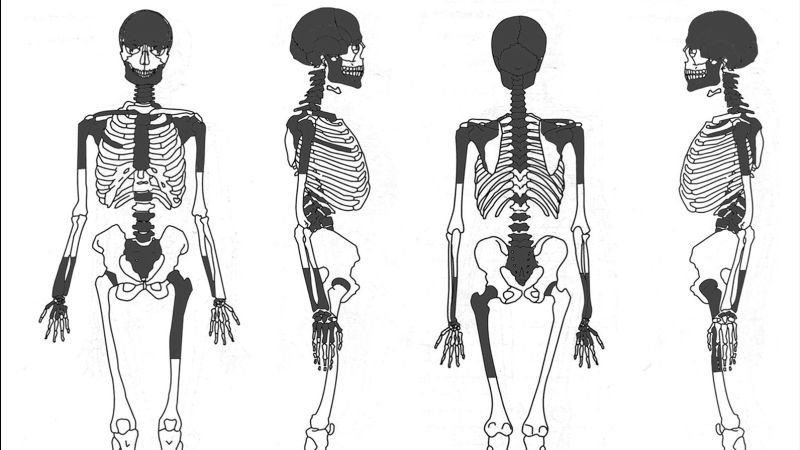
The woman, believed to have lived over 30 years ago, displayed distinct cuts on the inner surface of her skull. These parallel, straight incisions were likely made using a sharp instrument, as the study notes. The pattern of these marks aligns with the idea of intentional action rather than accidental damage. Additionally, the base of her cranium showed an unusual fracture, which the team interprets as a targeted impact. This suggests that the process of removing her brain was carefully planned, with the base of the skull serving as the primary access point.
“The cuts are in the region where ligaments connect the brain to the skull, making it logical to assume the brain was removed in this area,” explained Laura Castells Navarro, a lead researcher and postdoctoral associate at the University of York. She emphasized that this method would allow the skull to remain intact while facilitating the extraction of the brain.
The study’s findings are further supported by the condition of the woman’s remains. The fractures and cutmarks appear to be recent, indicating the procedure was performed shortly after death. This contrasts with the more gradual processes seen in other archaeological contexts. Navarro highlighted that the brain removal likely involved a precise combination of cutting and fracturing, tailored to achieve the desired outcome.
Bone Modifications Reflect Intricate Rituals
In addition to the skull alterations, the team discovered that at least four long bones—specifically the femur, humeri, and ulna—had been modified before burial. Earlier reports had speculated that these changes could have been caused by rodent activity, but Navarro refuted this, pointing out that rodent marks are typically uneven and irregular. Instead, the analysis reveals signs of deliberate polishing and shaping.
“The bones show a level of smoothness that’s not consistent with natural gnawing. We think they were snapped and then meticulously tapered to a sharp edge,” Navarro said. She noted that the ulna and humeri bore the most pronounced modifications, while the femur had a flat, polished finish, suggesting different techniques were applied to each bone.
The precise purpose of these bone alterations remains unclear. The study posits that the practice could have signified respect for a community member of high status or, alternatively, served as a form of symbolic treatment for someone perceived as an outsider. Despite the significant changes to her remains, the bones were returned to their correct anatomical positions within the grave, a detail that the researchers interpret as a gesture of reverence rather than degradation.
Context of the Discovery
The woman’s remains were uncovered in 2000 beneath a cairn—a stone structure commonly found on Scottish hillsides—on the northern edge of the mainland. Her skeleton was found alongside another individual, likely a young male who died around 15 years of age. Unlike the woman, the boy’s remains did not show signs of complex trauma, raising questions about the variations in treatment between the two individuals.
Further analysis of both skeletons involved DNA testing, radiocarbon dating, and chemical examination of their molar teeth. The results suggest a close genetic relationship, possibly maternal second cousins who shared a common great-grandparent. Both individuals are estimated to have lived between 50 BC and 70 AD, though they may not have been interred simultaneously. This timeframe aligns with broader Iron Age cultural trends in the region.
Broader Implications for Iron Age Practices
While the woman’s brain removal is a rare find, it fits into a pattern of human remains being manipulated and recontextualized in Iron Age societies. Navarro noted that similar modifications have been documented at other sites, where skulls were often pierced or fragmented as part of rituals. These changes might have served to display the body’s connection to the deceased or to create symbolic objects.
“What we’re seeing here is part of a wider interaction between the living and the dead, where ancestors were honored through careful curation of their remains,” Navarro remarked. She added that the practice reflects a deep understanding of human anatomy and a commitment to preserving the body’s structure, even after transformation.
The study also highlights the diverse ways in which Iron Age communities handled their dead. While some remains were buried in traditional cemeteries, others were placed in unexpected locations, such as homes, doorways, pits, or natural caves. This variability suggests that burial practices were not uniform but instead adapted to cultural, social, or environmental factors.
Although the exact motivation behind the brain extraction remains uncertain, the ritualistic precision of the cuts and the intentional placement of the bones imply a deliberate act. Navarro speculated that the practice could have been tied to beliefs about the afterlife, identity, or the symbolic significance of the brain in Iron Age cosmology. The combination of skull fractures and polished bone surfaces adds layers to this mystery, prompting further investigation into the meaning behind such modifications.
These findings contribute to a growing body of evidence about the complexity of prehistoric funerary rites. By examining the physical traces left on the body, researchers can reconstruct rituals that may have been performed centuries ago. The study underscores the importance of interdisciplinary approaches, combining archaeological analysis with biochemical and genetic methods to uncover deeper cultural narratives.
As the team continues to explore the Iron Age context, they emphasize that the brain removal is not an isolated event but part of a larger tradition of treating human remains with care and intention. This practice may have been a way to honor the deceased, integrate them into the community’s memory, or mark their significance in a way that transcends mere physical existence. The discovery of this woman’s skeleton, with its unique modifications, provides a compelling glimpse into the lives and beliefs of those who lived in the region thousands of years ago.
