
A Japanese mayor is making history — by taking maternity leave
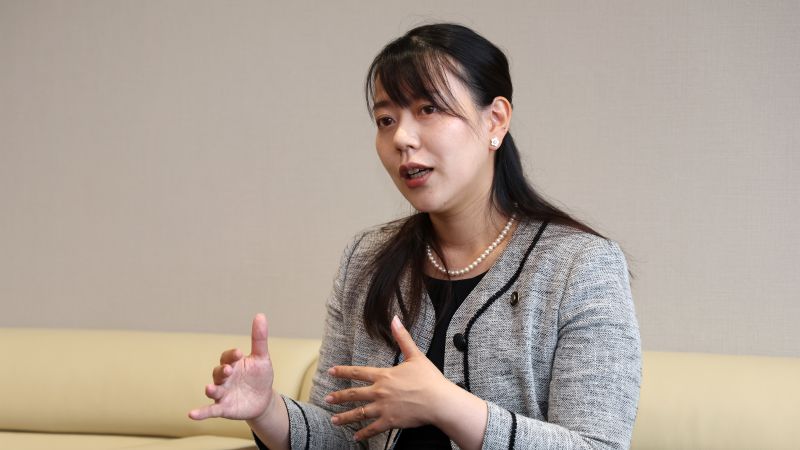
A Japanese Mayor is Making History — by Taking Maternity Leave
A Japanese mayor is making history – Shoko Kawata, the youngest elected female mayor in Japan, has become a focal point in a growing conversation about gender equality and work-life balance. Her decision to take maternity leave in the lead-up to the birth of her first child has sparked a national dialogue, highlighting the challenges faced by women in leadership roles. The 35-year-old mayor of Yawata, a city in Kyoto Prefecture, announced her plan to step back from public duties for 16 weeks — eight weeks before and eight weeks after childbirth — marking a significant shift in Japan’s traditionally male-dominated political landscape.
A Break from Tradition
Kawata’s announcement comes as Japan continues to struggle with a declining birth rate and persistent gender disparities in politics. While maternity leave is a standard benefit for public employees, elected officials like mayors are not legally entitled to guaranteed time off. This gap in policy has left many women in leadership positions caught between career ambitions and family responsibilities. Kawata’s move, however, challenges these norms and offers a new model for balancing professional and personal life.
The mayor, who took office in 2023, is set to give birth in mid-September. Her plan to take extended leave has drawn both praise and criticism, with some viewing it as a bold step toward progress and others questioning its impact on public service. Kawata’s supporters argue that her decision reflects a broader need for systemic change, while detractors claim it could be seen as a temporary absence from leadership duties.
Setting a New Standard
“I hope this will serve as a catalyst for changing the system,” Kawata told CNN. “It’s not just about me; it’s about showing that child-rearing and childbirth can coexist with professional responsibilities.” Her remarks underscore a growing desire among women to redefine their roles in both the workplace and politics. The country’s first female prime minister was elected just a year ago, yet women still make up less than 15% of the House of Representatives, according to data from the International Parliamentary Union.
Kawata’s city, Yawata, has a population of nearly 70,000 and is located about 285 miles southwest of Tokyo. To ensure continuity during her absence, she has appointed a deputy mayor to manage daily operations. Despite her plans to care for her newborn at home, she intends to stay connected by checking emails regularly. This approach reflects her belief that elected officials should be able to maintain their responsibilities while addressing personal life events.
The debate over Kawata’s maternity leave has intensified on Japanese social media platforms. Some critics argue that public officials should be fully committed to their roles and that time away from duty may be seen as inefficient. Yet, those who have spoken with her in person have expressed strong support. “They’ve been telling me to go ahead and take it,” Kawata said. “The staff and the public have been very understanding.”
Old Assumptions in a Modern Society
Sawako Shirahase, a sociology professor at the University of Tokyo, noted that Japan’s attitudes toward work and family are still shaped by outdated norms. “Many of the assumptions about government roles are based on very traditional views that don’t align with the realities of today’s working women,” she explained. While the legal framework does not mandate maternity leave for mayors, it also does not prevent them from taking it. “It’s a gray area,” Shirahase said. “There’s no prohibition, but there’s also no clear support system in place.”
This ambiguity has allowed Kawata to become a symbol of change. Stefanie Schwarte, a researcher at the Japan Center of Ludwig-Maximilians-Universität, highlighted the increasing number of female mayors in recent years. Over the past five years, the count of women holding mayoral positions has risen from approximately 50 to nearly 80, out of over 1,700 municipalities as of early 2026. “More women are breaking traditional barriers in local governance,” Schwarte said. “They are proving that leadership can be shared, and that sustained service is possible regardless of gender.”
A National Crisis and Personal Choice
Kawata’s leave is also part of a larger national effort to address Japan’s demographic challenges. The country recorded 671,236 births of Japanese nationals in 2025, a new record low that marks the 10th consecutive year of decline. To counter this trend, the government has introduced policies such as childbirth subsidies and housing support, while also encouraging fathers to take paternity leave. However, many experts point to cultural factors as the root cause of the crisis.
Japan’s overwork culture, often referred to as “karoshi” — or death by overwork — has long been a barrier to family planning. Employees across sectors report grueling hours and high-pressure environments, making it difficult to balance career and parenthood. “The rising cost of living and the expectation of long working hours push young people to prioritize their careers over starting a family,” said Schwarte. This dynamic has contributed to the country’s stagnating birth rate and limited representation of women in political leadership.
Kawata’s decision to take maternity leave is not just a personal milestone but a potential turning point for Japan’s political culture. By stepping away from her role, she is challenging the notion that elected officials must always be present at the workplace. Her actions could inspire a shift toward more flexible policies that accommodate the diverse needs of workers, particularly women. “This is a signal that work-life balance is possible,” Shirahase said. “It shows that even in a system that’s been slow to change, progress is achievable.”
As Japan grapples with its demographic and gender challenges, Kawata’s example offers a glimpse of what the future might hold. Her leadership, both as a mayor and a new mother, is a testament to the evolving role of women in society. While her maternity leave may be a small step, it carries significant implications for the country’s approach to work, family, and public service. “I want to demonstrate that a woman can lead a city and still have a family,” Kawata said. “That’s the message I hope to convey.”
A Ripple Effect on Policy
Experts believe Kawata’s choice could influence future legislation and workplace practices. “If more women follow her lead, it could pressure governments to create formal maternity leave policies for elected officials,” Shirahase suggested. Schwarte added that the growing number of female mayors is already reshaping perceptions of leadership. “They are proving that anyone — man or woman — can serve their communities effectively,” she said. “This is a powerful message for the next generation.”
As the debate continues, Kawata’s position as a trailblazer remains central. Her journey from a first-time mother to an elected leader highlights the intersection of personal and public life in Japan. While the path to gender equality is still long, her actions are a reminder that progress is possible. “This is about more than one person,” she said. “It’s about creating a system that supports all individuals, regardless of their roles.”
In a country where tradition often dictates the pace of change, Kawata’s maternity leave represents a small but meaningful shift. Her story is one of determination, offering hope that future leaders will prioritize flexibility and inclusivity. As Japan looks to address its declining birth rate and gender gaps, the mayor’s example may prove to be a vital part of the solution.
