
A total solar eclipse will occur this summer. Everything you need to know
A Total Solar Eclipse Will Occur This Summer. Everything You Need to Know
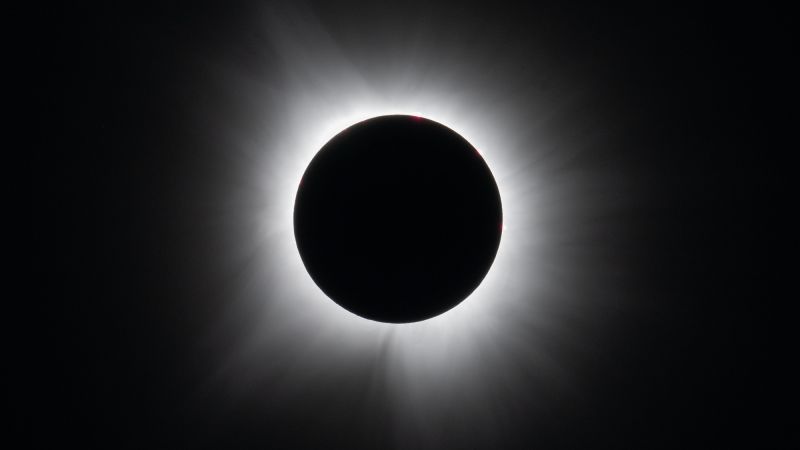
A total solar eclipse will occur – This summer will witness a total solar eclipse, a rare celestial event that will captivate the skies for the first time in over two years. The phenomenon occurs when the moon passes directly between the sun and Earth, casting a shadow that fully obscures the sun’s light in specific regions. NASA explains that during such an event, the sun’s radiance is entirely blocked, creating a brief moment of darkness that can be experienced by observers in select areas.
Where the Eclipse Will Be Visible
For those in Greenland, Iceland, northern Spain, and northeastern Portugal, the eclipse will offer a glimpse of totality. In these locations, the sun will vanish completely, plunging the environment into a temporary twilight. Meanwhile, a partial eclipse will be observable across parts of Europe, Africa, and North America, where only a portion of the sun will be obscured. The event’s path of totality, stretching over 5,157 miles (8,300 kilometers), begins near the Arctic coastline and moves toward the North Pole before traversing Greenland, Iceland, and into the Iberian Peninsula.
The duration of totality varies significantly across the path. In Greenland, observers will experience approximately two minutes of darkness, while those in northern Spain may witness only around 20 seconds of the eclipse before the sun reemerges. The Spanish Scientific and Advisory Committee for the Trio of Eclipses notes that the path will pass over Galicia and the Balearic Islands as sunset approaches, accelerating the shift from day to night. This unique timing means that the eclipse will coincide with the natural transition of light, offering a dramatic visual contrast.
Historical Context and Scientific Significance
The last total solar eclipse visible from mainland Europe occurred in 2006, according to the European Space Agency (ESA). This August event marks the first such occurrence in Spain since 1905, and it is the first of three eclipses the country will experience between now and 2028. Carole Mundell, the ESA’s director of science, emphasized the event’s significance in a statement:
“A total solar eclipse is one of those rare moments when millions of people can look up together and feel both wonder and curiosity. It is a shared moment that connects us to the Universe and reminds us that the desire to explore and understand is one of humanity’s greatest strengths.”
Such eclipses are not just visual spectacles but also scientific opportunities. During totality, the sun’s corona—a luminous halo of plasma—becomes visible, allowing researchers to study its composition and behavior. The public can participate as citizen scientists, contributing observations that help refine solar data. This collaborative effort underscores the eclipse’s role in advancing our understanding of the sun’s dynamics.
Preparation and Viewing Tips
To fully appreciate the event, eclipse enthusiasts should plan ahead. The path of totality will arc across regions, and the timing of the eclipse will depend on geographic location. Time and Date’s website provides detailed information about the event’s visibility, including local times and the sun’s position during the eclipse. For those outside the direct path, the ESA will broadcast a livestream of totality from its Astrophysical Observatory of Javalambre in Teruel, Spain, ensuring broader access to the spectacle.
Viewing a solar eclipse requires careful preparation. Specialized equipment, such as certified eclipse glasses or handheld solar viewers, is essential for safe observation. These tools are designed to filter out the sun’s intense light, which can cause permanent eye damage if viewed without protection. Ordinary sunglasses are insufficient, as they do not block the harmful rays that can burn retinas. Similarly, using optical devices like telescopes or binoculars without proper solar filters is risky, as they can concentrate sunlight and intensify its effects on the eyes.
Inclement weather is a common challenge for eclipse viewers. The Spanish Scientific and Advisory Committee for the Trio of Eclipses warns that cloud cover may limit visibility, especially in areas like the Balearic Islands where the eclipse occurs as daylight fades. Choosing a clear location and checking weather forecasts beforehand can enhance the experience. Additionally, understanding the eclipse’s progression is key—observers should note when the sun begins to disappear, when totality occurs, and when it returns to its full brilliance.
Upcoming Eclipse Events
The August 12 eclipse is not the last of its kind in the coming years. NASA predicts that the next total solar eclipse will cross southern Spain, North Africa, Saudi Arabia, and Yemen on August 2, 2027. This will be another opportunity for global observation, with the path of totality extending across multiple continents. Following that, the United States will see a total solar eclipse again on March 30, 2033, but only in Alaska will the event be visible. The contiguous U.S. will wait until August 22, 2044, when a total eclipse will span from North Dakota to Montana, offering a coast-to-coast experience.
By 2045, the next total eclipse will follow a path that crosses the Lower 48 states on August 12 of that year. This marks the first such event since 1919 and will be the most expansive in the region for decades. Such occurrences are rare, and their visibility depends on precise alignment of the moon, Earth, and sun. For locations outside the path, partial eclipses will still be visible, but the experience will be less dramatic than totality.
Whether viewing from a remote Alaskan tundra or a bustling European city, the August 12 eclipse will be a moment to remember. It is a testament to the enduring fascination with celestial events and the human drive to observe and learn. As the sun’s light is momentarily extinguished, observers will have the chance to reflect on the interconnectedness of our planet and the cosmos, a reminder of the awe-inspiring scale of the universe.
