
What Pope Leo’s Spain visit tells us about his priorities
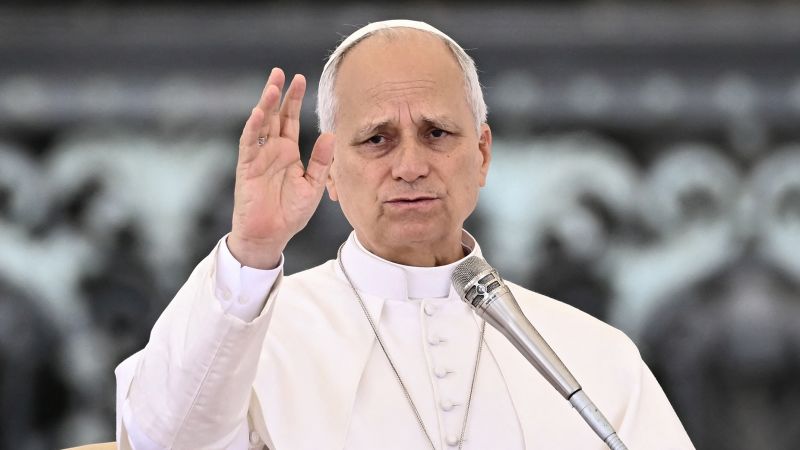
Pope Leo’s Spain Tour: A Focus on Unity and Migration in Europe
What Pope Leo s Spain visit – The Pope, Leo XIV, landed in Spain on Saturday, marking his inaugural significant journey across Europe since assuming the papacy. This visit, spanning June 6 to 12, is poised to highlight his dedication to addressing two pressing concerns: the growing divide among political factions and the challenges faced by migrants seeking refuge in the region. With a backdrop of intense ideological polarization, the Pope’s engagement with Spain’s leaders and public is expected to underscore his vision for fostering reconciliation and compassion.
Engaging with Spain’s Leadership and Society
Leo’s itinerary begins in Madrid, where he will meet with King Felipe VI and Queen Letizia, as well as address the Spanish parliament. This moment holds particular significance, given the current climate of political tension in Spain. Despite the country’s secularization, Catholicism remains a cultural cornerstone, and the Pope anticipates large crowds to greet him. His presence is also anticipated to draw attention to the ongoing issue of clerical sexual abuse survivors, whom he plans to meet during his stay.
“Young people that are looking for something more, having grown up in many cases that, if you will, are without a spiritual dimension in their lives, they realize there’s an emptiness, and a lack of a sense of meaning,” he said.
During his flight to Spain, the Pope remarked on the growing interest in faith among younger generations. He noted that his visit overlaps with a major concert in Madrid by Puerto Rican artist Bad Bunny, suggesting a cultural backdrop that could influence public perception. “If they are confronted with the question: do they want to see Bad Bunny or do they want to see the pope, I think many will see Bad Bunny. But I think there will also be a few here to see the pope. And that says something, you know,” he added, highlighting the contrast between entertainment and spiritual engagement.
A Theological Statement on Migration and AI
Leo’s recent theological document, released last month, emphasized the importance of welcoming migrants as a measure of social justice. The Pope described the treatment of immigrants in the United States as “inhuman” and framed their integration as a moral imperative. This stance is expected to be a focal point during his Spain trip, which coincides with his planned July 4 visit to Lampedusa, a key entry point for those fleeing conflict in the Mediterranean.
While in the Canary Islands and Tenerife, the Pope will meet with immigrants and organizations working to support their integration. He will also honor those who perished at sea during perilous journeys to Europe, a poignant reminder of the human cost of migration. These interactions will reinforce his message that caring for the vulnerable is central to Catholic teachings.
Leo’s concerns extend beyond migration to include the role of artificial intelligence in modern warfare. In his first major theological document, he warned that AI could exacerbate conflicts by enabling more efficient and detached methods of violence. This perspective aligns with his broader critique of war, particularly when it is justified through religious rhetoric. His calls for unity over division have been a recurring theme since his election in May, positioning him as a counterbalance to the Trump administration’s policies.
Spain’s Political Climate and the Pope’s Message
Spain’s political landscape is a mix of left-leaning and right-wing ideologies, with Prime Minister Pedro Sánchez at the forefront of the former. Sánchez, who has openly opposed U.S. military actions in Iran, invited Leo to Spain to emphasize shared values. The Pope’s visit also offers an opportunity to address the nation’s internal divisions, as Sánchez recently defended the pontiff against criticism from Donald Trump.
“While some sow wars, Leo XIV sows peace,” Sánchez stated, highlighting the Pope’s role as a unifying figure.
Leo’s message of “God’s love, charity, and respect for every human being” is designed to resonate across Spain’s political spectrum. His remarks on the U.S. highlight his support for a policy of open borders, contrasting with Trump’s more restrictive approach. The Pope also humorously hinted at his preference for American football teams, joking that he would back his native country during the upcoming World Cup. “The pope is for all teams, Prevost is for Real Madrid,” he quipped, referencing his former name before becoming Pope.
Symbolism and Legacy of the Visit
The Pope’s choice of Madrid as the starting point of his European tour is symbolic. The city, a hub of political and cultural activity, allows him to engage with both the monarchy and the parliamentary system. His visit to the Santiago Bernabéu Stadium, home to Real Madrid, adds another layer of cultural relevance, as he may connect with fans of the football club. This blend of politics and pop culture reflects the Pope’s strategy to bridge divides through relatable moments.
Leo’s Spain visit is not just a diplomatic event but a platform to amplify his priorities. The Vatican has framed immigration as a “human-level” issue, one that requires empathy and collective action. In Spain, where the Catholic Church plays a vital role in social services, this emphasis on charity and solidarity is particularly resonant. The Pope’s presence is also likely to bolster the Church’s influence in a country where secularization has steadily grown.
As Leo prepares to meet with Spanish leaders and migrant communities, his focus remains on healing societal fractures. His theological arguments against war and his advocacy for migration policies are expected to deepen his reputation as a leader advocating for peace and justice. The visit to the Canary Islands, with its historical significance as a migration gateway, further cements his commitment to addressing the global refugee crisis.
Context and Implications
Spain’s political challenges, including corruption scandals and nationalist-populist movements like Vox, provide a backdrop for the Pope’s message. By addressing both houses of the Spanish parliament, Leo becomes the first Pope to engage directly with the country’s legislative body, a move that underscores his desire to transcend traditional boundaries. His focus on migration and unity positions him as a key figure in Europe’s evolving social and political dynamics.
Leo’s theological document and public appearances are part of a broader effort to redefine the Church’s role in contemporary issues. His critique of AI’s impact on warfare adds a modern dimension to his advocacy for peace, aligning with global concerns about technology’s influence on conflict. The Pope’s Spain trip, therefore, serves as a multifaceted mission to inspire both spiritual and social renewal.
With his message of compassion and unity, Leo XIV aims to leave a lasting impression on Spain and the wider European community. His ability to navigate political and cultural landscapes, while emphasizing shared human values, will be crucial in shaping the legacy of his papacy. As he continues to address pressing global issues, the Pope’s visit to Spain stands as a testament to his vision for a more inclusive and peaceful world.
