Ancient Sherwood Forest oak tree reputed to have sheltered Robin Hood has died

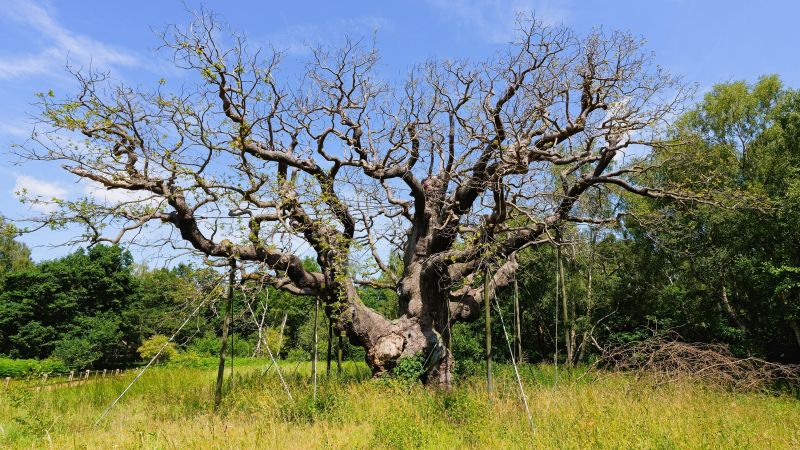
Major Oak of Sherwood Forest, Robin Hood’s Tree, Dies
Ancient Sherwood Forest oak tree reputed – The Major Oak of Sherwood Forest, a legendary tree associated with the Robin Hood myth, has finally passed away after centuries of standing. This ancient oak, believed to be over a thousand years old, has been a symbol of the forest’s historical and cultural significance. Its demise marks a significant loss for the region’s heritage, as it was once said to have sheltered the famed outlaw. While the tree’s role in the Robin Hood legend remains a subject of debate, its physical presence has long been celebrated as a national treasure.
The Iconic Tree’s Legacy
Sherwood Forest, a sprawling woodland in Nottinghamshire, England, has long been intertwined with the Robin Hood story. The Major Oak, one of the forest’s most iconic landmarks, has stood for more than a millennium, its massive trunk and sprawling branches serving as a natural refuge for outlaws. Though its exact connection to the legend remains unclear, the tree’s historical prominence has made it a focal point for centuries. Conservationists and historians have worked tirelessly to preserve its legacy, but its recent death signals the end of an era.
Despite protective measures, the tree’s decline was inevitable. Its canopy, once a vast shelter, has now become a reminder of the fragility of even the oldest natural wonders. The Royal Society for the Protection of Birds (RSPB) confirmed its death, attributing it to environmental pressures and human activity. While the Major Oak is not the only ancient tree in the forest, its symbolic role in the Robin Hood narrative has made it a unique and irreplaceable part of the region’s identity.
Environmental Challenges and Conservation Efforts
For decades, conservationists sought to safeguard the Major Oak against the damaging effects of tourism and climate change. The tree’s location in a popular tourist spot meant it faced relentless foot traffic, compacting the soil around its base and limiting its access to nutrients. Efforts included installing supports, adjusting soil structure, and monitoring hydration levels, but these interventions proved insufficient against the cumulative impact of environmental stressors.
Experts note that prolonged exposure to extreme weather conditions also played a role. A series of heatwaves, including the record-breaking July 2022 event, exacerbated the tree’s struggles. Simon Parfey, a soil microbiology specialist, highlighted the challenges of maintaining a healthy ecosystem for such a historic specimen. “The Major Oak’s survival depended on a delicate balance of natural conditions and human intervention,” he explained. “In the end, the pressures were too great to overcome.”
“Even as it dies, the Major Oak will remain a powerful symbol of Sherwood Forest’s past,” stated Hollie Drake, a senior site manager at the RSPB. “Its legacy will continue to inspire those who visit, reminding us of the stories that have shaped this place.”
Robin Hood’s Myths and the Tree’s Role
The Robin Hood legend, which first emerged in the 14th century, has often been linked to the Major Oak. While medieval texts do not explicitly name the tree as Hood’s hideout, its size and prominence made it a natural candidate for such a role. Historians suggest that the tree became a metaphor for the outlaw’s defiance against oppression, embodying the spirit of rebellion that defines the legend.
Its cultural impact extends beyond folklore. The Major Oak has inspired art, literature, and film, reinforcing its status as a national icon. However, its decline underscores the broader challenges faced by historical landmarks in the modern era. As climate change and human activity continue to reshape the environment, the fate of the Major Oak serves as a poignant reminder of the need for sustainable preservation.
While the tree is gone, its story lives on. Conservationists hope that its legacy will encourage future efforts to protect Sherwood Forest’s other ancient trees. “The Major Oak’s passing is a loss, but it also highlights the importance of preserving our natural and cultural heritage,” said a spokesperson. “Its roots will continue to inspire generations to come.”