
Astronomers detect sugar in interstellar space for the first time
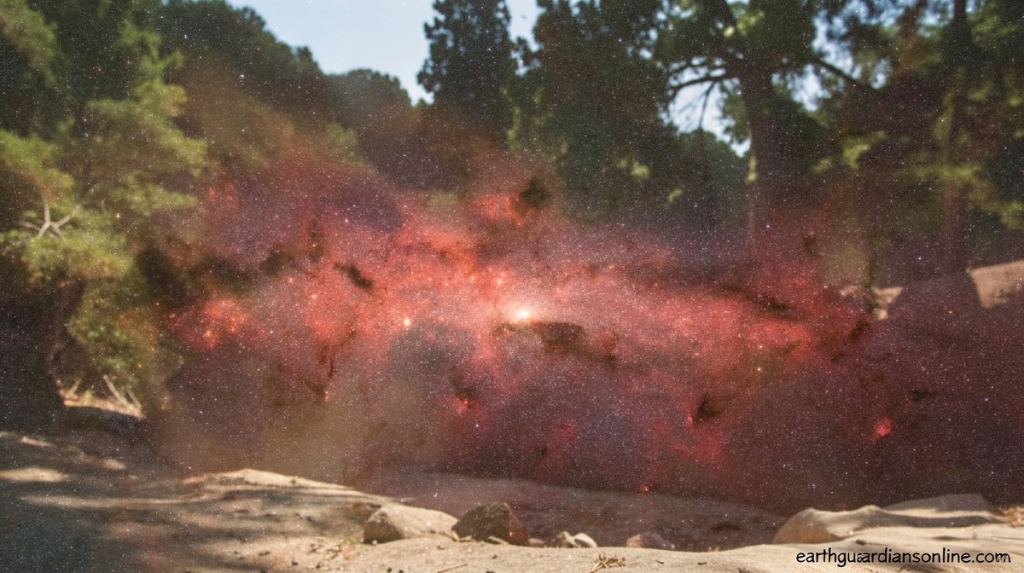
Astronomers Detect Sugar in Interstellar Space for the First Time in Historic Discovery
Astronomers detect sugar in interstellar space for the first time in a groundbreaking discovery that could reshape our understanding of how life’s building blocks form throughout the universe. Researchers have successfully identified erythrulose, a naturally occurring carbohydrate typically associated with red berries, floating within vast clouds of cosmic dust and gas positioned near the galactic core. This remarkable finding demonstrates that essential compounds necessary for biological existence can originate in the immense voids separating stars across our galaxy. Such a revelation significantly boosts scientific confidence that additional molecules crucial for the emergence of life may also reside beyond our solar system, potentially seeding other planetary bodies with the ingredients for living organisms.
The Spanish Observatory Network and Detection Methods
To conduct these groundbreaking measurements, scientists utilized two distinct radio telescopes situated in Spain, working in concert to capture and analyze the faint signals emanating from distant molecular clouds. One instrument is located at the Yebes Observatory, positioned north of Madrid, while the second belongs to the Institute for Radio Astronomy in the Millimeter Range, commonly referred to as IRAM, which sits in the Sierra Nevada mountains of southern Spain. Together, these facilities examined a molecular cloud designated as G+0.693−0.027, situated near the galaxy’s middle region where star formation activity is particularly intense. By analyzing radio wave signals from this cloud and matching them against laboratory-measured wavelength patterns for erythrulose, researchers confirmed the presence of the sugar with remarkable precision.
The detection of erythrulose in interstellar space represents a milestone in astrochemistry, showing that complex organic molecules can survive and persist in the harsh conditions of space before potentially reaching planetary surfaces.
Scientific Significance and Future Implications
A scientific group headed by specialists from Spain’s Center for Astrobiology successfully located this specific carbohydrate, which consists of four carbon atoms arranged in a distinctive molecular structure. Carbohydrates serve a critical function in biological organisms by supplying energy, constructing cellular frameworks, and creating components of genetic blueprints like RNA and DNA. The discovery suggests that the chemical precursors for life may be far more widespread throughout the cosmos than previously imagined. Initially, the team looked for simpler carbohydrates containing three carbon atoms but failed to locate any, making the four-carbon erythrulose detection even more significant for understanding molecular evolution in space environments.
This achievement opens new avenues for exploring how organic compounds travel through space and potentially contribute to the development of life on other worlds. The molecular cloud G+0.693−0.027 serves as a natural laboratory where astronomers can study the chemical processes that occur over millions of years in the cold depths of interstellar space. As research continues, scientists hope to identify additional sugars and complex molecules that may have been carried by comets and asteroids to early Earth, providing clues about our own planetary origins and the universal distribution of life’s fundamental building blocks.
The confirmation that erythrulose exists beyond our solar system also raises exciting questions about whether similar molecules might be detected around other stars in our galaxy. Future observations using more advanced telescope arrays could reveal whether sugar molecules are common throughout the Milky Way or relatively rare in specific regions. This discovery ultimately strengthens the hypothesis that the ingredients for life are not unique to Earth but are instead distributed throughout the cosmos, waiting to be discovered by both natural processes and human exploration.
