
‘Big Bang fix’ could be buying more time for the farthest spacecraft from Earth
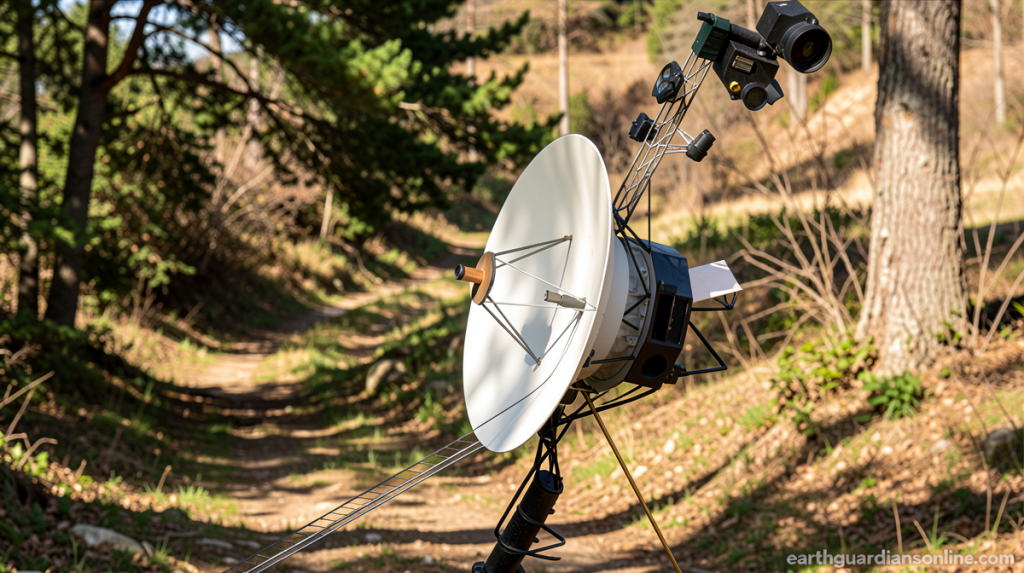
Voyager 2 Receives Lifesaving Power Upgrade in Deep Space
Earthguardiansonline.com – Space engineers have successfully executed a critical power management maneuver for one of humanity’s most distant explorers, extending the operational life of the Voyager 2 spacecraft by at least two additional years. The ambitious procedure, dubbed the “Big Bang” fix, was implemented on July 9 and represents months of careful planning and testing by teams at NASA’s Jet Propulsion Laboratory in Pasadena, California.
At approximately 21.35 billion kilometers—roughly 13 billion miles—from Earth, Voyager 2 continues its extraordinary journey through interstellar space. Its sibling probe, Voyager 1, sits even farther away at about 25.40 billion kilometers or 16 billion miles. Both spacecraft were launched just weeks apart in 1977, embarking on what would become one of the most successful planetary exploration campaigns in history. Today, they remain the farthest active human-made objects from our planet, having traveled beyond the heliosphere, that vast protective bubble of magnetic fields and charged particles created by the Sun that extends well past Pluto’s orbit.
The Power Challenge in Deep Space
Keeping these aging spacecraft alive has required constant ingenuity from mission engineers. Originally designed for a five-year mission, both Voyagers have far exceeded expectations thanks to their radioisotope thermoelectric generators—devices that convert heat from decaying plutonium into electrical power. However, these generators steadily lose approximately four watts of power annually, forcing the team to make difficult decisions about which instruments and systems to keep running.
Over the decades, engineers have progressively shut down various instruments and subsystems to conserve energy. Voyager 2 was scheduled to power down another science instrument before the year ended, potentially limiting its ability to gather valuable data from its unique vantage point in space.
Executing the Big Bang Fix
To prevent this loss of capability, engineers devised a simultaneous power swap strategy. The command sequence directed Voyager 2 to turn off certain powered devices while activating others that consume less electricity. This delicate balancing act maintained the spacecraft’s internal temperature—critical for preventing fuel lines from freezing in the extreme cold of interstellar space—while ensuring continued scientific operations.
The fix involved turning off two dedicated heaters and a digital tape recorder that primarily served as a heat source. In return, two different heaters and another residual heat-supplying device were activated, though these new configurations draw less power than their predecessors.
“This was a team effort, the culmination of a year of work, with almost every team member contributing,” said Kareem Badaruddin, Voyager’s mission manager at JPL, in an email. “Each of us love these spacecraft, and give generously of our time off-hours and weekends, so the feeling of realizing that we had extended the life of the spacecraft and science return by 2 years or more was fulfillment and delight — it had been a difficult task and our hard work was rewarded.”
Testing and Implementation
The path to success required extensive preparation. Engineers conducted preliminary tests in May and June to verify that the Big Bang fix would not consume more power than anticipated or cause temperatures to drop below acceptable thresholds. These tests confirmed that the modifications would work as predicted, with initial validation occurring on May 13.
“We had done so much work over the last year and I was very close to the analysis and our predictions, so seeing the first test results be so close to our expectations gave me confidence and excitement and, well, joy,” Badaruddin reflected.
Communication delays add another layer of complexity to deep space operations. It takes nearly 20 hours for a command to reach Voyager 2, followed by another 20 hours for a response to return. For Voyager 1, which sits farther from Earth, the round-trip time stretches to almost 24 hours.
Looking Ahead
With the fix successfully implemented, Voyager 2 now has sufficient power to operate its three remaining instruments for an additional year. Engineers also updated the spacecraft’s onboard software to ensure that if Voyager 2 enters safe mode—when operations pause upon detecting an anomaly—the lower-powered devices will be included in the default safe state configuration.
The next challenge awaits: preparing a similar Big Bang fix for Voyager 1. The test sequences developed for Voyager 2 will serve as the foundation for this upcoming procedure. Every decision matters for these ancient explorers, as turning off instruments or heaters in interstellar temperatures risks chilling the probes beyond recovery. If fuel lines freeze, the spacecraft could lose their ability to keep antennas pointed toward Earth, potentially ending the missions entirely.
The success of this endeavor demonstrates not only the resilience of these pioneering spacecraft but also the dedication of the engineers who continue to care for them decades after launch. As humanity looks toward future deep space exploration, the lessons learned from keeping the Voyagers alive provide valuable insights into long-duration space missions and the challenges of operating in the harsh environment beyond our solar system.
Related Reading
Frequently Asked Questions
What is Big Bang fix could be buying?
Big Bang fix could be buying is the main topic of this guide. The article explains the context, practical details, and next steps readers should understand.
Why does Big Bang fix could be buying matter?
Big Bang fix could be buying matters because readers are looking for a useful answer, not just a short summary. Good content should match search intent and help them decide what to do next.
