
Book finds its way home 120 years after a library burned down
Book finds its way home 120 years after a library burned down
A Survivor Among the Ashes
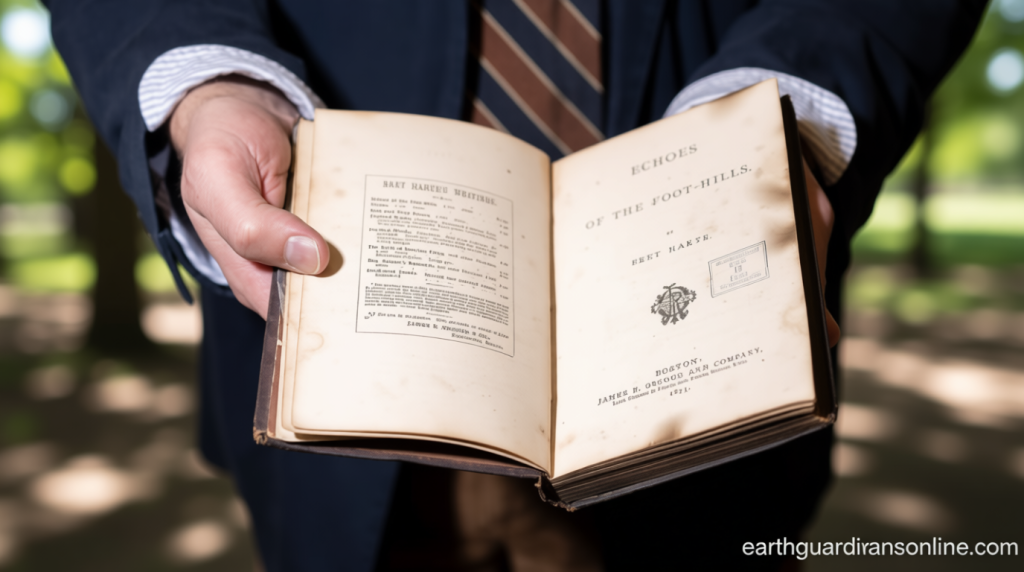
Book finds its way home 120 years – Within the brittle pages of a blackened book, soot-smeared remnants narrate the tale of San Francisco’s golden age. Though the 1906 earthquake nearly claimed everything, this particular volume was thought to have perished in the flames. The Mechanics’ Institute, the city’s oldest continuously operating library, had lost almost 200,000 books in the disaster. Yet, this one defied the odds, resurfacing in the hands of Randall Schwed nearly a century and a half later.
“What’s interesting about this book is that it’s a survivor,” Schwed remarked to CNN. “I needed to send it home.”
Schwed, a lifelong collector, discovered the book while browsing an online marketplace. It was listed for $35, and its journey back to its original home was as enigmatic as the event that nearly erased it. The library manager, Myles Cooper, has been pondering the mystery of how the book endured the inferno. With the city’s largest repository of knowledge reduced to rubble, how could a single volume emerge unscathed, only to be found 120 years later?
The 1906 Cataclysm
The earthquake of January 1906 unleashed devastation across San Francisco. Fires broke out almost immediately, consuming buildings and transforming the cityscape into a charred wasteland. The Mechanics’ Institute was among the hardest-hit structures. “Our library was destroyed in ways that many other buildings were not,” Cooper explained. “It completely fell down. There’s only one remaining wall and really only one brick story left, and everything was burned.”
Despite the catastrophic loss, the institute began planning its rebirth. Donations poured in, and the community rallied to restore what had been lost. The funds and books collected were instrumental in rebuilding the institution, which now serves as a hub for cultural and intellectual pursuits. The resilience of the city mirrored that of the library, which became a symbol of San Francisco’s enduring spirit.
Unraveling the Enigma
The question of how “Echoes of the Foot-Hills” survived remains a puzzle. Cooper, who has spent considerable time examining the book’s history, proposed several theories. One possibility is that the book was checked out before the fire. Another is that it was rescued from the wreckage by someone who recognized its value. A third theory suggests it was hidden in a safe location during the chaos. “There was a lot of looting in San Francisco during the 1906 earthquake,” Cooper noted, “so it’s plausible the book was taken by a curious individual.”
While no definitive proof exists, the presence of Agnes Quigley’s name inside the book adds intrigue. The stamp and date—Dec. 10, 1874—confirm its origin. Schwed, who has been researching the owner, believes Quigley may have been the first to inscribe her name. In 1898, Quigley advertised for a position as a chambermaid and childcare provider in the *San Francisco Call and Post* newspaper. The connection between the woman and the book remains speculative, but the coincidence has captivated historians and patrons alike.
A Legacy of Resilience
The Mechanics’ Institute, originally founded in the 1850s, served as a vital resource for gold miners seeking knowledge. Over time, its purpose evolved, and in 1906, it merged with the Mercantile Library to become the city’s largest repository of books. However, the union lasted only three months, as the Institute’s legacy continued to shape San Francisco’s cultural identity. “The story of this book is really kind of like a library fantasy,” Cooper said. “It’s really magical.”
Other books, too, managed to outlast the disaster. For instance, “Marriages, Rights, Customs and Ceremonies” was in circulation until 2001. These survivors, like “Echoes of the Foot-Hills,” are testaments to the city’s ability to preserve its past amid turmoil. The book now rests in a display case alongside an 1854 map of San Francisco and an oversized atlas featuring seismic activity drawings. “The combination of these artifacts creates a unique narrative of the city’s history,” Cooper added.
The DNA of a City
As a longtime resident of San Francisco, Cooper emphasized the city’s inherent drive to rebuild. “It’s definitely part of the DNA of San Francisco to rebuild and rethink things,” he stated. “We always have a place to save history, and people’s stories won’t be lost.” This philosophy is evident in the Mechanics’ Institute’s current mission. The library now houses a diverse collection of works, including those on architecture, mining, and railroads—fields critical to the city’s reconstruction efforts in the aftermath of the 1906 disaster.
Cooper also highlighted the role of oral tradition in keeping the earthquake’s memory alive. Though no eyewitnesses remain, stories of the event are passed down through generations. The library’s plan to use acid-free cardstock to document the book’s journey underscores a commitment to safeguarding its legacy. Such measures ensure that the narrative of survival and renewal continues to be preserved for future generations.
The Circle of Ownership
“Echoes of the Foot-Hills” has had three owners throughout its history: Quigley, Schwed, and the Mechanics’ Institute. Each chapter of its life adds a layer to its significance. Quigley’s inscription suggests a personal connection to the city, while Schwed’s acquisition brought it back to its roots. The Institute, as the current custodian, has ensured the book’s story is shared with the public. “This book’s journey reflects the resilience of both the city and its people,” Cooper concluded. “It’s a reminder that even in the face of destruction, history can endure.”
San Francisco’s tale is one of perseverance, and the Mechanics’ Institute stands as a living monument to that spirit. From the ashes of the 1906 disaster, the library has not only rebuilt but also evolved, embracing new roles while honoring its past. “Echoes of the Foot-Hills” is more than a mere artifact—it is a symbol of the city’s ability to recover, adapt, and cherish its heritage. As Cooper noted, the book’s survival is a story that “will continue to inspire.”
