
How do US arms sales to Taiwan work and why are they such a sore point for China?
How US Arms Sales to Taiwan Work and Why China is Concerned
How do US arms sales to Taiwan function? This question has become central to discussions between the United States and China, as the island’s military procurement continues to shape regional tensions. The recent diplomatic exchanges between US President Donald Trump and Chinese leader Xi Jinping have spotlighted the ongoing debate over American military support for Taiwan. A $14 billion arms package, approved by Congress, remains unsigned, with Trump using it as leverage in broader negotiations. This delay has created uncertainty, as both the Pentagon and Taiwan’s defense officials grapple with the implications of the stalled deal and shifting priorities in the US foreign policy landscape.
The Role of the Taiwan Relations Act in US Arms Sales
Established in 1979, the Taiwan Relations Act (TRA) serves as the legal foundation for US arms sales to Taiwan. After the United States formally recognized the People’s Republic of China (PRC) as the sole legitimate government, the TRA was enacted to ensure Taiwan’s continued access to defensive weapons. The law commits the US to provide “arms of a defensive character” to help the island “maintain a sufficient self-defense capacity.” This framework allows Washington to maintain unofficial ties with Taipei while acknowledging Beijing’s claim over Taiwan, creating a delicate balance in the US-China relationship.
Despite the TRA’s mandates, the process of approving and delivering arms has evolved over time. Congress has historically overridden presidential objections to maintain the flow of military equipment, reflecting a bipartisan consensus on Taiwan’s strategic value. However, the 1982 US-China joint communique outlined a plan for gradual reductions in arms sales, which has led to interpretations that differ between the two nations. China perceives this as a commitment to limiting military support, while the US emphasizes its defensive nature, framing the sales as a tool to safeguard Taiwan’s autonomy.
Delays and the Complexity of Arms Delivery
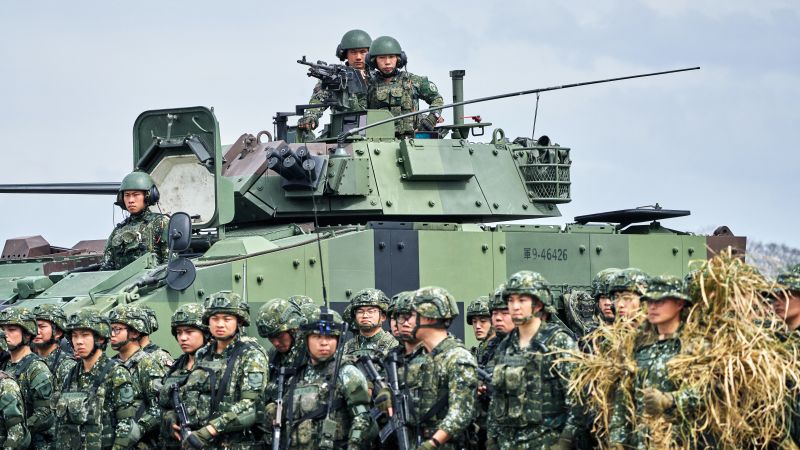
How do US arms sales to Taiwan navigate logistical challenges? The process involves not only political agreements but also industrial and financial hurdles. Recent reports indicate that a backlog of nearly $30 billion in military equipment remains unfulfilled, with Taiwan waiting for critical assets like F-16 fighter jets. The time required to manufacture and ship these systems has stretched delivery schedules, often taking years to complete. For example, an order for 108 Abrams tanks, placed in 2019, was finalized after 81 months, with the last units arriving just last month. These delays have tested the patience of Taiwan’s military leaders and raised concerns about the US’s ability to meet its commitments.
Acting US Navy Secretary Hung Cao recently highlighted that the Pentagon is prioritizing current conflicts, such as those with Iran, over long-standing obligations to Taiwan. This shift has led to the postponement of the $14 billion arms deal, leaving the island’s defense infrastructure vulnerable. Meanwhile, Taiwan’s Defense Ministry expressed frustration, noting it had not been informed of any delay in the procurement timeline. The mismatch between Washington’s strategic priorities and Taipei’s security needs underscores the complexity of how US arms sales operate in practice, often straining the partnership.
Strategic Implications and Regional Tensions
How do US arms sales to Taiwan affect China’s stance? Beijing views these transactions as a direct threat to its territorial integrity, fearing they could embolden Taiwan to pursue independence. The island’s military buildup, supported by American weapons, is seen as a challenge to the One China policy, which asserts Taiwan is an inseparable part of China. This perception has led to increased diplomatic pressure on the US, with Chinese officials warning of potential consequences for any further military support. The arms deals are thus not just about equipment; they symbolize a deeper geopolitical rivalry.
Analysts note that the US’s approach to arms sales is often influenced by broader strategic goals, such as maintaining alliances and countering regional adversaries. While the TRA guarantees defensive support, the actual pace of deliveries depends on budget approvals, manufacturing timelines, and political considerations. For instance, the 2024 order for 291 ALTIUS-600M loitering munitions was fulfilled in 21 months, showcasing the potential for faster response when resources align. Yet, the consistent delays highlight the challenges in balancing immediate needs with long-term commitments in how US arms sales are managed.
