Chevron pledges to double its Venezuelan oil production

Daftar Isi
Chevron Commits $7 Billion to Venezuelan Oil Expansion, Targeting Doubling of Output by 2031
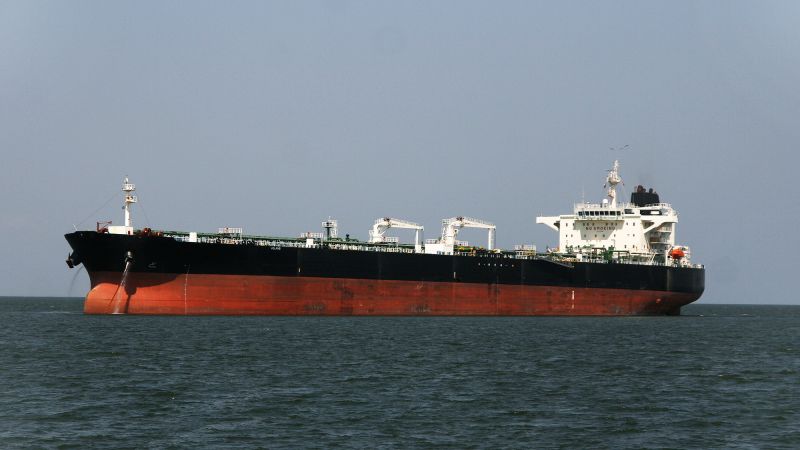
Earthguardiansonline.com – Chevron has formally committed seven billion dollars to expanding its operations in Venezuela, with the stated goal of pushing daily output from approximately 300,000 barrels to roughly 600,000 barrels within five years. The announcement marks the most significant single-company energy commitment to the South American nation in decades and positions the Houston-based major as the sole large American oil firm still operating continuously inside the country.
The decision arrived after months of pressure from the White House. Following the January removal of former President Nicolás Maduro from power, President Donald Trump repeatedly called on American energy firms to capitalize on what he framed as a historic opportunity. Chevron’s rivals, however, remained largely on the sidelines, citing the country’s volatile political landscape and a legacy of asset seizures that still haunts investor confidence.
A Decade-Long Presence and a Deepened Stake
Chevron’s foothold in Venezuela predates the current political upheaval by several decades. In April of this year, the company moved to increase its ownership share in the joint venture it operates alongside Petróleos de Venezuela, S.A. (PDVSA), the state-owned oil entity. Chevron now holds a 49 percent stake in that partnership, giving it meaningful operational control over the fields it develops.
The newly assigned concessions sit within the Orinoco Belt, a vast sedimentary basin in eastern Venezuela known for producing heavy, viscous crude that resembles thick tar. That particular grade of oil aligns closely with the processing configurations of refineries along the U.S. Gulf Coast, many of which were engineered specifically to handle such heavy feeds. On the cost side, Chevron estimates extraction expenses below twenty dollars per barrel, a figure that contrasts sharply with the roughly ninety dollars per barrel currently commanded by domestic American crude.
“Our expanded position reflects our confidence in the country’s deep resource potential,” said Mike Wirth, Chevron’s chairman and CEO. “This progress reflects the dedication of our Venezuelan employees and our long-standing focus on the responsible development of the country’s resources.”
Geopolitical Backdrop and the Rodríguez Factor
Interim President Delcy Rodríguez, who assumed leadership after Maduro’s ouster, has signaled a willingness to reform elements of Venezuela’s oil sector — a sector she herself once administered before entering broader political life. Her administration has taken initial steps to open the industry to foreign participation, yet Chevron remains the only American major willing to commit fresh capital at scale. ConocoPhillips and ExxonMobil, among others, saw their Venezuelan assets nationalized in 2007 during Hugo Chávez’s sweeping expropriation campaign and were subsequently expelled from the country, triggering compensation disputes worth tens of billions of dollars that remain unresolved.
That history, combined with sanctions imposed by Washington beginning in 2005 and effectively tightened in 2019 when the first Trump administration blocked nearly all PDVSA crude exports into the United States, created a climate of deep institutional distrust. President Joe Biden’s 2022 decision to grant Chevron a specific operating permit represented a narrow exception; Trump revoked that license in March of this year before reissuing it under the condition that no revenue flow to the Maduro-era government.
Production Recovery and the Scale of the Challenge
Venezuela’s national output has climbed through the year to approximately 1.2 million barrels per day, up from around one million at the start of the calendar year. Yet that figure remains a fraction of what the country once delivered. Before the socialist government assumed control in the late 1990s, Venezuela was producing on the order of 3.5 million barrels daily. Luisa Palacios, former chair of Citgo and current managing director of Columbia University’s Center on Global Energy Policy, has noted that restoring anything approaching that historical level will require sustained, multi-year capital deployment of a magnitude far beyond any single company’s appetite.
Chevron’s seven-billion-dollar program, while substantial, addresses only a portion of that gap. The company’s expansion targets the Orinoco Belt specifically and does not encompass the full spectrum of Venezuelan basins. Broader recovery would depend on additional foreign entrants, infrastructure rehabilitation, and a stable regulatory framework that has yet to be demonstrated over a full political cycle.
The U.S. Majority-Ownership Deal
On Monday, the Trump administration announced a separate arrangement in which the United States would assume majority ownership in a joint oil venture with a Venezuelan energy entity. Analysts view the deal as a confidence mechanism: by placing a sovereign American stake alongside private operators, Washington effectively underwrites part of the political risk that has deterred other majors. For Chevron and any future entrants, the arrangement could reduce the perceived downside of long-horizon capital commitments in a country whose institutional record remains fragile.
Whether that signal proves sufficient to draw additional American or allied investment remains an open question. What is clear is that Chevron has chosen to move first, betting that the post-Maduro window offers enough stability to justify a five-year production-doubling strategy in one of the world’s most politically contested oil jurisdictions.
Related Reading
Frequently Asked Questions
What is Chevron pledges to double its Venezuelan?
Chevron pledges to double its Venezuelan is the main topic of this guide. The article explains the context, practical details, and next steps readers should understand.
Why does Chevron pledges to double its Venezuelan matter?
Chevron pledges to double its Venezuelan matters because readers are looking for a useful answer, not just a short summary. Good content should match search intent and help them decide what to do next.