Colombia says it will only accept rescue teams from four countries, as earthquake survival window closes

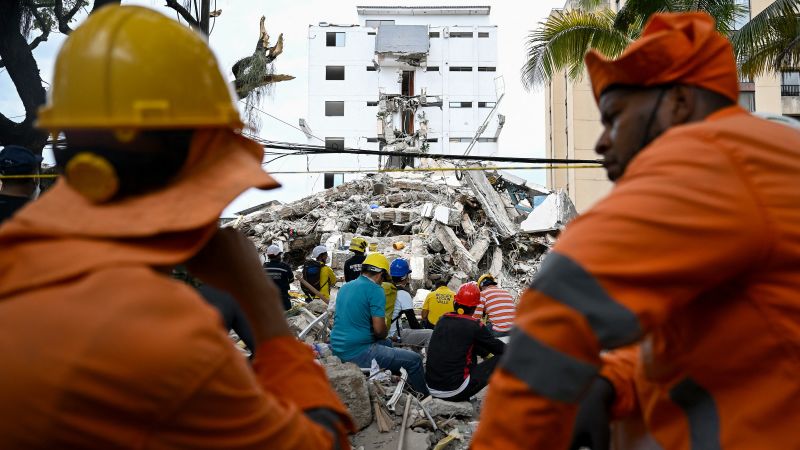
Colombia Says It Will Only Accept Rescue Teams From Four Countries
Earthguardiansonline.com – Colombia says it will only accept rescue teams from four nations as the earthquake survival window closes. The nation’s emergency response operations are racing against time to locate survivors following a catastrophic seismic event that has claimed at least 281 lives. The government has implemented a selective approach to international assistance, accepting rescue personnel from only four designated countries as the critical search period approaches its conclusion. Thursday marked a pivotal moment in the recovery effort, with nearly 380 individuals still unaccounted for across the affected regions.
Why Colombia Limits Rescue Team Acceptance
The earthquake, registered at 7.4 on the magnitude scale, represents one of the most powerful tremors to strike Colombia in recent decades. Infrastructure damage has been extensive, with residential buildings, educational facilities, transportation networks, and aviation hubs sustaining significant harm throughout multiple departments. President Abelardo De la Espriella emphasized the urgency of the situation in a late Wednesday address, calling for national solidarity during this challenging period.
David Tamayo Roldán, director of the National Unit for Disaster Risk Management, explained that the administration requires rescue teams to possess both international and national certifications before deployment. Colombia says it will only accept teams from the United States, El Salvador, Ecuador, and Israel—nations meeting these strict criteria. This selective approach initially surprised several neighboring countries that had promptly offered assistance.
Organizations including the United Nations and Mexico’s renowned Topos rescue brigade reported receiving no formal requests for search and rescue operations. The timing of this policy decision has proven consequential, as emergency professionals worldwide recognize that the probability of locating survivors diminishes substantially after the initial 72-hour period following a major seismic event.
The government would request rescue teams from only four countries: the US, El Salvador, Ecuador and Israel. In Colombia’s view, only those countries’ rescue teams have the international and national certifications required for the job.
Political Context Behind the Decision
The earthquake has presented an early challenge for President De la Espriella’s recently inaugurated administration. Political analyst Sandra Borda has connected the rescue team restrictions to ongoing tensions between the current and previous government structures. She noted that the new leadership demonstrates what she characterizes as significant skepticism toward certain segments of the international community, a stance she finds difficult to fully comprehend.
Borda further observed that procedural clarity regarding international assistance has been lacking from the outset. While officials initially projected confidence that domestic rescue capabilities would prove adequate, no comprehensive technical evaluation has been publicly released to validate this assessment. The situation has been complicated by uncertainty regarding where international personnel would be most effectively deployed.
There was a perception from the beginning that the rescue teams would be sufficient, although a technical assessment was never made public to confirm that they would indeed be enough to deal with all the damage and destruction caused by the earthquake.
Regional and International Response
Mexico’s position has been particularly noteworthy given the Topos Tlatelolco Rescue Brigade’s extensive experience with natural disasters globally. Mexican President Claudia Sheinbaum confirmed that while her government maintains active communication with Colombian authorities, formal approval for the rescue brigade has not been granted. Mexican rescuers remain prepared for immediate deployment, and food and medical supplies are being transported via Hercules aircraft.
Colombia’s Foreign Ministry has indicated that it is compiling a comprehensive inventory of specific requirements to facilitate international assistance. Foreign Minister Omar Bula emphasized that the administration has not categorically excluded any nation from consideration, noting that diplomatic relationships operate without ideological or political constraints.
Colombia has not excluded absolutely any country in terms of the offers that have been made to us. We work with countries without any ideological or political consideration.
On-the-Ground Challenges
Local emergency officials have expressed frustration regarding the confusion surrounding international assistance. Rescue operations continue across multiple departments, with teams working through damaged infrastructure to reach isolated communities. The limited acceptance of foreign rescue teams has created logistical challenges, as personnel must coordinate with domestic responders under time pressure.
As the survival window narrows, Colombia says it will only accept teams that meet certification requirements. The government continues to evaluate incoming offers while prioritizing operations that can deliver immediate results. International partners remain patient, understanding that the selection process reflects Colombia’s commitment to effective disaster response.
Frequently Asked Questions
Which countries can send rescue teams to Colombia? Colombia says it will only accept rescue teams from four countries: the United States, El Salvador, Ecuador, and Israel. These nations have teams with both international and national certifications required for the operation.
Why is Colombia limiting rescue team acceptance? The government requires rescue teams to possess specific international and national certifications. This ensures that incoming teams can work effectively within Colombia’s disaster response framework without additional coordination delays.
What happens to rescue teams from other countries? Colombia has not excluded any country entirely. Foreign Minister Omar Bula stated that the administration is compiling requirements and may accept additional teams as the situation develops. Offers from other nations remain under consideration.
How long is the earthquake survival window? Emergency professionals recognize that the probability of locating survivors diminishes substantially after the initial 72-hour period following a major seismic event. This timeframe is critical for search and rescue operations.
What is Colombia’s current death toll? At least 281 people have died in the earthquake, with nearly 380 individuals still unaccounted for across the affected regions. The 7.4 magnitude earthquake is one of the most powerful to strike Colombia in recent decades.