
Explainer: Who is Mojtaba Khamenei and how did he succeed his father?
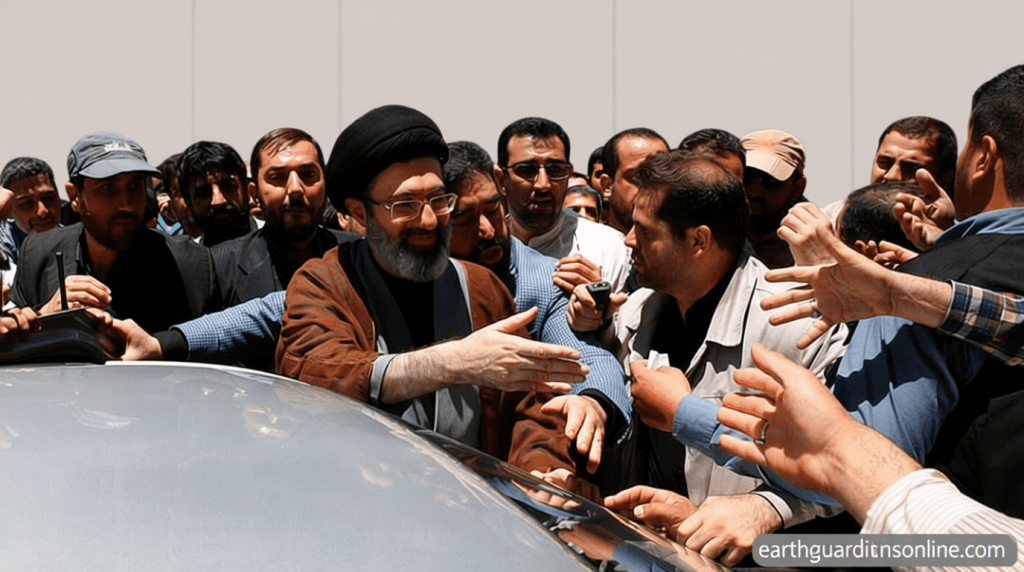
Explainer: Who is Mojtaba Khamenei and how did he succeed his father?
The Iranian Assembly of Experts recently declared Mojtaba Khamenei as the new Supreme Leader, following the assassination of his father, Ali Khamenei, by an Israeli airstrike. This transition occurred amid rising tensions in the region, with Mojtaba’s selection marking the end of Ali’s nearly four-decade tenure at the helm of the Islamic Republic’s spiritual and political authority.
Mojtaba Khamenei has remained a shadowy presence in Iran’s political landscape since his father’s death. Publicly, he has not been seen since the attack on the leadership’s offices, which also claimed the life of his mother, Zahra Haddad Adel. A member of a family deeply rooted in Iran’s theocratic governance, Zahra’s lineage adds historical weight to the appointment.
Born in 1969 in Mashhad, Mojtaba’s rise to power followed a deliberate career path. From his teenage years, he participated in the Iran-Iraq War, serving in the Habib ibn Mazaher Battalion of the IRGC’s 27th Mohammad Rasulullah Division. This unit became a breeding ground for influential figures, including Qasem Soleimani and Hossein Hamedani, who later held key roles in the Islamic Republic’s security apparatus.
Unlike his siblings, Mojtaba diverged from the roles typically reserved for the supreme leader’s children. While Mostafa and Masoud Khamenei focused on cultural or administrative duties, Mojtaba cultivated a network of power that extended beyond familial ties. His early exposure to military and security circles positioned him as a key player in Iran’s political machinery.
Analysts describe Mojtaba’s career as a calculated move through the highest echelons of religious and military influence.
His strategic positioning allowed him to align with the IRGC and other state institutions, solidifying his role as a central figure in Iran’s governance. Despite his relative lack of public visibility, his connections have been pivotal in maintaining the regime’s stability.
Recent attention has focused on Mojtaba’s financial profile. Western media outlets have speculated about his wealth, suggesting he may be a “billionaire” with substantial assets in cities like London and Vienna. However, the exact control over these holdings remains unclear due to the opaque financial systems linked to Iran’s leadership.
Within Iran, Mojtaba is not commonly referred to as a businessman or affluent individual. Instead, his economic influence is attributed to his political stature and ties to state-run entities. His financial dealings are seen as a byproduct of his role rather than a personal pursuit.
Mojtaba’s political leanings are often viewed as an enigma, with some analysts considering him a hardliner in security matters, while others remain uncertain about his ideological stance.
His minimal public statements on major policy issues have fueled debate. Critics argue that without an established record, his political direction is still a mystery. Yet, his military background and close ties to the IRGC suggest a focus on maintaining the regime’s hardline core.
