
For these children, the earthquakes in Venezuela changed everything
Young Lives Transformed: Venezuela’s Children Navigate Life After Devastating Quakes
For these children the earthquakes in Venezuela – The twin earthquakes that struck Venezuela last month have left an indelible mark on thousands of young lives. Among those most profoundly affected are children who have experienced the loss of family members, homes, and the stability of their daily routines. Ten-year-old Maria finds herself constantly returning to memories of the moment her world shifted irrevocably. Her mother was present when the powerful tremors struck their coastal community of Caraballeda, and now Maria carries that memory with her every day.
Following the destruction of their family home, Maria and her thirteen-year-old brother Damian were welcomed into the care of their aunt, Mercedes Osul. The transition has not been simple for either child. Maria repeatedly shares with her new guardian that her mother was there during the disaster. Damian, meanwhile, has adopted a quieter approach to processing his grief. “My nephew hasn’t wanted to talk about it,” Osul has observed. “All he does is play, play.”
Finding Comfort Through Play and Routine
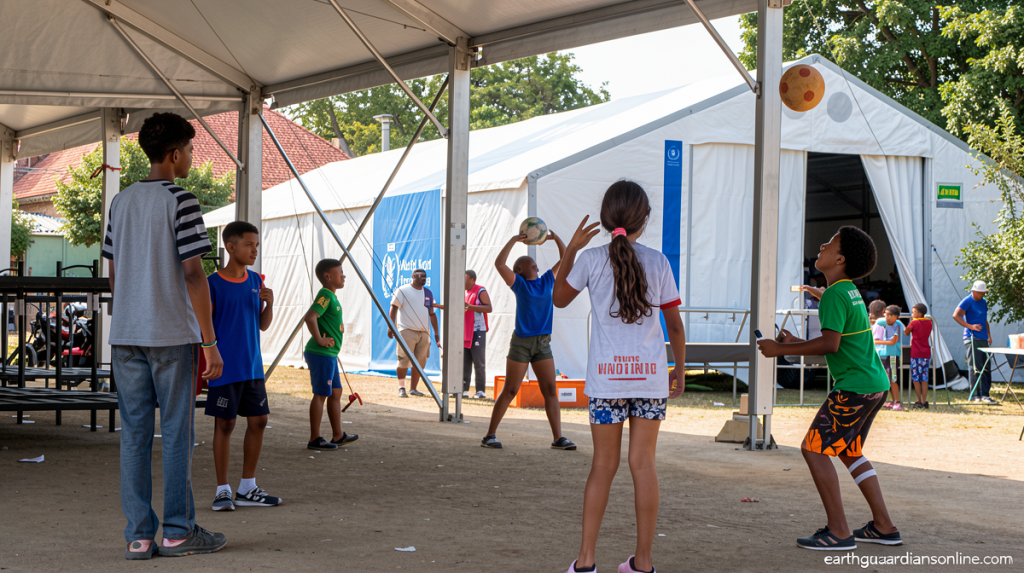
Damian channels his emotions through physical activity, spending considerable time on an improvised soccer pitch alongside other children who share similar circumstances. These youngsters have been displaced from their homes and now reside in one of numerous temporary shelters established to accommodate those affected by the crisis. While adults like Osul work toward rebuilding their own lives, the younger generation is learning to navigate fear, sorrow, and uncertainty.
Maria’s coping mechanism differs from her brother’s. Their aunt notes that the young girl seeks comfort in candy, finding solace in simple, childlike pleasures. These innocent responses represent natural ways for children to manage trauma, even when adults struggle to comprehend such experiences. Experts emphasize that there exists no universal method for processing traumatic events, which explains why multiple shelters have established what are known as Child Friendly Spaces.
Through play and group dynamics, children can begin to express themselves, begin to release the stress and trauma caused by this catastrophe, and also begin to regain that sense of security they have lost.
Manuel Rodríguez Pumarol, UNICEF’s representative in Venezuela, explains that the objective is not to pressure children into immediate discussion about their experiences. Instead, these spaces provide a secure environment where young people can start processing what occurred. World Vision has emerged as one of the organizations establishing such facilities. Andrea Lasso, the group’s Emergency Response Manager in Venezuela, reports that eight to ten movable spaces have been deployed across Caracas and La Guaira, the two regions most severely impacted.
Creating Safe Environments for Recovery
Within these spaces, children engage in board games, card games, arts and crafts, and sports. Lasso emphasizes the importance of these environments: “They need some space where they can feel safe again, where they can be protected, where they can play and interact with other children.” She considers this support critical for both recovery and the rebuilding of lives.
This assistance extends beyond the children to include the adults responsible for their care. Osul herself is navigating her grief over losing her sister while simultaneously adapting to her role as caregiver for her niece and nephew, alongside her own two daughters. The shelter’s psychologist recommended that Osul allow Damian to process his emotions naturally rather than forcing conversations about his mother’s death. “They told me to let him vent, that this is a way to vent,” Osul recalled.
The disaster has fundamentally disrupted the daily existence of thousands of children. Some have been separated from their homes, while others have lost family members, friends, schools, and the familiar rhythm of their lives. Within temporary shelters, the challenge encompasses more than providing sleeping quarters and food. It involves helping children reclaim spaces dedicated to safety, play, and learning while their families pursue longer-term solutions.
We have seen many people who shouldn’t be there, and are really not affected (by the crisis), but are just trying to take advantage of the situation and take advantage of children, which is so evil and so sad, really.
Lasso notes that controlling access to shelters remains problematic. Aid organizations must ensure these facilities serve as protected environments where children are safeguarded from exploitation. UNICEF estimates that approximately 650,000 individuals may require assistance following the earthquakes, with around 234,000 being children. This figure encompasses minors who lost their residences or relatives, as well as those whose homes remained intact but who experienced disruptions to essential services including drinking water, medical care, and vaccination programs.
“The earthquake has taken so much from those boys and girls, and our role is to ensure it does not take away their future,” Rodríguez Pumarol stated. A significant component of that future hinges on children’s ability to return to education. The UNICEF representative explained that several temporary camps currently operate within educational centers, and considerable efforts are being directed toward freeing these spaces for their intended purpose. As communities continue to recover, the focus remains on ensuring that Venezuela’s youngest citizens emerge from this tragedy with their hopes and potential intact.
