
France evacuates Cap Ferret peninsula by boat as wildfires rage
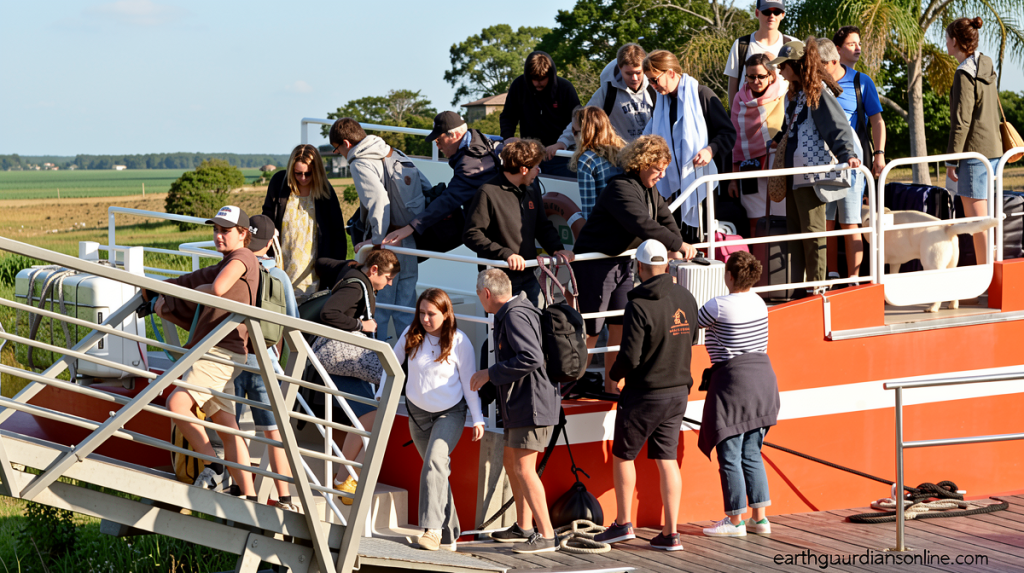
Mass Evacuation Underway as Wildfires Threaten French Coastal Peninsula
Earthguardiansonline.com – French officials have initiated a comprehensive evacuation of the Cap Ferret peninsula this Friday, deploying vessels to assist residents and visitors at this beloved seaside resort as flames close in. The operation, which involves boats departing from three separate piers along the peninsula, underscores the urgency of the situation. According to Sophie Brocas, the prefect of the region, the evacuation efforts are being coordinated from the peninsula’s maritime access points. The Cap Ferret peninsula sits approximately 70 kilometers, or 43 miles, to the west of Bordeaux in southwestern France.
This large-scale evacuation highlights the intensity of the wildfires currently sweeping through southern France. The blazes are being intensified by unprecedented heat waves driven by climate change, transforming the region’s terrain into highly flammable conditions. The peninsula’s unique geography makes it particularly vulnerable, with only a single roadway providing connection to the mainland. This limited access has made evacuation a critical priority, as any fire blocking this sole route could trap thousands of people.
Thousands Relocated as Flames Spread
CNN affiliate BFMTV reports that roughly 40,000 individuals are being relocated from Cap Ferret alone. While the majority will likely leave via the road connection, only a few hundred are being transported by sea during this initial phase. The situation is compounded by another active fire in the vicinity of Biscarrosse, located about 40 kilometers, or 25 miles, south of Cap Ferret. That separate blaze has already necessitated the evacuation of 23,000 residents from its surrounding areas.
The Hamptons-like peninsula has become a focal point of the crisis, drawing attention to how climate-driven weather patterns are reshaping fire seasons across Europe. The combination of record-breaking temperatures and dry conditions has created a perfect storm for rapid fire spread, particularly in coastal regions where vegetation and infrastructure are concentrated.
International Support Arrives
Following a formal request for help from French President Emmanuel Macron, several European Union member states have dispatched firefighting aircraft to assist in containing the blazes. The international assistance includes significant aerial resources designed to tackle the widespread fires. Macron shared details of the incoming support on social media platform X on Friday, noting the diverse contributions from neighboring nations.
“We will soon be able to count on reinforcements from two Croatian Canadair aircraft, two Portuguese Air Tractor planes, as well as two heavy Black Hawk helicopters from the Czech Republic and Slovakia,” Macron posted on X Friday.
Climate Crisis Intensifies Fire Season
While Europe experiences wildfires during the summer months each year, this season has seen considerably more land consumed than the typical average for this time of year. Data compiled by the European Forest Fire Information System (EFFIS) reveals the extent of the devastation. France has been particularly hard hit, recording over 300 wildfires so far this year, a stark contrast to the annual average of 93 incidents. This nearly fourfold increase demonstrates how dramatically conditions have shifted.
The underlying driver of these intensifying fire seasons is the ongoing climate crisis, which is producing hotter and drier weather patterns across the continent. These conditions parch the landscape, extracting moisture from rivers, lakes, and soil, thereby creating fuel for more aggressive fires. The brutal heat waves that gripped Europe throughout June were described by World Weather Attribution as having been virtually impossible without human-caused climate change, providing scientific validation for the connection between global warming and extreme weather events.
As authorities continue their evacuation efforts and firefighting operations, the situation remains fluid. The combination of international aid, strategic evacuations, and the challenging weather conditions will determine how quickly the fires can be contained. The events at Cap Ferret serve as a reminder of the growing challenges that climate change poses to European communities during the summer months.
CNN’s Laura Paddison contributed reporting to this article.
