French leaders say they’re listening to students. Will it be enough?

Daftar Isi
French Government Seeks to Ease Student Anger as School Protests Continue
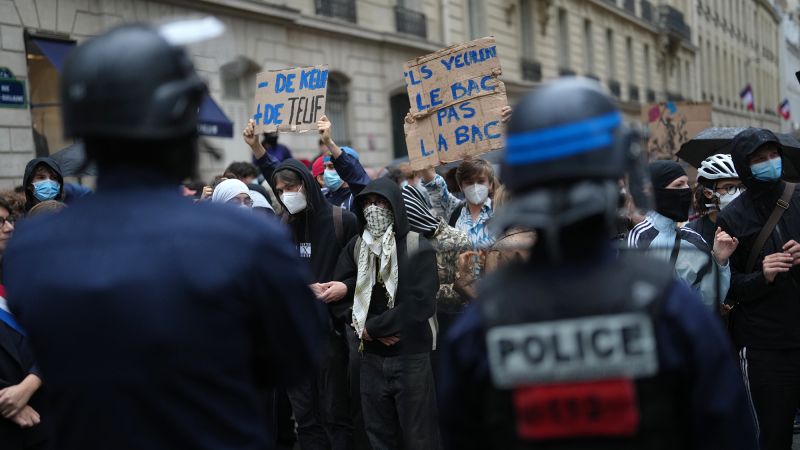
Earthguardiansonline.com – France’s government is attempting to lower tensions with high school students after days of protests, blockades and confrontations with police put education policy at the center of a growing political dispute.
Officials have shifted their tone following criticism of the police response, including an incident in which a teenager lost a hand during demonstrations on Monday. Interior Minister Laurent Nunez said police would no longer use the type of stun grenade connected to that injury, while President Emmanuel Macron has urged officers to show greater restraint when dealing with young protesters.
“Empathy” and a little more “pedagogy” is what French President Emmanuel Macron demanded of police forces facing student protesters.
Nunez said the president had stressed that public order must be maintained and serious violence addressed, but that officers should act with the greatest possible proportionality. The interior minister, formerly Paris police chief, drew a distinction between demonstrations led by teenagers and protests involving adults.
“We don’t deal with a movement of highschoolers like we deal with a movement of adults,” Nunez said.
Police Conduct Under Scrutiny
The government’s change in approach comes as police internal investigators open 18 inquiries into officers’ conduct during the demonstrations. Those cases are expected to examine whether police actions were proportionate in the circumstances.
Nunez rejected the idea that authorities were seeking to repress the movement, saying police were present to protect students. Yet the investigations and the ban on the relevant stun grenade underline the pressure on the government to demonstrate that the response to the protests is changing.
Prime Minister Sebastian Lecornu has also sought to create space for discussion inside schools. He told lawmakers that regular lessons would be replaced through the end of the week by a “period of internal democracy,” allowing students and staff to raise concerns and consider possible solutions.
Lecornu condemned violence occurring around the edges of the demonstrations while emphasizing that much of Tuesday’s protest activity was peaceful. He is due to address the country on Wednesday evening, a moment likely to be closely watched by students, teachers and families looking for clearer commitments.
Blockades Fall, but Demonstrations Remain Active
More than 500 educational institutions were expected to be partly or fully shut on Wednesday because of blockades. That figure represented a 41% decline from Tuesday, and the education ministry said 86% of schools would remain open.
The lower number of closures does not necessarily signal an end to the movement. Students have continued organizing from one day to the next, and their actions followed a much larger Tuesday mobilization in which hundreds of thousands of people marched with labor unions in support of students across the country.
Police detained 488 people in connection with Tuesday’s high school protests, the interior ministry said. Images of clashes have drawn wide attention, but student organizers have increasingly sought to separate their campaign from violence and keep attention on the conditions inside France’s education system.
A further national protest day has been called for October 17. Five major teaching unions have also announced a strike for Thursday in solidarity with students, suggesting the dispute could broaden even if the number of immediate school blockades declines.
What Students Want
Many high school protesters are focused on practical demands: more teachers, reduced class sizes and school buildings better suited to increasingly difficult climate conditions. Student union leaders have called for a 10-billion-euro investment in high school and university education, equivalent to about $11.2 billion.
A 10-point package prepared by student unions goes beyond staffing and funding. It calls for a review of student workloads, an end to the controversial university admissions system, an end to police violence against students and additional student housing.
For many participants, the disagreement is not only about budgets. It is also about whether students have a meaningful role in decisions that shape their daily lives and future opportunities.
“We are the ones most directly affected by the national education system, yet we aren’t actually listened to,” said Anaïs Ella, spokesperson for the student association Les Lycéens.
Ella said the prime minister had not directly addressed the central demands set out by student unions. She described proposals such as filling teaching vacancies in classes preparing for major exams as basic expectations rather than a sufficient response to the broader crisis.
Sabrine Kharbach, spokesperson for the Student Union federation of unionized students, said blockades would continue until students’ demands were met. Her position reflects the depth of frustration among organizers who believe temporary consultations will not be enough without concrete commitments.
Can Dialogue Contain the Movement?
Macron has previously relied on public consultation as a way to respond to sustained public anger. During the Yellow Vests movement in 2019, his government launched a major listening initiative intended to bring public debate into policymaking.
The current challenge may prove more difficult because student organizers are asking for immediate changes alongside a lasting reset in the relationship between government and young people. They want improved resources in schools, but they also want their experience of the education system treated as a central part of the political discussion.
Student Angelo Via, 19, who joined Tuesday’s street demonstrations, described a sense of “powerlessness” when peaceful protesters faced violent police action. That concern helps explain why the government’s next steps will be judged not only by the language used by leaders, but by how police operate on the streets and whether schools see tangible improvements.
The pledge to listen, the suspension of certain grenades and the planned school discussions may reduce immediate pressure. But with unions preparing strikes and students maintaining their demands, France’s leaders still face a test of whether dialogue can produce trust before the protests gain further momentum.
Related Reading
Frequently Asked Questions
What is French leaders say they re listening?
French leaders say they re listening is the main topic of this guide. The article explains the context, practical details, and next steps readers should understand.
Why does French leaders say they re listening matter?
French leaders say they re listening matters because readers are looking for a useful answer, not just a short summary. Good content should match search intent and help them decide what to do next.